
What if joy isn’t something we wait for, but something we practice?
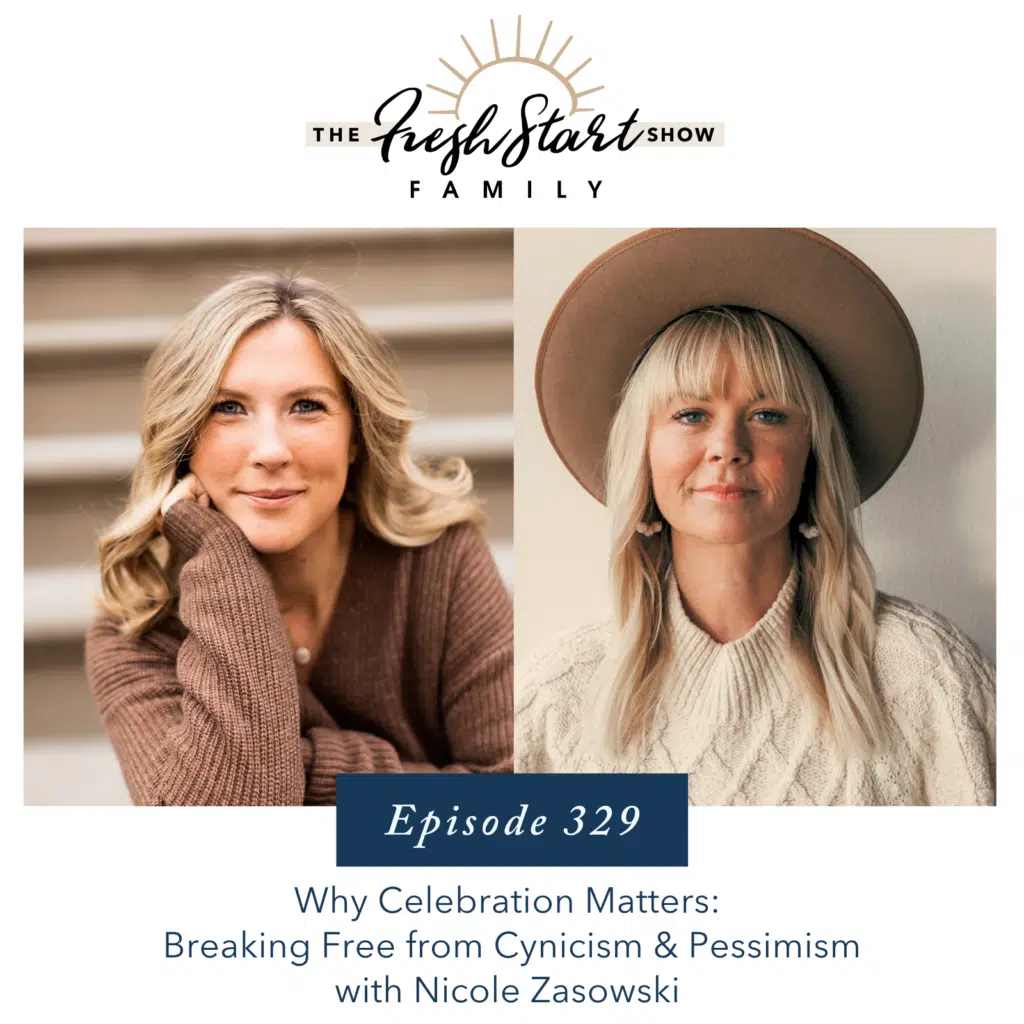
In this episode, Wendy sits down with marriage and family therapist and author Nicole Zasowski to talk about why celebration matters, especially in seasons when fear, grief, disappointment, or cynicism feel easier to reach for.
Nicole shares how her book What If It’s Wonderful? was born out of a long season of loss, infertility, and learning how to stop bracing for the worst when goodness finally arrived. Together, Wendy and Nicole explore how celebration can become a spiritual discipline, a parenting practice, and a powerful way to retrain our brains to notice God’s goodness in the middle of real life.
This conversation is full of hope for parents who feel stuck in pessimism, fear, or “waiting for the other shoe to drop,” and want to reclaim joy, practice thanksgiving, and help their kids feel deeply celebrated for who they are, not just what they do.
Special thanks to our sponsor!
Click here to check out the award winning Pep & Perk’s new album It’s Cool To Be A Kid — music designed to support and celebrate everyday family life, promoting positivity, because after all, it is cool to be a kid.

Episode Highlights:
- Joy isn’t just a feeling we wait for, it’s a rhythm we can practice.
- Celebration helps kids feel valued for their personhood, not just their performance.
- Pessimism and cynicism may feel protective, but they don’t actually make disappointment hurt less.
- Thanksgiving is a powerful antidote to fear because it helps us fully hold joy.
- Savoring small moments trains our brains to notice goodness in the life we already have.
- Celebration is not escape. It connects us more deeply to God, our emotions, and each other.
- Parents can build a family culture of joy through simple rituals, intentional words, and celebrating who each child is.
Resources Mentioned:
Follow Nicole on Instagram
Grab a copy of Nicole’s book What If It’s Wonderful?: Release Your Fears, Choose Joy, and Find the Courage to Celebrate
Nicole’s website

Unable to listen, or prefer to read along? Here’s the transcript!
Wendy:
Hello families and welcome back to a new episode of the Fresh Start Family Show. I am thrilled to be here today with Nicole Zasowski, who is the author of What If It’s Wonderful and other books as well. You’ve written a few, right Nicole? I can’t wait to hear more about them.
Families, today Nicole is going to talk with us about why celebration matters and how to break free from cynicism and pessimism. Welcome to the show, Nicole.
Nicole:
I’m so happy to be here. Thanks for making space for this conversation.
Wendy:
I’m so glad you’re here. Before we dive in, tell us a little about yourself, what you do, where you live, and a bit about your family. And I’d love to hear why you’ve written your books and what makes you so passionate about this work.
Nicole:
Sure. I live in Connecticut, just outside New York City, with my husband and three young children. I have a marriage and family therapy practice in Greenwich, Connecticut. Most of my work happens in my office there, but I also speak to groups around the country and do therapy trainings.
I’ve written three books, two trade books and one Bible study. I realized that even as a therapist, I struggle with the same things I help my clients with. So my books weave together my personal story, biblical truth, and therapeutic insight. I try to go first and be honest about what I’m working through too.
What If It’s Wonderful actually came from a really hard season. I went through about a decade of loss, including a sudden move, losing community, and infertility with five miscarriages in about as many years.
When things finally started to shift and we experienced some good, I found myself hesitant to embrace it. It felt safer not to hold joy than to risk losing it again.
I realized I was missing out, not just because of what I had lost, but because I was refusing to fully receive the good in front of me. That realization changed everything. I didn’t want to miss my life anymore. So I began studying both scripture and neuroscience to understand how we can practice joy, even when we don’t feel it yet.
⸻
Wendy:
That’s so powerful. And I just want to say, your work feels incredibly safe. I’ve been in a season of evolving faith for a few years, letting go of things that didn’t feel aligned and picking up what does. There’s been a mix of belonging and not belonging, highs and lows.
When I first found your work, I felt this sense of peace. Like, “Okay, I’m safe here.”
And recently, as fear has crept in again with everything happening in the world, I revisited your book. It was exactly what I needed. The first chapter on releasing fear hit me at the perfect time.
So today, I’m coming into this conversation both personally and professionally. Our audience is full of parents who want to show up with connection and compassion, but often feel stuck in reactive patterns. And pessimism can feel easier than hope.
So let’s start here. Talk to us about the discipline of celebration. Why is joy not just a feeling, but something we practice?
⸻
Nicole:
Our culture often treats joy as something we earn after achieving something. A reward for good circumstances.
But when I studied both scripture and neuroscience, I saw something different. Celebration isn’t meant to be a reaction. It’s meant to be a rhythm.
In the Old Testament, celebrations weren’t tied to perfect circumstances. They were practiced regularly, even in hardship. They were a way of remembering what is true, God’s goodness and faithfulness.
As parents, this matters deeply. One thing I hear often from adolescents is, “I feel like a walking résumé.” That’s heartbreaking.
It’s not that their parents don’t love them. It’s that praise is often tied to performance. When celebration only happens after achievement, kids start to believe their worth is based on what they do.
But when celebration becomes a rhythm, we begin to celebrate personhood over performance.
⸻
Wendy:
Wow. That phrase alone, celebrating personhood over performance, is everything.
We teach something similar, focusing on encouragement instead of just praise. Highlighting effort, growth, and process instead of outcomes.
Let’s move into fear. How does past pain condition us to brace for the worst instead of embracing the good?
⸻
Nicole:
Pessimism and cynicism are often attempts at control. We think if we expect less, it won’t hurt as much.
But research shows that even if the worst happens, bracing for it doesn’t reduce the pain. What it does do is rob us of joy, connection, and presence along the way.
Joy is actually one of the most vulnerable emotions we feel. When you hold something good, you also feel the risk of losing it.
If you’ve experienced loss, it can feel safer not to hold joy at all.
But the only way to tolerate that vulnerability is through the practice of thanksgiving.
Gratitude is noticing what’s good. Thanksgiving is expressing it. Speaking it out loud to God or to the people you love.
That’s what allows us to fully step into joy.
⸻
Wendy:
That’s so powerful. And it connects so deeply to nervous system work too. So many parents think they’re choosing pessimism, but really their body is trying to protect them.
Let’s talk about reclaiming joy as parents. Especially in hard seasons, how do we actually do that?
⸻
Nicole:
One of my favorite practices is called savoring.
It’s simple. You take a snapshot of a moment, like a photograph in your mind. Then you ask, what do I see, hear, smell, taste, and feel in this moment?
Our brains naturally hold onto big or negative experiences. This practice retrains the brain to notice small moments of goodness.
It doesn’t require more time or energy. It just helps you experience more joy in the life you already have.
⸻
Wendy:
That’s incredible. I love how practical that is.
Before we wrap, talk to us about simple ways families can bring more celebration into daily life.
⸻
Nicole:
Start with small rhythms. Celebration doesn’t have to be tied to milestones.
Have a random “birthday” night where you celebrate someone just because they exist. Use your words intentionally. Call out your child’s character and the unique ways they impact your family.
Simple things like that build a culture where kids know they are valued for who they are, not just what they do.
⸻
Wendy:
I love that so much.
Nicole, this has been such a gift. Thank you for the way you bring together faith, therapy, and real-life application so beautifully.
Tell everyone where they can find you.
⸻
Nicole:
You can find everything at my website, nicolezasowski.com. I’m also on Instagram, where I share “Therapy Thursdays,” little bite-sized reflections each week.
I’d love to connect with you there.
⸻
Wendy:
Amazing. Thank you again for being here.
Families, go check out Nicole’s work, grab her book What If It’s Wonderful, and give her some love online.