

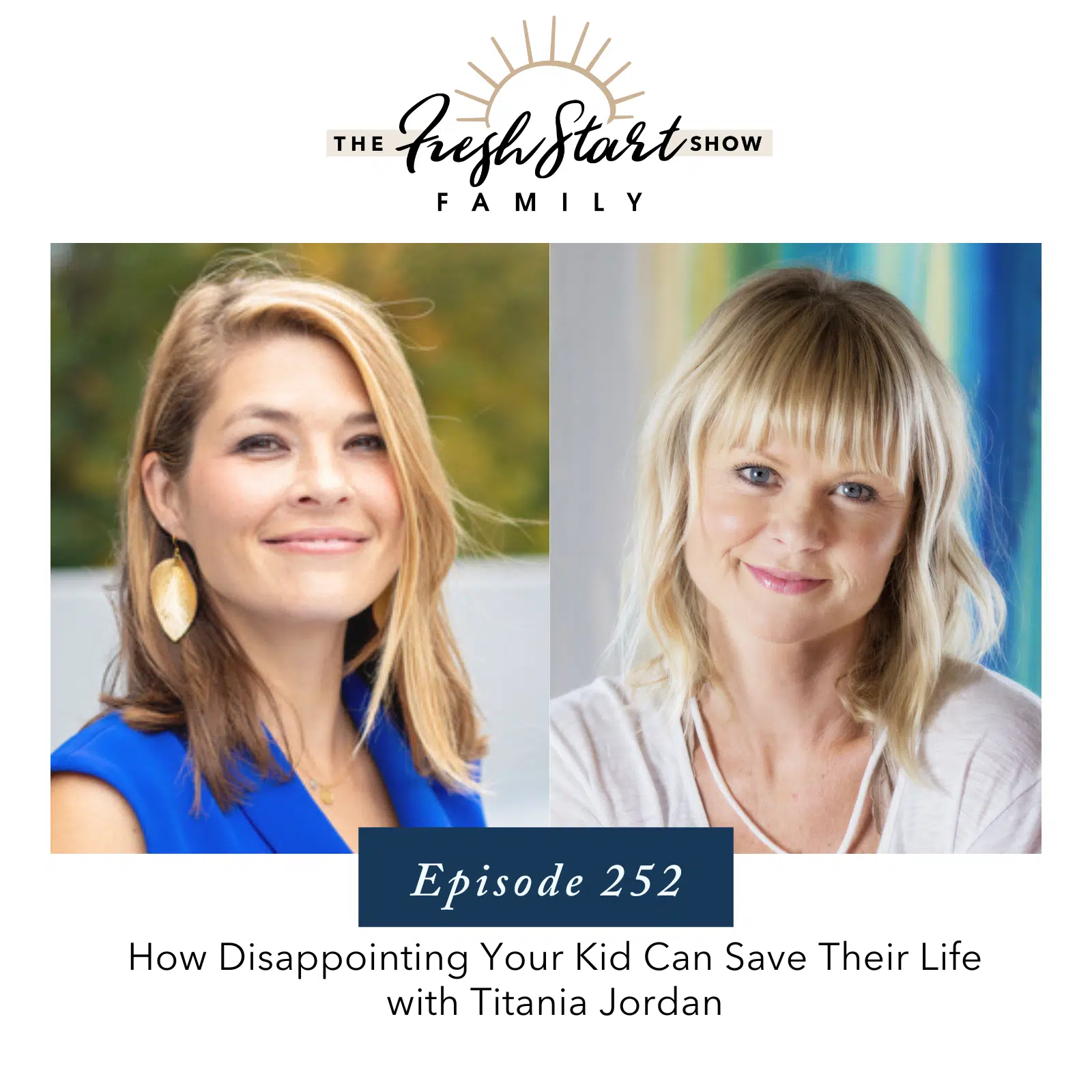
In this thought-provoking episode of the Fresh Start Family Show, Wendy Snyder sits down with Titania Jordan, a trailblazer in the field of child online safety and the Chief Parent Officer of Bark Technologies. Together, they tackle the tough yet vital topic of how “Disappointing Your Kid Can Save Their Life.” With honesty, warmth, and a shared commitment to empowering parents, Wendy and Titania explore the complexities of raising kids in an increasingly tech-saturated world.
This conversation pulls no punches as it dives into the challenges of safeguarding children in the digital age. Titania shares her personal experiences and offers insights into the life-changing tools and solutions developed by Bark Technologies to help parents protect their children online. Wendy and Titania unpack the real-world consequences of unmonitored screen time, including its impact on mental and physical health, while offering practical, compassionate strategies for navigating these modern challenges. Above all, this episode is a call to action for parents to lead with courage, connection, and clarity, creating a safer digital future for their kids.
What if you could be an effective, firm & kind parent WITHOUT relying on fear, force, bribery & rewards?
Imagine learning a new way of firm (AND kind) parenting so you can end painful generational parenting cycles and create family legacies & memories YOU are proud of?
All while getting your kids to cooperate with your rules and boundaries with ease.
IMAGINE …
Parenting your kids with calm & confidence each day in a way that causes them to do what’s asked of them because they WANT to (not because they HAVE to) … because you’re helping to build essential life skills that have them behaving well & being respectful when you’re NOT looking!
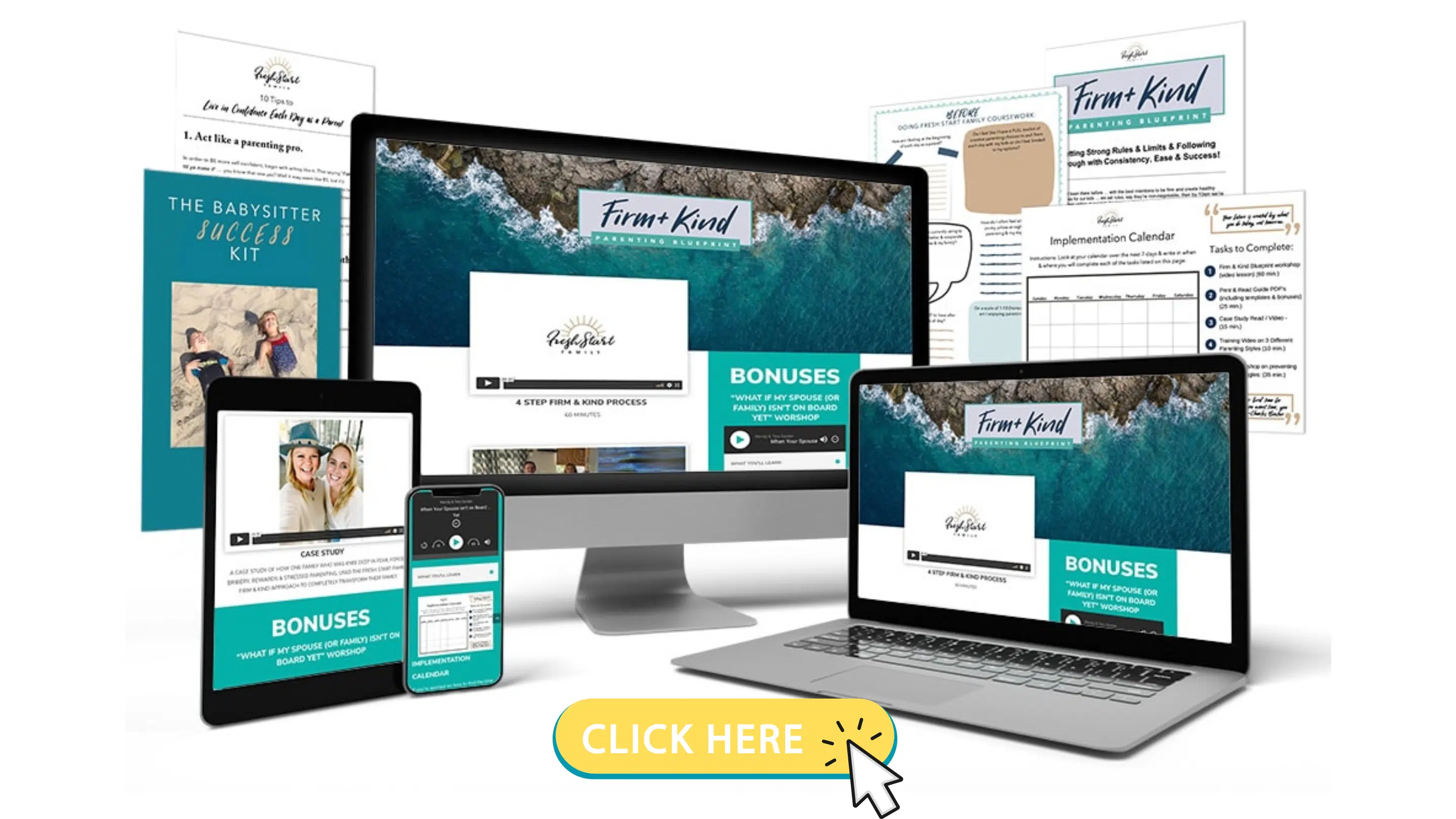
The Firm & Kind Parenting Blueprint is your step by step plan & video training to help you build the family of your dreams. Click HERE to learn more now!
Episode Highlights:
- Parenting in a Tech World: Understanding the complexities of raising children with digital access and the corresponding challenges.
- Bark Technologies: Utilizing Bark’s app, phone, and home solutions to safely monitor and regulate children’s online activities.
- Open Dialogue: Encouraging continuous, honest conversations between parents and their children regarding online safety and its impacts.
- Educational Resources: Employing resources such as the documentary “Childhood 2.0” and Bark’s annual reports to stay informed about the digital landscape.
- Community Action: Highlighting the importance of parents uniting to create safer tech environments, advocating collectively for change.
Resources Mentioned:
Follow Titania and Bark on Instagram
Check out all the products Bark has to offer to keep your family safe online HERE!
You can also enjoy 10% off their app subscription with the code: FRESHSTART
Catch the full episode on YouTube
Check out even more resources about screens and kids HERE!
Not able to listen, or prefer to read along? Here’s the transcript!
0:00:02 – (Wendy): Well, hey there, families, and welcome to a new episode of the Fresh Start Family show. I’m so happy that you are here today. We have miss Titania Jordan on the show, and I could not be more thrilled. Welcome to the show, Titania.
0:00:15 – (Titania): Thank you so much for having me.
0:00:17 – (Wendy): Yes, families, we are going to be talking today about how disappointing your kid can save their life. And my goodness, I mean, I really get excited for all of my interviews. This hosting and recording this podcast is really one of my favorite parts of my job. But this one, Titania, I’m going to say, I am so pumped for, so pumped for. I am so passionate about supporting the work that you do. I’m in awe and shock that there are not, like, a million of you, because I can’t believe how, like, in the dark, like, so many are, like, just because it’s. It’s just wild. So we’re going to get all into that today. But I just want to shout your work and your messaging and your education from the rooftop, so to speak, because what you’re doing is just so, so important.
0:01:07 – (Wendy): And we actually had a student who. I actually just had a phone call yesterday because I think she’s going to become certified to become a coach in our program called become a parenting coach. But she had a success story last fall where I got introduced to you. I had not known about bark before, and she had a notification fire off with her twelve year old from a. From a text thread, and it ended up just turning into the most beautiful educational conversation limit setting all the things. And she actually came in and asked for coaching, and we guided her on it. But it was just so amazing how that, um, was the result of. Of your app and, um, the notifying, because, yeah, I’ve had different thoughts about, like, monitoring kids in the past, but your method and the way you do it, like, really resonates with me to honor them and give them dignity, but at the same time, set firm limits and provide education.
0:02:06 – (Wendy): So, with all that said, welcome to the show.
0:02:09 – (Titania): Thank you. I am feeling the support.
0:02:13 – (Wendy): Yeah. So, so awesome. So, before we get into our subject matter, we’ve got three incredible takeaways for parents today about why disappointing your kid can save their life and how we do that without being at war with kids for so long. And I’ve got so many stories about this, and I can’t wait to hear yours, too. But will you tell us a little bit about how you got here? Why have you become so passionate about this? What is your story, Titania?
0:02:41 – (Titania): Sure. Yeah. So I’m a mom. My son is a 9th grader. He’s 15 years old. And I have made all the mistakes. I didn’t have resources like bark and protect young guys and, like, the parenting and a tech world Facebook group when he was younger. And so I made a lot of mistakes, and I so desperately wish that I could go back in time, and I can’t. But what I can do is share what I’ve learned with as many people who will listen and encourage them to not make those same mistakes so they have better, more optimal outcomes with their families, with their children, with everyone’s mental health and physical health. So passionate about it, because I’ve been through it, and it sucked.
0:03:26 – (Titania): Also, as a survivor of childhood sexual abuse and someone who has dealt with eating disorders, anxiety, suicidal ideation, the comparison trap, like, all of that. And yet, when I was growing up and dealing with some of that, I didn’t have tech to amplify it. And so now, being in this space at a company that helps to protect close to 7 million children across the nation, I unfortunately or fortunately, know what’s happening to children because of that access and amplification, and not enough people know about it. And so, as many people will listen, I will continue to tell them, here’s what’s happening, here’s what you need to know, and here’s what you can do about it.
0:04:09 – (Wendy): So powerful. And when it comes to mistakes that you feel like you made, was it actually like giving your kiddo a device and not realizing. Yeah. Was that like, the big. The big one?
0:04:19 – (Titania): Oh, yeah. Yeah. I mean, not realizing just the science behind what screens and games do to my sweet young at the time. Son’s developing brain, what it does to his dopamine levels and his reward center, how the frontal lobe of his brain isn’t even fully formed for rationale, decision making. How I would be blown away by his reaction when I would say it’s time to stop. Like, oh, my gosh, I would never talk to my parent that way. Well, it’s because I also wasn’t an addict.
0:04:52 – (Titania): Right. When they tried to tell me to do something. Like, the closest thing I can relate to is if they gave me the whole tub of ice cream in a spoon and then just decided to say, nope. I’d be like, what? You know, so I could have it.
0:05:04 – (Wendy): Yeah.
0:05:04 – (Titania): Yeah. Right? So, yeah. Giving access way too soon, I will say, to give myself some grace, we went through a pandemic and isolation, and he’s an only child. During probably some of the worst time we could have for him in his development, because at that time, I decided to let him have TikTok and Snapchat and more screen time and more social media access than I probably would have if we hadn’t been going through that.
0:05:34 – (Titania): So it really was the perfect storm.
0:05:37 – (Wendy): Yep, absolutely. And you said he’s in 9th grade now, and so have you being Titania Jordan, have you switched to the device, or you just, like, you’re building this kid safe device and this organization, all these things for, like, the future kids? Like, have you changed it up with him, or is he still an iPhone world?
0:05:58 – (Titania): I have changed some things up with him, uh, due to some of the circumstances that have taken place with him and piers, I have very thoughtfully let him, uh, keep the iPhone. Yeah, I. There are many days where I regret that.
0:06:17 – (Wendy): Yeah.
0:06:18 – (Titania): The older he gets, the harder it gets for me to justify switching to something else, but I don’t want that to discourage other parents who feel that they need to do that. Like, it really depends on your child and their circumstances. You know, he’s now at a place because we’ve had so many candid conversations where he’s actually regulating his screen time. He will leave his phone charging downstairs and go to sleep upstairs. Like, we’re past a lot of those things, but if we weren’t, I would absolutely make that switch.
0:06:54 – (Wendy): Yeah. Yeah. I’m a firm advocate for just wait till high school, you know, and then even then, right, like, I have the 16 year old, we waited till 9th grade, and it’s like, okay, we made it, right? Like, we made it through all these years in tearful conversations. And we’re going to talk about that first, about how it’s not easy to be a parent in a tech world. But then, even then, when she got the iPhone in the 9th grade, you know, now being 16, almost 17, there are still most days where I’m just like, I just wish this wasn’t a fan. Like, I just wish we didn’t have this. You know, you just wish that it was, like, illegal for cell phones, and there’s problems with in house texting and all the stuff too, which we’ll get into, but you just wish that it was, like, literally illegal for untethered Internet access devices to be in the hands, and it’s not. So we live with this reality now. And so let’s talk about that, how it’s not easy to be a parent in a tech world, even for you, right? And this is your career, and it’s just hard. And so let’s just normalize that we’re all in the same arena on this. If you could riff on that for a minute just to set the tone.
0:08:07 – (Titania): Absolutely. Yeah. Anything that you or I say that comes across maybe as, like, judgmental or you don’t know my family, you don’t know my circumstances. Like, not trying to be judgmental, but more coming from a place of, like, I’ve been there, I’ve made the mistakes. I just don’t want you to make those same ones. I regret them. Learn from my mistakes. I’m not perfect. I’m still figuring it out. There’s still things that I have got to work through with my own son. And knowing what I know, he’s really into discord right now. And I’m out there preaching to parents, don’t let your kids spend time on places that you haven’t spent time yet. I’m like, crap, I better spend some time on discord because you know what I mean? So give yourself some grace. It’s very overwhelming. It’s very hard, but just try to do something. Do one thing.
0:08:57 – (Titania): Perhaps it’s just Google. Two words, parental controls, plus the whatever your kid can access. Maybe it’s a PlayStation, maybe it’s a Kindle, maybe it’s an Apple watch. But just googling those words, parental controls and whatever your kid can access and start to learn about what is out there that you can utilize to just help them be a little bit safer.
0:09:22 – (Wendy): Yes, so true. And I think with an intention of, like, co regulation. Right? Like, I love, again, like, I’ve seen so many people share about this and I think in my community we’re so about, like, empowering kids and teaching life lessons and, like, we know, like, I specialize in strong willed kids and it’s like, we know that when you come at an angle from, like, I’m watching you and I’m. And if you mess up, like, this thing is, is yanked.
0:09:50 – (Wendy): They just, they get really good at hiding. Like, we have so many parents who come into our work coming from the classic world of, like, I mean, the iPhone has become the coveted, like, punishment. Like, if you roll your eyes at me, if you don’t pick up your room, if you get home late, like, whatever it is that frickin iPhone. And so we have so many parents who are, like, really recovering from that world and unlearning and doing a full 180. And so we come at it from an angle of, like, co regulation. Like, we’re teaching you and we’re implementing things in our home that’s going to help you stay safe. And also, I’m right there with you because I think that’s the reality when we talk about it being so us parenting in a tech world and why it’s so hard.
0:10:34 – (Wendy): It’s. Yes, it’s hard to be raising kids in this generation of this, but it’s also us. Like, I am literally facing the same exact challenges with these devices as my kids. Maybe a little. Definitely different because I love your work. When you talk about, like, actually go see what Snapchat serves up to you when you create an account like, that. Real blew my mind. So I’m not necessarily. That’s not.
0:10:59 – (Wendy): But I mean, the addiction with all the. Being a content creator on Instagram and the numbers and the effect on my mental health and, like, the addiction, why does it make me feel worthy when I, like, check off an email or see a dm? Like, it’s just wild how we’re doing this together. It’s so new for everybody. And the kids are figuring it out. We’re figuring out, but we’re really together.
0:11:21 – (Titania): In this at the same time, in real time. We’re all a living experiment, and that goes back to a way to bond with your child and learn it together and let them know how you’re feeling. You know, if you’re on Instagram and you’re like, realize I’m not feeling so great. Why is that? Oh, well, maybe because the past three posts were, somebody’s in the Bahamas, somebody’s lost 20 pounds, and somebody just celebrated their 25th wedding anniversary and got a new Ferrari. Like, yeah, yeah, no, maybe you probably aren’t going to feel that great about yourself because it’s not real life.
0:11:54 – (Titania): And telling your kids about that, be like, hey, I just noticed this. Have you ever felt that way after being online? We’ve got to talk to our kids.
0:12:03 – (Wendy): You know what? I’ve. It just happened yesterday, which is so perfect. God’s like, here you go. I’ll give you this annoying af situation. I was. I was like, I had just come off of a day where I was. I taught, like, multiple live workshops. I was tired. I wanted to, like, go just walk in nature forever. And I didn’t. I, like, didn’t. And by the time I got, whatever, Carpool didn’t work out, grandma wasn’t around to help, and, um, and I was multitasking. So Stella and I, she was with me to go to beach volleyball after we dropped Taryn off at surf, and we got our nice matcha latte and our little cookie that we get.
0:12:37 – (Wendy): But I was. I knew I had all these things to do, and I was, like, trying to pack it in, and I was trying to leave a voice memo to text as I was walking to the car with my matcha and it spilled everywhere. Yeah. And I was like, here. Here it is, right here. Like, this is, this is one of the results of the tech world is we think that it’s okay. Like, it’s smart to, like, check your text when you’re standing in line for the bathroom at Starbucks or fill every second. But that is just, it’s like a symptom of a suffering or a problem that they’re now, like, that’s the reality. Like, I can’t even imagine the high schooler’s brain.
0:13:21 – (Wendy): The, like, doing one thing at a time. Seems like it’s becoming obsolete, like, extinct.
0:13:28 – (Titania): Oh, my gosh. Even videos now, video creators will have two separate screens where somebody’s just, like, doing something random to hook you, and then they’re talking to you about whatever they’re talking about, and they’re not related because we’re in the attention economy. We’re always everybody, all of us, myself included, we’re trying to stop your scroll and make you pay attention.
0:13:51 – (Wendy): We’re trying to save your life.
0:13:52 – (Titania): I know, it’s crazy town.
0:13:55 – (Wendy): It really is. So, yeah, just, just remembering we’re in this together. Yes, it is hard. And it’s like, our kid is not the enemy. We’re in this together. We probably bought these devices. Now it’s our responsibility for everyone in the home to learn the important life skills and then also use the beneficial resources. Like, bark. Like, I just, um. My team, my, my head, my director of Ops, she actually was just in town with me and she was like, wendy, I’ve been using the screen Zen app. Like, it, like, just download it, do it. And within the first week, I’m, like, already seeing such a big shift. It blocks me from my team management slack app, it blocks me from email, and it just gives me, like, 7 seconds to think about it. And it’s enough to cause me, I mean, it feels like it’s been like a 60% reduction in my, like, overwhelmed state.
0:14:51 – (Wendy): And that’s just one single app, right? So it’s like the idea of bringing in these things that help your kids and help you, because just, like, we use calendars, it’s okay that we, we need and benefit from these type of resources. And so with that said, I mean, we should have probably covered this in the morning. In the beginning. In the beginning, Titania. But why don’t you tell everybody about bark and what it is and, like, how it actually supports parents and kids.
0:15:21 – (Titania): Sure. So bark technologies helps to protect close to 7 million children across the nation. And we do that in a variety of ways. We have an app, we have a home, and we have a phone. So the app helps to monitor children’s devices, social media accounts, text, email, YouTube, you name it. The app will connect to all the devices and accounts, analyze the content and context, and then send parents and caregivers an alert if and when their child has encountered problematic content or problematic people.
0:15:58 – (Titania): And then once spark sends you an alert, it’s also going to help you figure out what to do next. We don’t want to just give you the problem and say, good luck. You know, if your child’s being bullied, we’re going to let you know they’re being bullied, but also how to talk to them about it. What are the laws in your state? You know, that sort of thing. So that’s the app. And the app is incredibly powerful.
0:16:21 – (Titania): Gosh, as you mentioned, the beginning of the show, every day we’re hearing from parents that the app helped to save their child’s life, helped to bring them and their child closer together through some powerful conversations that wouldn’t have happened because of that. So there’s the app, then there’s the home. The home is like a little box that you plug into your router. Obviously, there’s an Internet service provider that’s bringing Internet into your home, and it doesn’t arrive safe, but if you attach the bark home to it, it can help you manage those things that live inside your home, like the smart tv or the game console.
0:16:57 – (Titania): And then finally, there’s the phone. We launched that a little over a year ago, not because children need phones, but they’re getting them and they’re getting unsafe ones. And so if and when it’s time for your child to have a mobile device, whether that’s for safety reasons, to track location, just to be able to text with mom or dad, there needs to be a safe option. And so we launched the bark smartphone that can be as locked down or as open as you want it to be for older kids.
0:17:30 – (Titania): So that’s what we do.
0:17:33 – (Wendy): I love it. And that bark phone, because Taryn has a kid safe phone, and it’s interesting. The one he has actually is kind of that concept of, like, you can open it up or you cannot. So are you saying the bark phone, the parent can turn it into, like, you can have full blown access to the Internet and apps, if you want. Like, is it. Is it really? Because he’s right now he’s asking for some money management, like copper.
0:17:59 – (Wendy): And there’s another app that I’m, like, having trouble putting on this other phone. So you’re saying the bark phone, you get to decide what you unlock in it?
0:18:08 – (Titania): Exactly. Yeah. The parent has full control of what their child can or can’t access. You can allow access to any app that you deem is appropriate for your child. And if you decide in hindsight, that wasn’t a good idea, you can take it away, which is important, because if you have an iPhone, you know, once that kid has downloaded it, they can redownload it from the cloud without asking for your permission, which is incredibly frustrating.
0:18:32 – (Wendy): Yes. Yeah. You’re such a pro at figuring out, like, all the. I feel like you’re like a little investigator, that you’re just trying to figure out all the different ways that kids can do stuff. And again, in my opinion, it’s not because they’re trying to be little stinkers and get away with. My mom had the weirdest term growing up. Get away with bloody murder. I’m like, what kind of term is that? And I still say it, I still repeat it. It’s not like they’re trying to get away with bloody murder. They’ve literally been handed and given access to a proven addictive substance, I guess you could call it.
0:19:05 – (Wendy): So, of course, they’re trying to get their fix. Like, it makes sense. But we are responsible for having put that into their hands. So it’s okay that, you know, and then we want to, of course, make sure we’re empowered to be able to have the conversations in a way where we’re not just yanking, especially out of punishment, but more like, hey, my role is, like we talked about at the beginning, to keep us safe, to bring in these resources, to understand when we’re overdevelop. Like, this is not working for our family, where it’s causing.
0:19:36 – (Wendy): So tell me about the messages that get sent when an alert happens. And I’ll tell you, I’ll give you an example. Last year, when Andrea had that happen with her son, it was a text thread, and there was racial slurs going off in the text thread. And so, like, what kind of messages is it giving you? Like, I imagine this algorithm. That’s what. Tell me more about that.
0:20:05 – (Titania): Yeah, so I’m actually pulling up a bark alert on my phone. So I’ve got this. So I’ve got my son, who’s 15, and I’ve also got this fake daughter, Ella, who’s 13. Yeah, Ella, she needs help.
0:20:26 – (Wendy): Yeah.
0:20:26 – (Titania): So with regards to Ella, so I don’t throw my son under the bus with real things, you know, I got a text from bark saying you, uh, you have a new alert true view for Ella. Now, that’s if that’s not severe or urgent. I have gotten ones that say, like, you need to look at this now. And it’s because Ella, me. But Ella on her bark phone was on Kik, which is a very dangerous app. And while she was on kik, she was being solicited to engage with pornographic material and predators.
0:20:58 – (Titania): And so in that case, Bark figured that out, sent me a text. Also send me an email to let me know I better take a look at what’s going on with Ella. So I click into that alert, and it takes me to my bark dashboard where I will scroll down past my son’s stuff. Because, again, that’s not for public disclosure. When I go down to Ella, it’ll show me. It’ll show me, hey, here’s what’s happening. Here’s where it happened, and here’s what you need to do about it.
0:21:33 – (Titania): So I’m going to some of Ella’s alerts, and it’s pretty fascinating. I’m just going to toggle severe for the sake of time because there’s a lot of things that aren’t severe but are. Okay, so you see here at the top, Ella, severe, risky contact, sexual content on Kik. So I’m going to click into that, and we block inappropriate content. So you’ll see right here, it says media blocked. But I can tell you firsthand, because I was Ella on Ella’s phone, that media wasn’t blocked.
0:22:13 – (Titania): And that was just full on. All the things. Things I can’t unsee because of the.
0:22:20 – (Wendy): Oh, yeah, yeah, yeah.
0:22:22 – (Titania): Like, right there. So bark, let me know that this happened. And it’s showing me the context. You know, this. This person named Anna Maria, it’s not. Wasn’t. Wasn’t really, you know, and Ella is asking, how old are you? And she’s saying, hey, I’d like to show you my naked pics. And you will. It just. It just goes on and on and on. So anyway, that’s an example. Maybe was a bit long winded, but it’s a lot to take in. It’s a lot to take in. And Ella’s not even a real kid.
0:22:52 – (Wendy): Yeah. And then what you said, it gives you notices of, like, here’s how we recommend you talk about this. Now, what does that part look like to Tanya?
0:22:59 – (Titania): Yes. So I scroll down past like this, the screenshot of the snippets of, like, what Ella encountered. I clicked on recommended actions, and it’s telling me with regards to a risky. Because there were multiple things, so risky contact. You know, you got to take action when it’s a predator and how to report it and how to talk to your kid. And they might need therapy if images have been sent and that sort of thing.
0:23:23 – (Titania): When it comes to sexual content, you know, that’s a little bit. That’s more of a gray area because every family has different standards around when they introduce their children to certain concepts and what even is age appropriate sexual curiosity. So we. We tread that one a little bit lightly, but we do include things like the state by state differences in sexting laws and articles. Like, I found porn on my child’s computer. Now what?
0:23:51 – (Wendy): So nice, the links.
0:23:53 – (Titania): Yes. A lot to think about, but we’re there to hold your hand.
0:23:57 – (Wendy): I love that so much. Yeah. So interesting. Just the, like. Yeah, the porn. I feel like, you know, I have a history of sexual abuse when I was a kid, too. And it’s, like, interesting. It’s like porn seems to be a little bit of a gateway to that almost, because it, like, brings in this feeling in a little person’s body that of course they’re interested. Of course. Like, there’s a literal human reaction to that where you’re like, oh, that looks kind of fun. I like the way my body feels. And so it’s like, coming in and educating them. Like, there’s nothing wrong with you. You’re not an alien. You’re not disgusting. I was just in a, like, a deep.
0:24:36 – (Wendy): I teach, like, a deep life coaching and transformational weekend. And one of the students was talking about, like, how his mom was, like, very. Just demeaning. Like, when he would make a mistake when she was young. But then you heard the word like him say, like, and I got caught looking at porn, and it was like, yes, I need to know. That was disgusting. But I just made a mistake. And so I just hugged him and I was like, it’s not disgusting.
0:25:02 – (Wendy): It just makes sense if that comes up. Of course you’re curious. That’s just part of being a normal human being. We do not want that coming across your phone. And here’s how you build your self regulation skills around that and learn how to look away or how to be like, okay, even though this is confusing because it feels good, this is the harm associated. This is the long term detrimental things that could happen if that starts to come across your eyes a lot or what to do all the things.
0:25:36 – (Wendy): I’m just so about the conversation of making these kids feel like they’re not crazy and they’re not in trouble. And here’s what’s going to happen now. We’re going to create a plan. You’re going to understand the risk. And let’s riff about that for a second. Titania. Because tweens and teens, they’re so notorious with. It’s not a big deal. I know everything. You having a 9th grader, you’re in that season. I have a 16 year old and a 13 year old, and it’s like coming across with the education where they actually, like, will listen. Right.
0:26:17 – (Wendy): What’s your take on that? Because it’s just that season that I remember where you’re just like, this isn’t a big deal. Like, you, they see these images and you’re like, no, that actually, that is a big deal. Like, you have to understand. You know what I mean?
0:26:30 – (Titania): Yeah. I mean, you know, talking about sex in any way, shape or form with a parent is not super comfortable for a kid. It’s awkward. A lot of them. Can we just end this, please? You know, I get it. I get it. That said, you’ve got to keep having those conversations. And it’s so important to reduce the shame and stigma associated with any of those things and just outline what is a normal, healthy human relationship and then what’s detrimental to your ability to have a healthy relationship when it’s the right time.
0:27:02 – (Titania): And that’s what we need to focus on is the fact that there are things that can maybe feel good in the moment, but they’re actually going to hurt your ability to have something really amazing and healthy and beautiful later that you don’t have to talk to me about at that time. But I’m here to prep you before. I’m here to let you know that those feelings are normal, that it’s okay, that that stuff’s interesting, but a lot of it is not true. Some of the people that are performing in that sort of industry are not there willingly or they’re.
0:27:38 – (Titania): They’re not healthy themselves. And if they could go back, they would change their decisions. Talk about the addiction. Always bring it back to science about what’s doing to your brain and how it can, again, just make it harder for you. When it is time for you to be in a loving, committed, safe, healthy, mature relationship with somebody, you want that to be a good thing long term. You don’t want to bring baggage and damage into it.
0:28:08 – (Wendy): I love that. Yes, well, and then, you know, like, I love the idea of. Because that has been one of. And well, before I go there, I will say that it’s such a science, it’s such an art to combine the, like, compassion and the education with. And this will not exist. Like, the firm boundary. Like, I teach a little recipe called firm Kind authority, which is different than, like, like, more casual, firm kind boundaries.
0:28:36 – (Wendy): But it’s like where your shoulders are back and you’re like, this is a strong no. So first is we do sequencing here. So it’s like, instead of threats, instead of, like, if you don’t listen to me, then you. I will yank that iPhone so fast, you won’t even know. It’s more like, first we have the conversation, even though it’s uncomfortable, we’ll learn a little today. We’re going to learn a little next week. Every time we get a bark, it’s like, we’re just going to learn a little bit. We’re learning.
0:28:59 – (Wendy): And then I feel confident paying for this bill, like, having the iPad hooked up to the home, wifi, whatever it may be. But, like, it’s just there needs to be like a very firm boundary of, like, sequencing. First we talk and we educate and we learn. And then, because so many kids are just going to be like, this is stupid, right? And it’s not just porn, it’s like, it’s just even, like when you’re trying to educate about, you know, like, and I want to hear more about your resources, Titania, about, like, the science side, because it’s like, I’m always have a goal to educate my little girl, who’s 16, almost 17 now, about, like, the science behind how much the anxiety and the depression and the overwhelm has gone up since the invention of the iPhone. And then the TikTok, like, it seems so innocent, but here’s the actual science. Like, here’s the data that’s going to show, like, what it does to the brain and how much higher the levels of anxiety and depression and even suicide are. And that’s like, was really like my big ammo all those years. So all throughout middle school, she was the only kid in our world, in our whole neighborhood, even though I tried really young to create, like, a group of parents who were going to do the wait till 8th pledge with us, and basically no one was really interested. And so all throughout middle school, she was just like, super alone. She’d go on volleyball team of 14 kids, they would go on big volleyball things. She’d be the only kid in that van without untethered access to Snapchat, TikTok, all the things. But all those years, I just kept trying to tell her, I know it’s so hard to understand when you’re young, but you got to trust me that you’re going to see some of your friends who have been addicted to these devices or exposed to these things in high school. You will unfortunately start to see probably some of them dealing with depression or anxiety or even suicidal thoughts. So what. What resources do you have, Titania, or recommend to, like, really come from that education place of research and the science to show these kids it’s not just some stupid idea mom and dad have. It’s like, here’s the actual studies to show the amount that it’s gone up.
0:31:27 – (Titania): Sorry, I muted because of my dogs. That’s so important. Taking it outside of the. You do what I say, as I say, when I say, because I say. And it’s you and your child aligned as a team because of the science, because that’s what’s best for them. And so whether it’s a documentary that I highly recommend called childhood 2.0, I’m not a doctor, I’m not a scientist. So we asked doctors and scientists to talk about how things have changed for children and childhood over the past 20 years. And you hear from the experts as to what they’ve seen, like the increase in children being admitted to the ER for either successful or unsuccessful suicide attempts skyrocketed over the past ten years.
0:32:17 – (Titania): You hear from experts and you also hear from children who are telling you what is happening in their worlds. And time and time again, they say, over the hour and a half documentary, you know, my parents have no idea. No, my parents don’t know. If they knew this, then this, you know, they don’t know that x, Y and z is happening. It’s eye opening. And how young these children are. The fact that they were so brave to speak up about what was happening in their world, whether it was bullying, mental health issues, predation, it’s a lot. So childhood 2.0, the documentary, I would watch it first before you decide to watch it with your child. It might not be appropriate for your child yet, but you can make that choice.
0:32:58 – (Titania): And then our annual report we analyze. Just last year, we analyzed over 5.6 billion data points across children’s devices and accounts. And what we found, the rate at which children, tweens and teens experience these issues, disordered eating, suicidal ideation, predation, you name it. The rates are way higher than any one of us might think. So showing that annual report to them and saying, wow, 86% of children experienced XYZ.
0:33:32 – (Titania): Do you know anybody that this has happened to? And if so, what did you think about that? How did you support them? Were you. Were you a bystander? Were you an upstander? Has this happened to you? If this did happen to you, would you feel comfortable talking to me about it? If so. Or if not, why? You know, it’s constant conversations. And so. Yes. Resources, documentary, books, reports, blog posts, Instagram reels, whatever your method of consuming content is, we have that for you. I co authored a book called parenting in a Tech world.
0:34:09 – (Titania): You know, basically, however you want to digest this, we’ll give it to you.
0:34:15 – (Wendy): Yeah. At the dinner table the other day, the kids were so annoyed because I won’t let technology at the dinner table. But I was talking about your reel where you showed Ella, opened up a snapchat account, and the freaking. The accounts that got served up to her. Is that real, Titania?
0:34:31 – (Titania): It’s real. Like, I’m not my goal. Like, this isn’t theater.
0:34:36 – (Wendy): They were so mad at me because I was like, I’ll show you after dinner. And then I had to find it. And Taryn was like, going out to skateboard the ramp, and Stella was like, I gotta try to get check, but they were dying to see it. So. But that tells me that they’re interested in what you’re creating. So it’s like, my request is that you keep creating stuff that shows them. Like, shows them the stuff, right? Like. Cause if I pull up a report, they’re gonna be like, but if you could somehow create something that’s like, hey, here’s the actual data points of, you know, the suicide rates in this year versus this year, or the anxiety of this year. This is this year, right? Like that. I just want to keep showing them that because that helps them understand this is real. Because, again, the tween teen brain is just like, no one. Like, you guys, don’t get me.
0:35:28 – (Wendy): Like, older world. Trust us, it’s not a big deal. No one’s gonna try to, like, predate predator me or whatever. No one’s gonna, you know, it’s not gonna happen. I’m not gonna get addicted to porn. These, like, you know. And it’s interesting to do it, too, in a way where you’re not creating shame for your kid, because I’ve noticed Stella over the years. She’ll be like, mama, I’m sorry. I just feel, like, really relaxed when I come home from. After a tournament, and I just scroll TikTok, and it’s I. And I’m so sorry, you know? And I’m like, honey, don’t.
0:36:01 – (Wendy): This is not a place for you to feel bad about your behavior. And we just still got to keep educating you on the potential. And you just want to be able to self monitor. That’s the goal, right? To be able to realize when you start to feel like, that other day when I dropped my matcha, that was such a moment that the awareness around how I was feeling and in direct correlation to the tech overload, I was able to say, okay, I gotta stop myself here. Like, no more.
0:36:29 – (Wendy): No more voice memos around work. It’s gonna wait. You know, like, the ability to, like, stop yourself. But, man, it’s. It’s for real. And I. We. So we’re in San Diego, California, and right now we’re recording in March. And so last month, in February, we had at my daughter’s high school, two suicides in two weeks. Oh, two weeks. Like, three blocks that way and, like, 2 miles that way.
0:36:59 – (Titania): And these are children. These are children.
0:37:01 – (Wendy): Yeah. It was a 10th grader and a senior one was on the indoor volleyball team. Two boys, which I think. Oh, it’s just like, yeah, it’s just real stuff. Like, that’s why I love your work, titania, because I feel like you have this, like, gusto about you, that it’s not about judgment, it’s not about shame. You’ve been there. But, like, this is. Don’t turn away from this. Like, and it is so gnarly. Like, it is so uncomfortable to go through the years where you’re, like, saying no, but, like, just remembering, like, what is the yes behind your no. Would you agree?
0:37:38 – (Titania): Yes. And what is the what? What’s the why behind this? There’s a reason. And, you know, you said something a minute ago about your daughter feeling shame for wanting to just relax through TikTok, and I always take it back to an ice cream analogy, honestly. Like, let’s say you have a. You have a bad day or a weak moment, and you’re like, I’m going to have that bowl of ice cream. That’s okay. There’s no shame.
0:38:01 – (Titania): It becomes a problem when you’re having ice cream for breakfast, lunch, and dinner, right? When you can’t regulate it, when you can’t have it in moderation. Same thing with screens, same thing with social media. I just. I get it. And.
0:38:17 – (Wendy): It’S an analogy.
0:38:18 – (Titania): It’s so overwhelming to me to think about how many parents just don’t know yet what we know. And so that’s why anybody who is listening or watching, I just. I can’t thank you enough. There’s a million places you could be spending time, and you’re spending time with us. And then I have an ask of you, and that’s to please share this with just one other parent that you care about and maybe go to coffee with them or share it with your PTO or your church group or your book club or what. Like, nothing is going to happen until parents start working together to make the change that’s best for their kids.
0:39:00 – (Titania): You know, we got BPA out of baby bottles. We got lead out of gasoline. You know, we got a warning label put on cigarettes. We can make tech safer, but we can’t wait for our legislators or the tech companies to do it for us.
0:39:15 – (Wendy): Yes, it’s so true. Yeah, it was so, you know, it’s like a month ago. I love to see actual, like, bipartisan support for the tech staff to hold the tech companies responsible. And also, I was just kind of like, gosh, I can’t believe there’s so much that people won’t come together for. But when it. It seemed to be like this, in my opinion, this, like, take of, like, oh, it’s this evil tech companies, and they’re the problem. And it’s like, no, in my opinion, yes, they need to be held responsible. Big, big platforms and the tiktoks of the world and meta and all the things, and we need to take responsibility like it is. It just was kind of infuriating to me how everyone, like, there was a lot of jumping on the bandwagon of, like, these evil people. And it’s like, well, that’s not actually. Actually the way it works. Like.
0:40:09 – (Wendy): Like, everything can be misused and cars can be used to kill people. And we’re not blaming the car company. We are educating young drivers. Stella is getting her license in three months. Like, we are educating, and we are having discussions, and we are putting limitations on it to get a license, right. And, like, all these things. So I love the idea of, like, really standing in that responsibility and knowing that that is a way to live a purpose driven life.
0:40:39 – (Wendy): The workshops I just taught a few days ago was about the powerful, positive parenting heroes journey and what it takes to kind of climb up and go on this adventure to raise your kids with dignity and firm kindness and firm boundaries. And this is one of those areas where you’re just, like, in order to really help the world thrive and change the world, we need to, like, all take a stand and be willing to be the rainbow unicorn of the group and to know that, yeah, let’s riff on that for just a few seconds or a few minutes before we wrap this episode, because that, I mean, it almost feels like it’s impossible, right? Like, so we live in San Diego, and again, I did it. I’m still doing it. Taryn doesn’t have an iPhone. He won’t till high school, and Stella didn’t either.
0:41:30 – (Wendy): But it almost feels impossible to be the person who is so different in the group because nine out of ten, if you could add a half a human in there, 9.5 out of ten kids in our area have unlimited access. They’ve got iPhones from the age of, usually 8910 years old. And there’s just no limits, there’s no boundaries. So I feel like parents would probably be like, if I go to have a conversation with somebody about sharing this bark app or whatever, this person is going to be like, it’s not a big deal. Or, like, are you judging me? Like, talk to us about, like, a. How to stand in, like, that confidence, being that rainbow unicorn and being different, which then, like, translates to your kids. They’re going to feel confident when you feel confident, but then also, like, finding that bravery to actually share when it seems like nine out of ten people do not care.
0:42:27 – (Titania): Totally. It’s so interesting. I was just having this conversation earlier today with our CEO and dad of two, Brian Basin. You know, back when my son was younger, like, 8910, there weren’t any parents sounding the alarm. I wish. I wish I could have had this podcast to listen to, to be like, you’re not crazy, it’s not good for your kid, and you just say no. I looked around at other parents, and they were all doing the same thing. They were letting their kids have access. And they were my son’s friends, and I was like, well, I guess we’re all doing this, right.
0:43:02 – (Titania): And so many parents are scared to let their child be the only one. And I get it. I’ve been there. But now that we know better, we have to do better. You cannot argue with the data. And if you care about your child’s mental health and physical health, you cannot in good conscience give them unfettered, unfiltered, unmonitored access at such an early age. You can’t do that. You are a bad parent if you do that. And I’m saying that as somebody who’s telling herself back then to Tanya, you are a bad parent for doing that.
0:43:37 – (Titania): And it’s okay. You can change, you can make good choices, but it’s so much better to do it earlier than later. So I’m just encouraging all of you, even the most kind people, pleaser people, you know in your heart and you know in your gut and you know, in your mom instinct, I. What’s good for your kids and what’s bad for your kids. And if you get that stirring, that it’s not good for your kids, lean into that.
0:43:59 – (Titania): Don’t look around what everybody else is doing. You pay attention to that. And then you shout that from the rooftops. And you don’t have to be rude, but you can advocate for what’s best for your child. Meaning they’re going over for a playdate or sleepover, say, hey, you know, it’d be great if kids could just be kids and play together old school. Is it okay if all, like, the tech goes just in a basket and they don’t play with it? They play with each other.
0:44:24 – (Titania): You know, it’s those gentle nudges to help people wake up. It’s time for parents to wake up.
0:44:31 – (Wendy): And that’s a great opportunity to share the article or share some research or, like, something around how sleepovers might be. I don’t know what exists out there, but, like, something that would be a little bit of a gateway of, like, hey, I know this is uncomfortable. I’m just really passionate about keeping the kids safe. Would you be willing to consider having them put the devices in the basket? Here’s something.
0:44:53 – (Wendy): Here’s an episode that’s really helped me realize what a dire, dangerous situation we’re living in. I don’t know, but just knowing that it’s possible, you just gotta. And, yeah, it’s like that. It’s like, I can tell you’re right there with me, with never wanting to embark or to put shame on people, ever. Right term, like bad. It’s like, we have to understand that this is. This is serious. This is not.
0:45:24 – (Wendy): This is like, just like you would think. I mean, like, there’s so many definitions of what we would say. Like, that is bad parenting, but, like, you have to understand that this is serious. It’s like you want to take action. We don’t use that word lightly. No.
0:45:40 – (Titania): Like, if we saw a parent with a baby, not in a car seat. No offense to that parent, but that’s bad parenting. Your kid needs to be in a. It’s just science. And that’s where we are.
0:45:50 – (Wendy): Yes. I love that. I love that so much. Oh, my gosh. And then, yeah, I think kids develop the confidence to be different when you have, like, a settled nervous system around it. Right? So it’s like, I think this brings up so much. Right? Like, at the basis of all human beings fears is the fear that we don’t belong, the fear that we’re not going to be loved, the fear that we’re going to be rejected. And when you decide to parent differently and be a voice and live a purpose driven life where you are spreading education and preventing harm on children and your family, then there’s going to be a lot of those fears that come up. So whether you’re working with your therapist or with a parenting and family life coach like myself, it’s important that you get yourself into a place where that’s. That’s normal, but you can’t suppress them and not do what you need to do, which is set the firm boundaries, get the bark downloaded, have the conversations, hopefully not give your child the apps. Like, that’s right. Like, again, if you. If you’ve already done, it’s not impossible to undo it. We have so many episodes here that we’ll put in the show notes to help you understand that you can go and change things, especially when you’re paying the bill, you’re providing the Internet.
0:47:09 – (Wendy): Like, you are the firm, kind leader of your home, and it’s not too late. But just know that, like, I think when you stand in the confidence and when you’ve moved through the fear instead of suppressing it or acting like it doesn’t exist, that you’re scared you’re going to be criticized by other families, because what’s the big deal? Like, I remember having that feeling at the volleyball tournament one time when the coach was like, okay, everybody, go take your break.
0:47:39 – (Wendy): I’ll text everyone. And I was like, oh, my gosh, this is so sad because Stella doesn’t have a phone. And I just remember being so uncomfortable that she was going to be, like, this alienated, and it was just fear that it’s okay. It’s just an uncomfortable moment. She’s actually safe. You’re safe. Just be an advocate and stand tall and let the coach know. Like, it’s okay. Like, this is actually not a life or death thing when it comes to setting the boundaries and being the unicorn family, but it feels like it is.
0:48:13 – (Wendy): It feels like it is what actually is the life or death is handing these devices to the kids without the resources or without the. The help to, like, monitor it. Okay, last thing I want to ask you before we wrap, is this home little box? This sounds incredible, because we have a lot of parents who they say, my kid doesn’t have the iPhone out in the world, but they have the device at home that they’re allowed to tap into the Internet.
0:48:42 – (Titania): Right.
0:48:42 – (Wendy): And that was kind of our story. And so if I were to go back, I would have liked to have a bark box on that, because, like, there was definitely times where I was like, you know, I’d walk up to, like, Taryn for an example, and he would x out of the iPad real quick. And I was like, oh, honey, like, chat. Let’s chat. And I just remember this one time he. I don’t even remember. This was probably, like, two years ago, and I came over, and I was like, you’re not in trouble. And I put my hand on his chest, and it was beating, like, so fast, like, out. And he has a mom that has. Is, like, a power, like, a positive parent. Like, he’s not gonna get spanked. He’s not gonna get. And his heart was beating out of his chest, and I was like, you’re okay.
0:49:27 – (Wendy): Not gonna be mad. Whatever. It was, like, let’s just talk about it. And I don’t. I think it was, like, a shooting game, and we’re, like, super anti, like, pretend murder games and stuff. But, like, that home box is so beautiful. So just. Any advice to leave listeners with as far as, like, yes, your kid doesn’t have the apps or the phone or whatever, but, like, even in the home, like, it’s still. If there’s any access to the Internet, that’s what we want to make sure we’re monitoring and supporting them with.
0:49:58 – (Titania): Yeah, if you have a smart tv, if there’s a drawer of tech that you used to use, but you haven’t recycled yet, but if you power it on, it can connect the Internet. If you have people, if you have friends that come over and bring tech. Right. Babysitters, whatever, that’s when you need the barcomb. It can block apps and websites. You can schedule screen time, and you can apply web filtering to all of the Internet connected devices within your home, which is critical, because the tech that comes into our home doesn’t automatically arrive safe. It’s.
0:50:29 – (Titania): It’s the wild, wild west. It’s the www. So if you would like some help with making the connected tech in your home safer, you should definitely check out the bark home.
0:50:39 – (Wendy): I love it. All right, well, families. I love Titania’s work so much. I’m going to create a special page just for all the bark resources. Fresh start, familyonline.com bark. But then also to Tanya, let listeners where they. Let them know where they can come find you. Grab your book. Like, all the things. You don’t have a podcast yet, right?
0:51:00 – (Titania): Not yet.
0:51:01 – (Wendy): Okay.
0:51:02 – (Titania): Gosh, as you know, it’s a lot of work, right?
0:51:05 – (Wendy): Yeah.
0:51:05 – (Titania): So I just like to be a guest on other people’s wonderful podcast. But, yeah, you could just google my name, Titania Jordan. And I’m everywhere. So if you like YouTube stuff, hang with me there. If you like Instagram reels, I’m there. Facebook, TikTok, whatever. Like, nobody really ever has my name. So you’ll find me, Jordan. You don’t have to spell it right. You’ll find me.
0:51:30 – (Wendy): Yes. Or they can just google the bark app, right? Like, that is one of our. The baby step takeaways that you kind of alluded to earlier is like, just take an action. Download the app. Download.
0:51:41 – (Titania): Yeah, I mean, it’s. And it’s less about me. Like, if you want to connect with me, easy to find me. But those important takeaway, not about me, is, do you need bark? You need the bark app, you need the bark phone. You need the bark home. You need something. So Google bark technologies and go down that rabbit hole, because it’s a good one.
0:51:58 – (Wendy): It is a good one. Oh, well, thank you, Titania, for being such a force to be reckoned with in the world. I just feel like you have this beautiful, like, passionate energy, and I appreciate it. I honor it. I know it is a lot of work to grow a mission driven organization, so thank you for waking up every day and doing this important work. We are really appreciative of.
0:52:24 – (Titania): You gonna get a little watery eyed. Thank you. Thank you for having me.
0:52:31 – (Wendy): Yes, listeners, thanks so much for being here. Make sure you go support Titania and get going with all the bark resources.