


Enter to win a prize package worth over $1700 now by subscribing to our new channel on youtube. Click HERE to enter
*warning contains language that may not be suitable for children
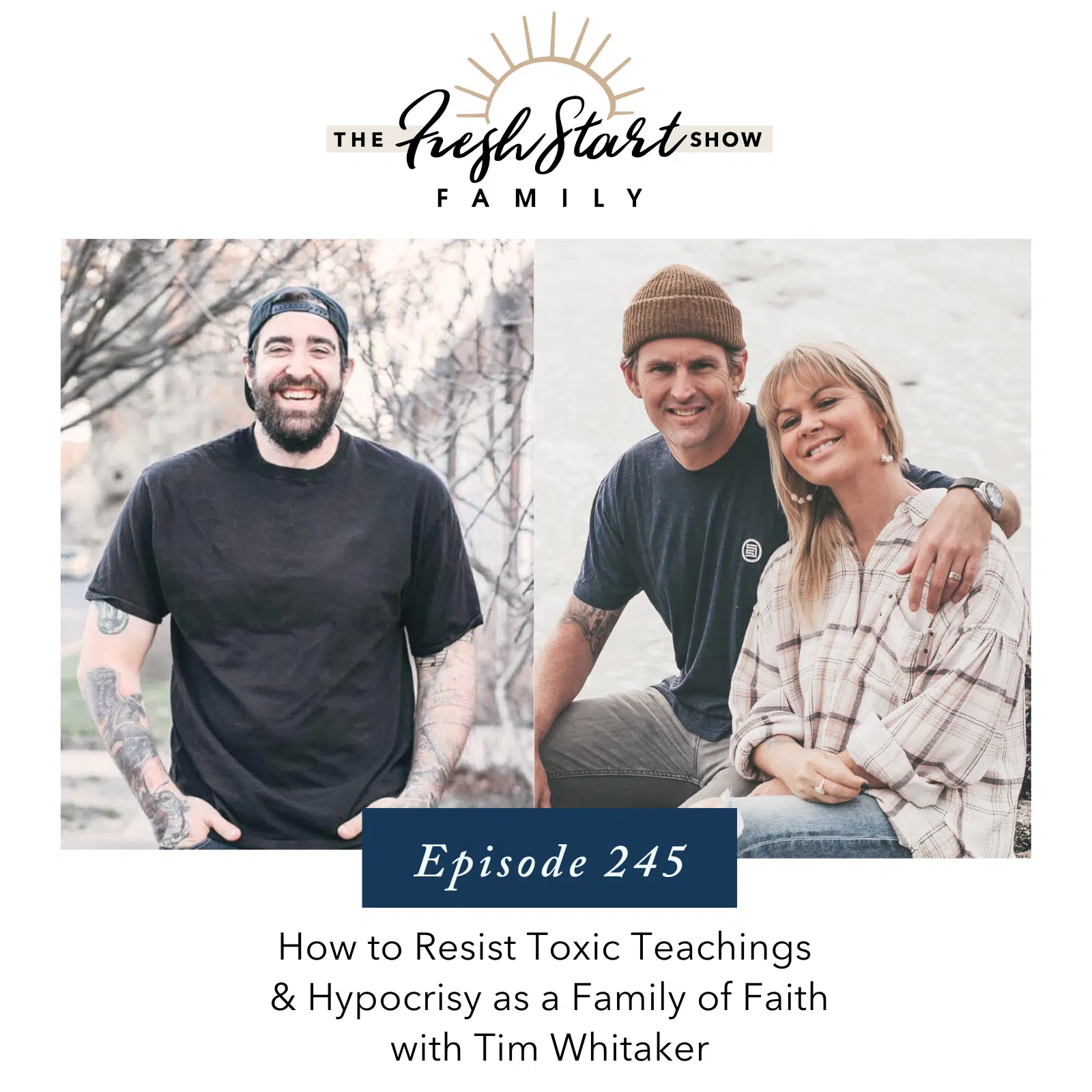
In this compelling episode, we sit down with Tim Whitaker, founder of The New Evangelicals, to dig deep into navigating faith, resisting toxic teachings, and advocating for marginalized communities within the Christian church. Tim shares his personal journey from growing up in a conservative evangelical household to becoming a leader in the movement for a more compassionate, inclusive faith. Together, we explore how to maintain integrity and authenticity in a faith that can often feel contradictory, especially within the landscape of modern evangelicalism.
From the polarizing effect of politics within the church to the urgent need for social justice and LGBTQ inclusion, Tim’s story and insights are timely and powerful. This episode isn’t just a conversation—it’s an invitation to reflect on your own faith journey, question toxic teachings, and advocate for a more loving, inclusive community. Wendy and Terry offer their own personal reflections, making this episode a rich resource for families seeking to align their parenting and faith with compassion, integrity, and justice.
If you’ve ever found yourself wrestling with questions of faith or striving to create a more inclusive, just world for your children, this episode is for you.
What if you could be an effective, firm & kind parent WITHOUT relying on fear, force, bribery & rewards?
Imagine learning a new way of firm (AND kind) parenting so you can end painful generational parenting cycles and create family legacies & memories YOU are proud of?
All while getting your kids to cooperate with your rules and boundaries with ease.

IMAGINE …
Parenting your kids with calm & confidence each day in a way that causes them to do what’s asked of them because they WANT to (not because they HAVE to) … because you’re helping to build essential life skills that have them behaving well & being respectful when you’re NOT looking!
The Firm & Kind Parenting Blueprint is your step by step plan & video training to help you build the family of your dreams. Click HERE to learn more now!
Episode Highlights:
- Authentic Faith Journeys: The importance of genuinely exploring and questioning one’s faith, even when it leads to difficult and uncomfortable conversations.
- Navigating Church and Politics: The impact of political events, particularly the rise of Trump, on evangelical communities and personal faith journeys.
- Inclusion and Justice: A central theme is the inclusion of LGBTQ individuals in the church and challenging toxic teachings that marginalize these communities.
- The Cost of Integrity: Both Tim and the hosts discuss the personal and social costs of maintaining integrity and advocating for change within the church community.
- Support and Community: The significance of finding and nurturing supportive communities, especially for those questioning or deconstructing their faith.
Resources Mentioned:
Find The New Evangelicals on Instagram
New Evangelicals website
The New Evangelicals Podcast
Catch the full episode on YouTube!
Also Mentioned:
Episcopal Church
United Methodist Church
Many Lutheran & Presbyterian Churches
Disciples of Christ Church
Not able to listen or prefer to read along? Here’s the transcript!
0:00:03 – (Wendy): Hello, podcast community, and welcome back. I’m so happy you’re here. Today on the show, Terry and I chatted with Tim Whitaker, who is the founder of the New Evangelicals, which is a nonprofit organization that helps you explore the christian tradition and expand your faith while also holding evangelicalism accountable. And as we get into this episode, I did want to just bring awareness to the fact that everyone is welcome here at the fresh start family table. So I’m going to read to you one of my favorite manifestos. This is actually written by a woman.
0:00:43 – (Wendy): My screen is killing me, guys. Sorry. Let’s try this again to bring up this hidden. There it is. Okay, pull this over, and we’re going to try that one more time. Hello, listeners, and welcome back, or podcast community. Hello, podcast community. Welcome back to a new episode. I’m so happy that you are here. Today on the show, Terry and I chatted with Tim Whitaker from the New Evangelicals, which is an incredible nonprofit organization that helps you explore the christian tradition while expanding your faith and also holding evangelicalism accountable.
0:01:35 – (Wendy): And I love Tim. I love the way he shows up in the world. I love the work that he’s doing to fight things like christian nationalism and just some really scary stuff that is happening currently in the christian world, especially here in America. It is a very tense season right now as we are knee deep in political season. We are just a few weeks away where we will be choosing and voting for the new leader of our beautiful United States of America. And my goodness, is it tense in a lot of circles. So I love the courage that Tim has to show up in a very brave way and to bring people together and create unity and belonging for families and people who are really feeling a little disconnected, maybe from the way they were raised in traditional evangelical church circles and are looking to practice a form of faith that feels more in line with who they are and who they want to be and how they want to show up in the world.
0:02:34 – (Wendy): So I thought, before we get started on today’s episode, it’s always a good time when we have faith based episodes. You know, some of our episodes are going to be faith based, some are not. Most, in fact, are not faith based. But since I am a mama of christian faith, we do have a lot of episodes around the christian faith and how to expand and feel energized and inspired, especially how to bring our christian faith into our parenting walk.
0:03:03 – (Wendy): And we know that we have so many families from all over the world who are not of christian faith. So everyone is welcome at the table here and one of my favorite manifestos, that was written by a woman named Lindsay letters, hangs on my wall right next to my desk, and I’ll read it to you here if you are searching. Saved. Black, brown, white, gay, straight. Sure. Unsure, older, younger, peace filled, pain filled.
0:03:34 – (Wendy): Able bodied or differently abled, no matter how many moms or dads or divorces or kids or chromosomes or failures or successes or questions you have, no matter your gender or status or where you are from, know that you are welcome here. And I love that manifesto so much. I love Lindsey letters. If you’re not familiar with her, I would highly encourage you to follow her and the artwork that she does and the way she journeys through this world as a Christian. She just inspires me deeply, and her artwork is beautiful.
0:04:10 – (Wendy): But this episode today feels a little bit vulnerable to put out into the world, because we do talk, both Tim and I and Terry talk about our evolving faith journey, which, when you put it in the public eye, is definitely under scrutiny. And so I know for myself as I have grown in my faith and felt like I’ve become closer to God through my evolving faith. I love how Sarah Bessie refers to when you’re really asking questions and, you know, getting into a place. Some call it deconstruction.
0:04:48 – (Wendy): Some call it evolving. Like Sarah, I relate more to evolving faith because I wasn’t raised in the church. That was, like, I didn’t have to recover from or heal from the fear and the force and the like, you know, driving into, you know, people that you’re gonna go to hell if you mess up and how bad you are as a sinner. Like, all of that rhetoric that is pretty thick in the evangelical world, I didn’t grow up with that. And so I came to my faith later in life when I was about 19 years old, landed on a little church in Pacific Beach, California, called Pacific Beach Christian Disciples of Christ Church that I now realize is a fully affirming church. And that just makes me so happy as I was kind of getting in touch with my roots the last few weeks of my evolving faith journey.
0:05:37 – (Wendy): But I didn’t have all of that fear in me as I have been evolving and growing my faith right. So, for me, it’s been a consistent decision of and freedom that comes along with deciding what feels right to you as far as the, you know, practicing and operating in the world as someone who has Jesus at the center. And so if you are a family of christian faith, I think that you will really enjoy this episode, because you just. Whether you are in a season of deconstruction or evolving faith. Or maybe you really are someone who is just going to church and you are so happy with your traditional or even model evangelical church. And maybe some of the big issues that many of us who have these big justice buttons we enjoy discussing and having civil discourse over, maybe they just aren’t even on your radar, right? And you are just happy and you’re doing great. And so if that is the case, God bless.
0:06:37 – (Wendy): May you continue to feel safe and secure in your journey and your faith circles. And I know that there are just so many people who I meet that have shared with me how they really are just not wanting to repeat the same generational cycles that was how they were raised and the fundamental or the traditional evangelical circles where fear and force is heavy. Many, many, many pastors are still preaching from the pulpit even today that punishing, hurting, harming, hitting, scaring kids into submission is godly discipline, that it is biblical.
0:07:21 – (Wendy): If you are someone that is like really starting to question that and feel like that is a big disconnect with what you actually believe the Bible says. If you’ve listened to any of our podcast episodes where we actually teach you what the Bible says, it’s very different than what many of those traditional kind of evangelical pastors, even the most modern ones, preach from the pulpit. Just know that I see you. I honor you. You are safe here to ask questions, to educate yourself, to expand your knowledge.
0:07:52 – (Wendy): For those of you who are learning to read the Bible with a contextual lens, not just an infallible, literal and inerrant lens. I think for those of us who are evolving christians, it is so wonderful once you get with some educators and some theologians and pastors who teach you how to do that, and really they remove the fear that comes from so many of the circles that I think prevents people from doing educational work.
0:08:20 – (Wendy): It just feels really good. And so I want you to know that wherever you land, you are safe here, you are safe to explore, you are safe to voice, you are safe to be in respectful community, even to have civil discourse in a place where there is diversity here at fresh start family. And we love that. We are very firm in we do not welcome in disrespect. And trust me, there has been so much of that over the last few months with my own evolving faith journey, especially when it comes to the local church I was attending and what happened there that I’ve spoken a lot around on social media, but just know that this is a place of safety and that is what we are really dedicated to.
0:09:09 – (Wendy): And again, we believe that when it comes to Christianity, if you are a family of christian faith, we believe in the type of Christianity that brings people closer, that creates unity, that is about peace, that is about serving the oppressed and the marginalized and the poor and the sick and the orphans and the widows and the disadvantage. Like the youth, right, like children are so powerless compared to grown ups. And it’s just so evident about, you know, it’s right in our, in, right in front of our eyes. You don’t have to look very far to see how children are an example of a section of humanity who has been hurt and harmed, especially by religion.
0:09:57 – (Wendy): But we are just here to advocate for the margins, and we feel really strongly about that. And so if you are interested in practicing a faith, a Jesus centered faith, I should say when it comes to Christianity that is focused on justice, joy and inclusion, and that you are someone who values peace and you are someone who values leaders, who bring us together versus create division, then you’re going to love this episode. You’re going to love us here at fresh start family.
0:10:25 – (Wendy): I was just at my new church. I found a new church here in north San Diego, California, that I’m so excited about. The family and I are just jumping for joy. Remember that there are churches all around you, even if you don’t think there are. There are online churches now that will align more with your way of Christianity if you’re not relating to the type of Christianity that you’ve been immersed in, you know, for however long.
0:10:53 – (Wendy): But we were at a recent service, the pastor was talking about how every single month they get together clergy from their community that is of all different types. So they’ve got catholic priest, they’ve got presbyterian, they’ve got non denominational, they’ve got jewish, they’ve got Lutheran Presbyterian disciples of Christ, like all these different types of folks who have very different belief systems, even when it comes to scripture.
0:11:21 – (Wendy): And they come together and they do good works together in the community, and they also have civil discourse and, and a meal together, and they practice being, you know, of high dignity human beings who genuinely care about each other and care about their neighbors. And so that is the type of Christianity I am interested in practicing. I know it’s the type that Tim’s interested in practicing. And it is very, very alarming to, to many of us who have very big justice buttons.
0:11:53 – (Wendy): As we watch christian nationalism grow in America, it feels like it’s spreading like wildfire. When we watch the type of angry, judgmental, condemnational, exclusionary type of Christianity that is getting being practiced and not just practiced, but really shouted into people’s faces. It is scary. And so those of us who are advocates, and again, we have strong justice buttons. That’s why we show up.
0:12:22 – (Wendy): We really do our best to spread the message that you have choices when you practice your faith. And even though it may feel really scary to do things different than your friends from Bible study or your college roommates, or your in laws, or your parents or your sisters and brothers, just know that there really is so much choice in how you do Christianity. And I think Tim at the new evangelicals is just showing that, that the things that really matter to those of us who relate to the new evangelicals, it’s just so wonderful to build community around that. I’m going to mention, I know this is a little bit of a long intro for Tim. We’re going to get to Tim’s episode here in just a minute.
0:13:06 – (Wendy): You guys are going to love it. But I did just want to go through and mention a list of people that you guys can go explore on your own. I’m going to make sure we put them in the show notes too. But this list is a community of people that has helped me feel like I belong in the type of Christianity I am trying to practice. And again, I’m going to say it again, if you are jewish, if you are Muslim, if you are atheist, if you are evangelical, if you are non denominational, if you are lutheran, if you are a Presbyterian, if you are catholic, you are welcome here at the fresh start family table. I believe in diversity and everyone is on their own path to figure out this thing we call life and to create, you know, to connect and be guided by the divine, whether you believe that’s God, Jesus, angels, the universe, whatever it may be. And I just want to build a community where we are connected and it’s important to feel like you belong, right? And so these are some of the people who have helped me feel like I belong.
0:14:07 – (Wendy): Even in the seasons where I feel like an outcast when it comes to traditional evangelical spaces, which I’m now realizing I never really belonged in the first place. I was always the black sheep. Teaching compassionate discipline, really for the last twelve years in evangelical churches when I was always bucking up against the edges, right there was just, I was the first one to come in and teach at the churches I had been at. And even though I was welcomed and I was supported, which was so phenomenal, I could feel my black sheepness, I could just feel how the norm in those spaces was to bring in the parenting educators that preached peace and joy and connection and kindness all the way till you got to discipline that it was being preached from the pulpit or from the parenting.
0:14:56 – (Wendy): You know, who had the big Instagram following and the book that they authored that you just go ahead and you hit harm and scare kids into submission and then that is labeled as godly discipline. I was never down with that. I was always a bit of a black sheep. So even in the season where I’m continuing to kind of lean into my black sheepness and find confidence in that, knowing that I do have a larger community where I do belong, it’s just really helped my little heart feel better and my nervous system feel me. I feel more settled. So again, we’re going to put this on the show notes page, but here’s a list that you can enjoy after you listen to this podcast episode today with Tim that you can kind of go check out everyone’s work. Sarah Bessie she’s one of my favorite authors in the world. She has a few different books. Her latest one is called Field Notes for the wilderness and it is such a great book. If you are someone who relates to that terminal, evolving christian, if you are someone who has an evolving faith where you believe in your ability to learn and grow and grow closer to other people who are who even when they’re different than you Kate Bowler is another one of my favorite authors.
0:16:11 – (Wendy): I really admire the way she shows up in the christian space and the type of christian she is. Kayla Craig, who is the author behind liturgies for parents. It’s a very popular Instagram account and podcast. Just love the way she shows up in the world. She is not shy about advocating for things like common sense gun laws, even though there is such an intense christian nationalism. Fiery like you feel the hammer when you speak up about stuff.
0:16:40 – (Wendy): And she still does it. And I love that about her. And she does it with such respect and dignity from a Jesus centered place. Cole Arthur Riley from Black Liturgies is another just incredibly justice and Jesus centered Christian who I just love her work so much. David Hayworth from the naked pastor account. We’ve had him on our show. His artwork is so moving and beautiful. The Episcopalian Church, the United Methodist Church, many Lutheran and Presbyterian churches are really I’m learning more and more in line with the type of Christianity that I relate with and that I feel like I belong in as well as disciples of Christ denomination.
0:17:23 – (Wendy): Also, Stuarthenne Dante is another one of my recently discovered authors that I just love. Mary van Geffen is actually a fellow parenting coach who, you know, she likes to refer to herself as someone who’s untangling her faith and finding all the ways that her faith or her involvement in religion has hurt people. And so what she shares and her courage to be a different type of Christian has really inspired me. Meredith Miller, she is the author of nurturing a faith in your children that they don’t have to heal from.
0:17:58 – (Wendy): She’s one of my favorite people and pastors. She’s mostly a kids pastor, but she’s also been on our podcast to discuss the topic of what it looks like to be an affirming family when it comes to the queer community. And so I love Meredith. She’s actually who I studied under for six months, or it was about four months, our Bible study around the scriptures that a lot of people read and make a decision that being gay is a sin.
0:18:27 – (Wendy): I traveled through a deep dive on scripture and studied in community what those scriptures actually mean. And it was one of the most moving four months of my life where I definitely felt like I grew closer to God. So I just love Meredith’s work. She’s also a pastor at a church up in LA, Benjamin Creamer. He is over on Instagram. He’s an author that just has been using his voice to advocate for peace, peace filled unity amongst christians. And again, his type of Christianity is really something that I’m drawn to and that I am attracted to also. Dan McClellan is a theologian. He does a lot of work over on Instagram to help us understand those sticky scriptures that a lot of times have been used to oppress and harm people. And so I love his work. Brian Rucker is an ex evangelical pastor, now turned progressive pastor. And he just shares really with such courage and tenacity, just great things when it comes to being a fully inclusive christian.
0:19:35 – (Wendy): And then people like Munther Isaac, who is a palestinian christian pastor. I just love his work. Organizations like Peace Catalyst International, which are equipping and mobilizing Christians for collaborative peace, building across lines of difference, and then also in the parenting space, we’ve had so many people on the podcast that are just helping families resist the toxic teachings of, again, mostly the evangelical or fundamental christian circles that really believe that the Bible tells you that hurting and harming and scaring your kids into submission is godly.
0:20:12 – (Wendy): Some of my favorites are Doctor David and Amanda Florida. Doctor David and Amanda Erickson from flourishing homes and families. We just interviewed them recently. They have a new book coming out that we’re really excited about. And they just really represent to me what it looks to be a Jesus centered family and to be raising children with compassion and dignity and from a peace forward perspective.
0:20:38 – (Wendy): Christina Dronin at gentle christian parenting. Of course. Doctor Tracy Baxley from social justice parenting. I just love the work that she’s doing when it comes to inclusion and anti racism work. And then my new church is called Ocean side Sanctuary, if you want to check that out, if you’re ever in San Diego. Really excited about that new space for myself and my family. And then people like the christian advocate Tori Beck recently found her work on instagram.
0:21:05 – (Wendy): She helps me feel like I belong. There’s just so many people out there that if you are starting to realize that you are not quite connecting again to that division and the condemnation and the judgment and. And the often angry rhetoric that is often preached from the pulpit or from people with microphones that have very loud voices, I want you to know that there is different options for you to practice Christianity. And you don’t have to leave the church entirely.
0:21:41 – (Wendy): If you want to, that’s okay. But if you’re like me and you want to stay in community and you want to stay connected with people and still serve in your local community and be a light in that way and keep your candle lit, so to speak, there are a just so many people that once you start to expand your community, you start to realize you’re actually. You’re. You totally fit in it. Just, you just feel. You might feel like a black sheep in your traditional or fundamental evangelical church in your neighborhood.
0:22:12 – (Wendy): But if you just start to open your eyes and start to seek, you’re going to see that there’s just a lot of people out there who are feeling the same things that you’re feeling in your heart. Okay, so I know that was a long intro. I’m going to make sure I put all those names in the show notes. I can’t wait for you to listen to this episode. Please go support the new evangelicals. I really do love the way that they show up and the important advocacy work that they are doing, especially when it comes to resisting the christian nationalist movement, which I just can’t say enough. I really, truly believe is thoroughly dangerous to our nation, to our faith, and to humanity.
0:22:52 – (Wendy): So thank you for being here. Everyone is welcome here and we just really appreciate every single one of you who listens to our show. Please share this. If you have a friend or family member you feel like could relate to this podcast episode and getting to know Tim and his work over at the new evangelicals. When you share, it really helps us get the word out there. Parents and families and people are not alone.
0:23:19 – (Wendy): And that’s enough to just make your day feel so much brighter. When you thought you were alone and you thought you were on an island all by yourself, or you felt like an alien. To know that, no, actually, people get you and you make sense and that you are welcome and that there are people to pour into you and inspire you and give you a virtual hug and provide you with hope. That is something that I feel like is just know, priceless.
0:23:46 – (Wendy): All right, guys, without further ado, help me welcome Tim to the show and enjoy this episode.
0:00:03 – (Wendy): Well, hey there, families, and welcome to a new episode of the Fresh Start Family show. Terry and I are super pumped to have Tim Whitaker here this morning, founder of the new Evangelicals. Welcome to the show, Tim.
0:00:16 – (Terry): Welcome.
0:00:17 – (Tim): Hello. Thank you. Thank you for having me. It means a lot.
0:00:20 – (Wendy): Well, we are really excited to talk about this topic. Today we are going to discuss families how to resist toxic teachings and hypocrisy as a family of faith. And I know that sounds intense, man, but we’re gonna have some laughs today. We’re gonna definitely build belonging. Because if you are someone who has just witnessed some things, maybe in your church or the church world, and have started to feel like, very uncomfortable feelings in your body, but not sure quite what to do and how to speak up or how to advocate for what you want.
0:00:56 – (Wendy): And if you’re someone who loves Jesus and it’s just kind of in that ground of like, how do I navigate this? I know that this episode is gonna be really inspiring for you today. So, Tim, the reason, you know, I wanted to have you on the show is because I really do just truly respect your work as, as a fellow. And you, you have to tell me, do you, do you consider yourself a strong willed person? So I specialize in teaching families who have at least one strong willed kid. That’s the reason I became an educator. Our little girl, who’s 16 now, at three, I thought I was going to lose my mind because she was just. She still is. She’s this amazing, God created, strong willed human being. We always joke that she could be an excellent lawyer.
0:01:38 – (Wendy): She is not underspoken. She’s just amazing. And then as time has gone on, I’m like, oh, that’s my mini me. She’s me. But have you ever thought about yourself like that as, like, a strong willed person?
0:01:51 – (Tim): Interestingly enough, I haven’t a whole lot. But people tell me that I’m very stubborn and very strong willed. And now that I have a three year old, almost four, are firstborn, and I see how strong willed he can be. And my mom says, this is you as a child. I’m like, okay, I guess I was strong willed. So I guess the answer to that is yes. But I think it’s, you know, it’s tough to perceive yourself in that way sometimes. I don’t think about it like that.
0:02:16 – (Tim): But if I reflect on, like, decisions I made and things I do, I think it’s safe to say that I’m strong willed.
0:02:22 – (Wendy): Yeah. And the cool thing about strong willed humans and all different kinds of humans are blessings for all different reasons, right? Like, I mean, everyone’s got their own contribution, but I I love strong willed humans because we just can’t be silent. Like, we have these giant justice buttons. And if we become aware of something or when our body, like, starts to speak to us and we get this uncomfortable feeling of, like, uh oh, something’s wrong here, or, this is unfair, this is unequitable, we start to not be able to sleep, and there’s just. I see it all the times in kids.
0:02:56 – (Wendy): It’s just giant justice buttons. This is why, like, kids who are strong willed are, like, a nightmare to play board games with when they’re young, because they just are, like, freaks. They’re competitive. They’ll do anything to win. And if they sniff out, like, a younger sibling is trying to cheat at all, they flip out. Like, it’s just so. But I really honor people who have a strong will and probably have a very big justice button and are dedicating their lives to doing something with that and using their voice. And I just obviously see you do it every single day, and I know it’s a really intense path.
0:03:35 – (Wendy): And so just thank you. Thank you for following your heart and for building this organization. Are you guys a nonprofit? Did I see that. That you’re nonprofit now, or no?
0:03:47 – (Tim): Yeah, yeah, yeah. We became a nonprofit in September of 2021 was when we became recognized by the state and the government.
0:03:55 – (Wendy): And I know that’s not an easy feat. So I just know all of this on the back end is probably. I mean, it’s insane the amount of work, I’m sure, it’s taken to do this.
0:04:04 – (Tim): So I definitely did not intend to start what I am doing now. It was started out as an instagram account, and now it’s become this thing I’m just trying to make happen. And it is. It is a lot, but I do enjoy it.
0:04:16 – (Wendy): Good. Okay, well, start us off with your story so listeners can get to know you a little bit and tell us, like, how did Tim get to where you are now as the new evangelicals founder? And, like, just the courageous and bravery you approach life with every day. But how do we get here? Tell us your story.
0:04:34 – (Tim): Bravery and courage. When on the inside, I’m fearful all the time of everything. So.
0:04:39 – (Wendy): I know.
0:04:39 – (Tim): Isn’t that funny, right? How the perception can be different from how you feel internally? Um, yeah.
0:04:44 – (Wendy): The.
0:04:44 – (Tim): The cliff notes of my story are, I grew up in a very conservative evangelical christian household. I was homeschooled for nine years. My first church, I was a part of didn’t have any instruments. It was a piano and hymns. Um, and I have been a very loving household. My parents are still great humans, so they. It wasn’t, like, abusive or something like that. They. They were wonderful. And I, from a very early age, made a profession of faith in Christ. You know, I mean, that was my world. I. I have no memories of not being in a church. When I was eight years old, I was handing out bulletins on Sunday morning.
0:05:19 – (Tim): Involved wearing my little suit and tie, which is one of the reasons why now I don’t wear suit and ties ever, because I hate them so much still at age 35. Um, so that was my life. I got involved with parachurch organizations. I did missions work. I planted churches. I was a professional drummer in the worship space for a little bit. I still play professionally today outside of the church. And everything about my belief system was always true north on just trying to follow Jesus and be a better Christian. That was always the motive for my life from, like, age 13, when I kind of owned my faith, so to speak, onward.
0:06:00 – (Wendy): Yeah.
0:06:00 – (Tim): And there’s a lot of, you know, in between here, but kind of jumping ahead a bit. Long story short, really, in. When I was 18, I started asking questions about how do we organize as a church? What does it mean to be a church? You know, I had some really good friends in that space who were able to think through those things with me very much an amateur theologian type, you know, in my basement with a whiteboard and some friends just ideating over what could church be? How do we do it better?
0:06:27 – (Tim): And I was reading a lot of influential books that were changing my perspective, but always rooted in. Because I want. I want to be a better Christian. And then in 2016, honestly, with Trump, that was kind of the real smelling salt moment for me, where I thought to myself, okay, I’ve seen some issues before. I think I’m a little more moderate than maybe some of my friends, but that’s all fine. But this Trump thing just seems to be another level of. I don’t understand how we reconcile these very different and competing values.
0:06:57 – (Tim): On one hand, I was raised by people who were very clear that God demands a certain sexual ethic from me. You know, essentially, don’t touch yourself or anyone until you’re married. That was kind of the rule, you know, and. And if you do any of those things, you could be disqualified for ministry. And God, you know, isn’t happy about that, but there’s forgiveness, but it’s still. The Holy Spirit’s convicting you, and, you know, that kind of thing.
0:07:22 – (Tim): And so I go from, okay, I did that, what you wanted me to do to, oh, you’re mad at me now because I can’t vote for the guy on the COVID of Playboy magazine, the guy who’s on his third marriage, the guy who really embodies as a man everything you taught me. Men are never to be right. Men don’t lie. Men have integrity. Men treat women with respect. Men, you know, in fill in the blank here. And Trump, really, from a very early, early on journey, embodied the antithesis of all that stuff.
0:07:53 – (Wendy): And so to me, it wasn’t very clearly was fine with grabbing pussies.
0:07:58 – (Tim): Yeah, exactly. I mean, you said, this is a family show, so I don’t want to say it, but I know that you said it. I guess we can say in the.
0:08:04 – (Wendy): Intro, in the intro, I’ll make sure that listeners know if the kids are around to put your airpods in because I don’t. I don’t want this, you know, I want this to be. We can talk clearly, openly. But, yeah, that was, I’m with you. I was. My heart was like, what is happening?
0:08:18 – (Tim): Exactly? And so that was the beginning of going, you know, something really stinks in this. In this room of Christianity that I’m in. And then I saw the response to Black Lives Matter. I saw the response to Covid. I’m still in the church through all of this, you know, and I’m serving. I love it. What I was doing in my previous church, I loved. I’m a professional musician. We’re doing high end worship.
0:08:39 – (Tim): We had the full production. I have great friends, so I’m there. But I’m also watching this from afar, going, I don’t understand, like, how is loving your neighbor equating to don’t wear a mask? Tyranny. I couldn’t. I couldn’t navigate. I couldn’t reconcile those two things. So eventually, in October of 2020, that’s when I got the thought, you know, we needed, we need, like, a new evangelical movement. And that’s when I thought the term new evangelicals.
0:09:05 – (Tim): I was scared to start it. I was really hesitant to do anything with the name. Eventually someone convinced me just. And said, dude, just go on Instagram and start it. Who cares if you fail? So the name of the new evangelicals are so audacious. It’s such a big term. Like, we’re the new who’s we in this conversation? Like an Instagram account. So, yeah, but so I eventually, I started it, started asking questions.
0:09:29 – (Tim): People found it. We discovered deconstruction exelical movement, and we kind of exploded, and now we’re a nonprofit, and I do this work full time.
0:09:38 – (Wendy): Oh, amazing. And in the midst of that, though, there was a season that I really relate to your story, because I kind of experienced a little bit of this last spring when I released a podcast episode about what it means to be an LGBQT plus affirming family with my friend Meredith Miller. But in the midst of that, you were. You were on staff, right? And wasn’t there part of your story that when they started learning about what you were building and exploring and the questions you were asking as you were continuing to deepen your faith in Jesus, that wasn’t there, like, an ultimatum gave? Do I remember that, right, about your story, that you were like. They were like, bro, you gotta. You gotta stop or go.
0:10:21 – (Tim): Yeah. I was never on staff, ever, at any church. I was always a full time volunteer, which was every pastor’s dream. I was that guy, you know, can we call Tim for this? And I, by the way, I want to emphasize, because it’s not always the same story for me. It was very much a willingness. I loved doing it. Everything I did at the church’s volunteer, I was happy to do.
0:10:40 – (Wendy): Cool.
0:10:40 – (Tim): Um, but, yeah, even for my church, being a volunteer drummer, not even on staff, but asking these questions online eventually got to a point where, in April of 2021, my senior pastor, in a very nice way, but regardless, gave me the ultimatum, you know, and said, hey, you can either stop serving, serving with us, with us as a drummer, or you can stop what you’re doing online. I could still serve in other capacities, like, you know, greeter team or something. I could still tithe, of course, but I couldn’t do what I was known for doing. And the people that I built relationships with, I couldn’t do that with them anymore if I kept doing the work I was doing online.
0:11:13 – (Tim): So that’s when I shook the pastor’s hand and said, thank you, and I resigned on the spot. And then within a few months, you know, I lost about 90% of those connections that I built over six years. I mean, very deep ones. I wasn’t just. People often think that folks who deconstruct were like spectators, but I found the opposite to be true. We were usually the ones who were most involved. Our whole life revolved around the church. We had our best friends through the church.
0:11:35 – (Tim): We spent a lot of intimate moments with those people, a lot of tears, a lot of encouragement, a lot of love. And so, within a few months, all of those relationships, minus about four or five of them, completely evaporated.
0:11:47 – (Wendy): Yeah.
0:11:48 – (Terry): I think, you know, this. Gosh, this represents something that I has been going on for so long. I think probably, you know, since Jesus was walking the earth, was like, there’s having a relationship with God loving Jesus, like you said. Like he’s. He’s your. Your north star. But then there’s the world and the. And. And this idea that the world, whether it be through your own church, through the media or anything, is Isdev, you know, often just trying to just kind of take away from what the pure intention is, is just to have a genuine relationship with God and to be able to ask questions and to be able to, like you said, like, see, like, is this of the world? You used the example of, you know, you know, just kind of politics and culture as a whole the last several years is like, when you find that you can’t actually ask questions safely.
0:12:48 – (Terry): I mean, that’s a strange place to operate from when you’re just trying to understand and have a closer relationship to Jesus and just to be able to, like, oh, sorry, I’m not allowed to ask a question. That must have been very shocking for you. I mean, hearing, like, how close you were with all of these people. And, I mean, that was your whole upbringing.
0:13:14 – (Tim): Yeah. I mean, there are two parts to that. I, in my experience, and this is. Everyone has a different story here, but my experience was that my churches were not opposed to the questions. They were opposed to different answers. Right. So it was kind of like a trick question, you know, it was like, yeah, let’s talk about hell. But in their back pocket, they have, like, the answer already and their goal is to lead you there.
0:13:37 – (Tim): And I think I was at a point where I was starting to in entertain different answers to the questions is.
0:13:44 – (Wendy): Great point, Tim.
0:13:45 – (Tim): Yeah, great question, Tim. Yes. Well, what if I say I’m not so sure? Oh, well, now you’re. Now you’re. You’re. You’re going abridged too far. Right. Um, and so I think that was, that was what got people nervous. I got some accusations that, you know, the youths were under attack, maybe by. By some of my language, and people were talking about what I was saying online. It was problematic because my conclusions or the fact that I was at the time, even entertaining different conclusions was just too extreme.
0:14:14 – (Tim): And by extreme, I mean, you know, can we accept queer people for who they are? I mean, that’s what we’re talking about here. I’m not talking about did Christ really rise again from the dead. I mean, I understand how a church might get worried about that because it’s pretty commonly held belief, but it was about like, oh, can queer people still be christian? You know? Oh, I don’t know, too far.
0:14:33 – (Wendy): And volunteer and play in the bandaid.
0:14:36 – (Tim): Yeah, yeah, exactly. And be fully included. Right. In leadership and volunteer roles. It was really painful to lose those people. I’m a very relational person. I’m a type six on the enneagram. Loyalty is a core value of mine. I have a very hard time losing friendships. I tend to pride myself that I’m not the one who leaves, you know? And so to lose, I mean, it’s a little more complicated because in this particular scenario, not only was I heavily involved with my church, but we were part of. We created this, like, multi church worship night event in our local area that was attracting, um, dozens of churches.
0:15:14 – (Tim): And we. We were all networked with each other. So if. If a church down the street needed. Needed a guitarist, we would lend one over and vice versa, because we were all behind the scenes, very close as friends. So I didn’t just lose, like, my church, my local church, I lost those friendships, but then I lost all the other networking relationships I made with people who I spent a lot of time with, playing gigs and doing worship stuff and dreaming about the future.
0:15:38 – (Tim): And it was really painful to be in that spot where you’re like, I don’t understand. I can make room for you. I’m not asking you to change your views on this. I’m not talking, I believe, to kids at church. I get it. We see things differently here. But for some reason, I can make room. But you can’t make room for me. Even though I’m not here to be a threat, you know, I’m not trying to overthrow leadership. I don’t want to be a leader. I’m happy to drum, but even that was a bridge too far.
0:16:08 – (Wendy): Yeah. And it’s interesting. I am like, the more I get older, the more I realize how much of an empath I really am. And so it’s funny in my body right now how much sorrow and grief and sadness I have because of this story that I’m hearing. And we’re going to get to, like, the good part in a minute here, families, because I’m telling you, to live a life where you’re no longer suppressing or hiding or people pleasing feels so good. And that is on the other side. When you, like, listen to yourself and just follow through, we’ll get there. But I can just so relate him to your story because it’s, like, very different but similar thing. Like, I mentioned when I started to question some things in my faith specifically, like, what does it look like to be in a firming LGBQT family? And really, like, I didn’t grow up in the church, and so I didn’t have this, like, huge fear mechanism, like, baked into me. Like, I feel like so many people who grew up in, like, deep evangelical circles did.
0:17:11 – (Wendy): So when I went to, like, have this conversation and started doing Bible studies to, like, explore the scriptures and really learn, like, I really wasn’t. It was just, like, another thing that I was doing to, like, explore my faith. And then interviewed my friend Meredith, had her on the show. She wrote this beautiful book called Woven nurturing a faith in your child they don’t have to heal from. You might know Meredith’s work.
0:17:32 – (Wendy): And it was just so beautiful. And I went. I released it into the world and it was like the biggest shock I’ve ever experienced in my life. We lost so many people, like, in ten minutes. And the daggers that came our way were so gnarly and the name calling. And then I. Later we went on and we switched churches, and I went to host a small group, and it was like, oh, my gosh, we’ve heard that you’ve had this conversation. And it was like, at one point, it turned out that they were going to allow me to have the small group, which, thank God, I’m so excited to be someone that is advocating in this space and being welcomed, and it all worked out. But for a moment, we thought that I wasn’t going to be allowed.
0:18:14 – (Wendy): And the grieving and the sorrow that I had, I remember on this park bench by the ocean one day was just so intense, and I was just like, how is this happening? Like, how is this our faith? Like, I’m a woman who dedicates my life to helping families and ending painful generational cycles and the bullshit toxic teachings of corporal punishment as godly in the church. And yet, like, I’m on the table. Like, I’m on the. What is it called? The chopping block.
0:18:48 – (Terry): And we’re not even living the lifestyle that’s even in question. So then you start to think you’re like, how much more intense must it be for that community? We’re like, you know, oh, my gosh. So you’re just like, wow. You just get a kind of a taste of it there. And it’s. It’s deep. I mean, for people who are showing up just wanting to deepen their relationship, with Christ. And then, like I was saying, then just the world gets in the way.
0:19:26 – (Terry): It’s like, debate and their fear, because that’s where I just keep saying they’re just. That they’re scared. What are they scared of? They’re scared. What are they? You know, it just seems like just everything is operating either out of fear or holding fear over you. It’s like. It’s like this kind of.
0:19:48 – (Wendy): Yeah.
0:19:49 – (Terry): This unspoken battle that’s happening. It’s like, you know, we can’t do that because we’re scared of this. Or, hey, let’s make them scared of this so that they don’t talk about this. It’s like this. This kind of underlying kind of, you know, tone I think that’s just held in so much of society, especially in these instances.
0:20:10 – (Wendy): And my question for you, Tim, is, I want to hear from you is, like, on the other side, after going through all that, which, again, I can just feel it in my body, that one season in particular was so full of grief and sadness. But also what was crazy cool was that it strengthened my relationship with Christ so deeply. It connected me so much more with the LGBTQ community. I now had a glimpse into understanding the pain that they must experience on a daily frickin basis for hundreds of years.
0:20:46 – (Wendy): And I just, like, my faith just got so much deeper and real and together as a family. Like, watching Terry support me through that. And my kids. My kids are 13 and now. And they were just like, ride or die. They were like, mom, we will bounce if we will go anywhere. They just, like, we stood for something. We stood for something. And it just, like, was so freeing, but yet fricking gnarly. So my question for you is, you’ve been doing this.
0:21:19 – (Wendy): You started 2016, starting having these conversations, like, not suppressing your voice but openly discussing why you felt like there was hypocrisy or whatever it may be. And now here we are, 2024. How has it been? Has it been freeing for you? Has it deepened your relationship with Christ and, like, as a father to children now? Like, I know that’s three questions, but, like, what’s on the other side? Because I want to inspire people. I want people to understand that this is an episode about courage and bravery and faith and, like, knowing that you belong.
0:21:53 – (Wendy): You belong, like. And you may feel like you’re, like, in your circles that if there’s unhealthy things happening, but also there’s this whole community where you belong, and you are welcome and you are honored as a Christ follower, just as you are. So could you answer that very deep, threefold question?
0:22:13 – (Tim): Yeah. I could never go back. You know, it’s like, there are some people who are wired friends of mine who I love. I mean, we’re good friends who are like, I don’t think about these things that deeply. I am cool at my church. I just. I go. I do my thing. I believe. I play my part. I go home. Okay.
0:22:33 – (Wendy): Yeah.
0:22:35 – (Tim): I’ve just never been wired that way. Like, I want the deeper conversation. I want to explore. I’m a curious person, and one thing that my dad really instilled in me very young is integrity. I don’t even think he knows how much he instilled that core value into me. Just like my dad was almost always. I mean, you couldn’t ask for a more consistent humanity. Um, you know, the same person at church that he was at home, on the job, et cetera. Obviously, when you’re. He’s a blue collar worker, so when your job is going to shit, you get angry. That’s typical for anyone in that field. But he was a consistent. He wasn’t like an angry person. You know, he was. Yeah, a very consistent person.
0:23:13 – (Tim): And he always. He would tell me, you know, because he’s more conservative. When I was a kid, I hate paying taxes. I hate it. But you know what? Like, we have to do the right thing, even though I hate it, you know? And that just, like, stood with me of, like. Yeah. And so I take a lot of that into the work I was. I do. And for me, 2016 was that moment of, like, I can’t move from this, guys. You know? Like, I’m sorry. I know I can’t bend my conviction of a man who likes to grab women by the crotch and try and justify why somehow that man’s, like, fit to lead the country.
0:23:46 – (Tim): Sorry. Now, at the same time, at that point in my life, I couldn’t vote for a Democrat. I wasn’t there yet, so I voted a third party out of principle. Um, and certainly there’s room for all those discussions. I get it gets complicated there, but, um. But on the other side of it, it was painful, but I’m glad I did it, you know? But it’s painful, like, you know, one of the biggest and most difficult challenges still. And there’s. I have no good answer to this. Maybe this is the most discouraging part of the conversation, is that people are looking for embodied community because they’re. Because they lost their church. And I know how difficult it is to find people who can relate to your previous experience and also be where you’re at. Right. Maybe you make new friends who have no church context and can’t really understand and empathize with that culture that you were brought up in, and they. They don’t get the little inside jokes you might drop or you have friends who are still inside that circle who kind of treats you weird.
0:24:37 – (Tim): Hey, friend, how you doing? Oh, God’s good. I’m doing great. It’s like you could just tell. It’s like we’re, like we’re one inch beneath the surface. If we go one, one eat one inch deeper, we’re going to explode. Because of my views on something that you just can’t stand. Right. So I understand that part, and we’re fortunate. I do have some good friends in my life who I’ve had for a long time who have made room, and I have made room for them.
0:24:59 – (Tim): We get along great, but they’re rare. And also, you know, I’m 35. Parenting is new to me, but I’m realizing how. How much that changes, how. How available you are for those connections with friends. You know, I’m not 18 anymore, so there’s a lot of changes happening, but I couldn’t trade it. You know, the work I’m doing now, and I don’t use spiritual language a whole lot these days. I’m still navigating my own spirituality, but I do feel like it’s. It’s my calling, you know? I feel like this is what I was called to do in some weird sense. And it’s hard being on this side of the screen like you guys. I’m sure as content creators, you don’t know your impact. Are we making a difference?
0:25:38 – (Tim): Is anyone listening to this? Do I just sound like a big idiot? You know, you just. You just think about all those self doubting moments, like, are we. Are we making a difference? You know? And if you’re not careful, you can live and die by numbers and downloads and. But then you get these messages, right? Oh, my God. I just found your work. It has saved my life. And you’re like, okay, maybe this is why it’s worth it.
0:26:01 – (Tim): So. So I hope that answers the question, you know? But I can never go back. I feel so much more free to really explore all of the rooms of the christian tradition, not just the basement I was brought up in. And it came at a lot of. It came at cost. It cost me something. It cost a lot of relationships that I thought I’d be doing life with for a long time, maybe even forever. So that was painful, but I can never go back.
0:26:30 – (Wendy): I’m just looking up this book. There’s a book called the regrets of the dying. Have you ever heard of this book? It’s written by a chick who was a. I want to say she was a hospice nurse. Bronnie Ware, top five regrets of the dying. I’m pretty sure this is the one. If it’s not, it’s a similar book. But she talks about how she does all these studies and is with people on their deathbed. Hundreds and hundreds, probably thousands of people.
0:27:03 – (Wendy): And the biggest regret that people have when they die universally is that they didn’t live a life true to themselves. And that’s what I think of when you’re doing this kind of stuff. It’s like. And if you’re listening and you’re like, dude, my church is great. Like, there are people that are really in healthy churches. Like, I look at my friends that are in episcopalian churches and I’m like, yes, like, or my, one of my employees is a greek orthodox and she’s in a greek orthodox church and her dad was a priest, and she’s just like, wendy, we don’t have this weirdness, right? Like, so if you’re in it, but if you’re not in your questioning, but you are living true to, like, what you feel called to do in that small, still voice that so many of us equate with God’s calling on our life, like, it’s frickin worth it, because to not have that regret when you die, I think is amazing. And such a way to live for our children, to let them know that you are safe, to question you are safe.
0:28:11 – (Wendy): A true faith, in my opinion, does not involve force. It does not involve pressure. It involves support and just allowing someone to get there when they’re ready, when themselves, God meets them where they are, all that stuff. I love it. I think it’s a different journey for everyone. I think most of the listeners here, as they’re on their journey, Tim, I think that the way it starts for most of my listeners, if I had to guess, they’re similar to me where you have kids and you’re in the classic church system.
0:28:49 – (Wendy): We were at the same church for like twelve years. We loved it there. Air quotes allowed me, but, like, they blessed me with the opportunity to teach there for a long time and in the evangelical church, to be a teacher of what I teach, which is very not in line with all these twisted, toxic books that are touted as godly in the christian world. It was a big deal. We loved it there, right? But the more and more I got, like, my ears started to go up to the circles within and without, like, externally and internally that were still preaching this, like, doctrine of godly punishment.
0:29:31 – (Wendy): Like, and that if you didn’t hit your kids when they misbehaved, that you.
0:29:36 – (Terry): Were actually for that there was like, remember how many people we came, like, oh, my kid’s this old time to start whooping them?
0:29:44 – (Wendy): Yeah.
0:29:44 – (Terry): It was like, not even. It was like a. Like some sort of, like, rite of passage that had to happen. Not. It wasn’t like, if they misbehave.
0:29:53 – (Tim): Yeah.
0:29:53 – (Wendy): And, I mean, I have students who they are, like, again, really in, like, in their church and love Jesus so much, and they get to a place where they’re starting to explore what compassionate discipline, which is what we teach, versus punishment looks like. And they literally get called into meetings, and the pastor and his wife or, you know, the Bible study women are very concerned because, like, there was one. We have an episode with my friend Christina Dronen, who runs this big group, gentle christian parenting, and we released an episode called parenting with the fruits of the spirit. And it was one of the most beautiful, amazing episodes. Just boom. Like, that’s what we all want as parents, right? Like, self control, gentleness, like, all the things compassion. And they called her in because she had said, hey, you guys should listen to this podcast episode. It’s so good. It’s with my mentor, Wendy. And they were like, we need to call a meeting because we are scared that you are, like, in satanic circles.
0:30:58 – (Wendy): And it’s just like, what in the world is happening here? But the more I think a lot of families, that’s their first dip in the water of, like, starting to ask questions around this and then realizing they’re actually not safe. They’re not safe. And so then that sparks, like, oh, that’s weird. Why would I. Like, why would I be getting this message that I have to hit my kids? And there’s all these, like, publications and work out there and science and neuroscience to prove that I don’t have to hit my kids to be a godly parent and that it’s super whack to toxic, outdated, weird ass teaching, but yet I am being questioned and put on the chopping block and looked at like I’m some weird outsider who’s in satanic circles. Like, that’s genuinely happening for a lot of people in this community.
0:31:53 – (Wendy): And then there’s a lot of people who just kind of suppress it and hide it. And so then they’re like going to church and they’re like, they know that from the pulpit it’s being preached sometimes or in the small groups, but yet they kind of just remain quiet about it. But there’s all these levels, right? But for our community, Tim, that’s kind of where it starts, the questioning. And I want this episode to just be one that it’s like, I know we’re talking about the gnarliness and the pain and the sorrow and all this stuff that comes when you live this life, but it’s also, again, so freeing.
0:32:28 – (Wendy): And I just know that I’m going to like, be high five and Terry out in my deathbed one day and being like, we didn’t buy into the cultural toxic bullshit that we had to like, hurt, harm and humiliate our children into submission. Like, we did it, babe. We resisted that teaching. And then of course that opened up this beautiful box of like, feeling safe, that it is safe to be a Christian who has questions, who affirms the queer community and still is a Christian. And like, it’s safe.
0:33:03 – (Wendy): I am safe. Terry is safe. My children are safe. You are safe. Like, I’ve just been doing so much nervous system regulation work lately and it’s like, it’s the ticket to understand that we are safe. So if you have gotten that message that you are not safe to question, just know that that’s not truth, you are safe. And even if it takes finding a new church or advocating, like, that’s where I am right now. Like, I feel better in my body as I keep showing up and advocating. Like, there are days when I just want to retreat and be like, nevermind, I’m not going to host a small group.
0:33:38 – (Wendy): But then I feel that still small voice that’s like, no, Wendy, I want you to stay present. I want you to stay present. I just want you to advocate. I just want you to be you. I don’t want you to jam anything down people’s throats. But when the question comes up, I don’t want you to shy away. I want you to just speak. Just speak and hold the space and have the conversations. And I’m like, okay, but that’s where I’m at, right? And I hope a lot of people, if you feel that calling to stay and then be the advocate, right? Who brings in the healthy christian parenting to the table or be the advocate that has the affirming conversations, right? Like, or whatever it may be.
0:34:20 – (Wendy): Oh yeah, purity culture. Like, that’s a whole nother one, right? That I know. Like, my friend Sheila Ray Gregoire does such amazing work around, but, yeah. So, again, the tone is there is such light, lightness, light and freedom on this side that is unmatched, because I believe that living any type of life of suppression or silence will fuck with you hardcore. Do you agree?
0:34:50 – (Tim): I think so.
0:34:51 – (Wendy): Yeah.
0:34:53 – (Tim): No notes.
0:34:57 – (Wendy): Yeah, I love it. What do you think, Terry? Let me look at my question.
0:35:02 – (Terry): Well, you know, it’s. It’s. It’s very interesting to me, like, how complicated we as humans make things, and everything becomes some sort of a debate. And, you know, everybody’s very, very fearful of not being on the same page as other people. I mean, my favorite journey, the more I get to know Jesus, the more I feel like I know him. And I feel like he wouldn’t be down with all of these things that we’re wrestling with.
0:35:38 – (Terry): So, I mean, it’s like, I made Wendy this mug, Tim. It said Jesus didn’t whoop kids. Pretty sure that’s a fact.
0:35:48 – (Wendy): Yeah.
0:35:49 – (Terry): So I just kind of go back.
0:35:51 – (Wendy): But he never said that. He never said that, terry.
0:35:55 – (Tim): Yeah, that’s true.
0:35:56 – (Terry): Yeah, that’s true. But I just, you know, so I think I go to, like, I continually try to make things simpler and more pure, where I feel like the world tries to make things more complicated and more divisive and divides people, and then I see that as that’s the work of the enemy. So I’m just like, hey, I feel like so much of the people who are trying to go one way are actually still tangled up into something that all of us don’t always realize that we’re tangled up in. So, yeah, it’s just this, again, like Wendy said, I mean, this isn’t like a take down the church, leave your church episode.
0:36:46 – (Terry): Far from it. It’s like, show up. We just want, you know, everybody to feel safe, to show up and be themselves and to have, you know, to not be scared, you know?
0:36:58 – (Tim): Yeah, no, and that 100%.
0:37:00 – (Terry): And that’s, you know, and a lot of that started with, I mean, similar kind of mindset in our parenting walk and why fresh our family exists, too. Put the faith side aside. It was just like, we didn’t feel like we wanted our kids to be scared of us. We didn’t want to just do things just because we said so and then have them do things for us just because we said so and to have this fear enforced things. So I think there’s a lot of similar themes that go on, both on the parenting subject and of just the, you know, the subject of, you know, faith and the church, it’s like we just want to remove that.
0:37:45 – (Terry): And I feel like if people really could understand that that is a common ground, would you agree, people that we’re trying to talk to, even if we don’t agree on, you know, policies of who to vote for and down to the nth degree, would you agree that removing fear from relationships is a goal that we could all go for? Would you agree that we’re all trying to go for being more like Jesus whose characteristics are all listed here?
0:38:19 – (Terry): I feel like it’s so easy to get tangled up into all of the things that would divide instead of the unifying things and then agree, too that, hey, gosh, we’re not going to figure it all out here. We’re on a trajectory for a million year long argument. If we want to just try to say that we’re going to nod our head and high five on every single last thing here, but can we agree on this and operate from there and then be able to ask ourselves questions and not feel like anybody’s going to be ostracized, removed or, you know, shamed for it? So.
0:39:01 – (Wendy): Yeah, yeah, yeah. And that’s why I want, I just want to, like, platform your work so much, Tim, because I think once you go through this and it feels so scary and weird and, like, people are going to find out that you’re practicing conscious parenting and then it’s like, so scary. Right? And then you start to relax a little bit and then you start to see how much you’re surrounded with people that are living life and they’re safe and they’re healthy and they’re good. And so, like, back that time when I had started to get that itch to explore the affirming conversation, to study the scriptures, to make my own decision and release that podcast episode and felt like I kind of lost so much.
0:39:44 – (Wendy): That’s when I God introduced me to so many new people and the list is profound. I found Sarah, Bessie, Kate Bowler, Carlos Whitaker, who was on our show, I think. Carlos wasn’t Carlos on yours?
0:39:57 – (Tim): Yeah, he’s great. Yeah.
0:39:59 – (Wendy): Episode 90 of the Fresh start Family show. Carlos Whitaker is such a great, like, helps us have both sides in the circle and feel safe, right? Like we are safe to be together and all love Christ. Sharon McMahon. I found that year Jen Hatmaker and the transition she’s gone through has been so beautiful to witness. I obviously met my friend Meredith Miller, author of Woven Mary Van Geffen, who’s also a positive parenting educator and just so outspoken about her affirming stance.
0:40:30 – (Wendy): Kayla Craig, who is just so beautiful and it lives the type of christian life that I want to live. Shana Nequis, the author, the amazing episcopalian priest Jean Robinson. He has added so much to my life as far as like, just living the example of what it looks like to be fully, authentically you and love Jesus. Pastor David Hayworth was on our show, episode 151. Sheila Gregoire was on our podcast. Brian Wrecker, who was just so much fun.
0:41:05 – (Wendy): I will say that on my Instagram. Obviously, I try to put out more than I consume, but there are a few people that I’m like, yay, new stories. And it’s you and Brian and my friend Mary Van Geffen who makes me laugh and I know will always be outspoken about her faith stance. I do enjoy cards, those stories too, but you’re up there, so it just, it feels so good once you start to realize that like, oh, you’re not going to have to like leave and never have a family again. Like, no, there’s all these people that are like willing and surrounding you and they may be all across the world and not like next to you in your town, but they’re there.
0:41:48 – (Wendy): Has that been cool for you to like expand your community, Tim, through your work?
0:41:53 – (Tim): Yeah, it’s been really cool. Yeah, I know the names you’re talking about. Brian’s become a good friend and Carlos Whitaker has become a good friend. It is, yeah, it’s been great meeting and also just meeting people, like, just people who aren’t creators, people who are consumers, right. People who are dming you and who are sharing. There’s some people that I talk to almost every day in my DM’s now.
0:42:16 – (Tim): And I love that. It’s great. And it does build a sense of connectedness, you know, um, we have a private Facebook group of over 7000 people and people have connected through that. And so it’s been really great meeting, I mean, all kinds of maybe folks I look up to, you know, like Shane Claiborne has become a really good friend and his book changed my life when I was 18. So it’s been great being able to have that relationship. And Pete ends has become a good friend. And it’s like, wow, like, this is just really cool being able to meet people who take this stuff really seriously.
0:42:47 – (Tim): Um, and because they take these things so seriously, they’ve actually left maybe their fundamentalism behind. Right. Because they found it untenable, but in search of something better, they found greener pastures that have given them a more, um, nuanced way of understanding the world that is hopefully fueled by love, which I think. I think it’s just so wonderful.
0:43:08 – (Wendy): That’s awesome. I love it.
0:43:11 – (Terry): What are some of the I know you mentioned earlier, like, how, you know, you’ll get a DM every once in a while, or maybe it’s not every once in a while. Maybe it’s all the time of, you know, this changed my life, or I’m glad I found you, but, like, you know, once you stepped out boldly and, and kind of, you know, have done what you, you’ve been doing the last few years, like, there had to have been some big surprises.
0:43:31 – (Terry): Like, what are some of the big surprises that you just never saw coming?
0:43:36 – (Tim): Becoming friends with Andy Stanley. That was a surprise. Never saw coming? Yeah.
0:43:41 – (Wendy): I don’t, I don’t know. Who is Andy? Andy Stanley? We don’t know Andy.
0:43:45 – (Tim): He’s one of the biggest mega church pastors to exist today. North Point Church is like 45,000 strong. And he dm me on Twitter one time and was like, let’s talk. I called, I elevated one of his. He had a really good speech on being gay and being in the church. That shocked me in a good way. And so I highlighted it and it went, like, in our circles, it went viral, did a couple million views. And so he dm’d me and said, let’s talk. I said, hey, I’ll fly out to you, say great to him in May of last year. And we spent the weekend together and became friends. And I met him a few other times since then.
0:44:22 – (Tim): That’s something that’s been pretty shocking for me, is like, what am I doing talking to someone who is in this position? He’s also doing great work, by the way. He really is. At first, I was really leery, like, mega church pastor, and, uh, you know, turns out he’s the real deal. But I think for me personally, what has been most shocking in general is just the people I’ve been able to meet and the things I’ve been able to do and the fact that we’re helping people, I mean, those are just really, you know, they’re important things, and it’s a huge responsibility. Right. Because, um, when you have a platform, when you are saying things that people take to heart, you don’t always realize that people are listening to you seriously and that they take what you say with a heavier weight than maybe other folks. And that’s a lot to think about sometimes. And I had someone message me, actually, the other day that said that our work helped them literally stay alive. I was like, oh, my God.
0:45:23 – (Tim): What do you say to that? I was at an event in Albuquerque, New Mexico, the queer christian conference. A girl came up to me and was like, I found your work. When I was in the beginning of deconstructing and finding out about my sexuality, and your work saved my life. And she’s crying. Then I’m crying. I’m just like, oh, my God. So those kinds of conversations have just been really impactful for me and a good reminder to keep going because frankly, and I’m just being blunt and honest, I truly struggle with the, you know, sense of, like, are we actually doing good work?
0:46:02 – (Tim): I really do. And I think. I don’t think people understand how common that is in the creator world. Like, you know, it’s. It’s. This is just real talk. But it’s very weird being in the headspace where you see that your Instagram account has 92,000 followers, and you think, oh, that’s just, like, not enough. Like, are we really doing the impact? Am I really doing the work? You know, oh, I didn’t grow that many followers. Today. I’m failing as a creator. I mean, this is. When you say it out loud, it does. People are probably laughing. Like, that’s ridiculous. And I totally get it.
0:46:35 – (Tim): But, like, when you’re in it all the time and you’re always striving to hopefully put out content that people resonate with, and then these metrics that tell you if that’s true or not are either going down or they’re stagnating or they’re whatever, you just kind of go, like, are we losing it? Am I losing the edge? Like, are we still relevant? And these are just things that we have to, I think, on this side of the screen, have to wrestle with and figure out and figure out ways to recalibrate our nervous system right? From that feeling of fear again, of, like, oh, I am fearful that people.
0:47:06 – (Tim): That I. Fearful that I’ve overstayed my welcome or I’m fearful that whatever I’ve said is now redundant and not necessarily helpful anymore or whatever it could be and recalibrating that to I am safe and that people tell us all the time that our organization is doing good work, and I should be able to rest in that instead of thinking about, like, what’s next, you know? So there is that side of this that’s kind of maybe the shadow side of doing work that I’ve dreamed of doing for a living. I mean, I podcast and make content and talk to people all day. It’s what a dream and read books, but there’s a lot of times where it doesn’t feel that way. You know what I mean?
0:47:43 – (Wendy): Dude, I so freaking get it.
0:47:46 – (Tim): It’s.
0:47:46 – (Wendy): It is such a weird path, but as a. As a life coach who, like, helps people heal for a living, it makes sense to me. Right. Like, the shame side of it that we might call, like, fear, right? Like, scared of not being enough, scared of being too much. Like, a lot of it is just shame reduction work that I think when you live out your calling or courageously live life, like, God calls you into, like, more and more healing.
0:48:13 – (Wendy): If you follow that path and do the work through whatever it is, therapy or group work, whatever it may be. Like, a lot of times it’s what opens, like, think the pandora’s box to, like, finally shedding more and more shame every single year. That, in my opinion, comes from a lot of the times, the way we were raised, especially in the church. Like, if you do something wrong, there’s danger. If you’re not perfect, there’s danger if you do it good and get 1.3 million views. Like, I had a real go viral last week, and it was like, that’s good. Then you’re loved, then you’re accepted, and it’s like, but if you do it bad, then you’re going to get put in the closet.
0:48:49 – (Wendy): And I’m very disappointed in you and so is God. It’s just so effed up. Of course we struggle with shame and fear of not being loved and, like, when we start really putting ourselves out there, but I can’t say enough. Like, the feeling of courage and bravery, which only comes to a human being after you feel scared as hell. That feeling, to me, trumps fear. Like, I will feel scared all day long if I get to live a life where I’m like, like, that feeling, that high five at the end of Terry and I’s life where I’m just like, yes, we did it. Like, we did not let fear hold us back. We lived the life that is true to us and raised our kids in a way that really was, like, who we are and just operated on a.
0:49:39 – (Terry): Daily basis from a standpoint that you genuinely care and want. Want people to live no matter what their lifestyle is, no matter what. Like, you know, what you just shared about somebody’s, you know, saying, you know, you saved my life. You know, it’s like, debate all you want about people’s lifestyle or this, that, the other. But, like, you know, I think you know, Wendy and I have talked about, it’s like, I just, I just want, I just want these people to be alive.
0:50:09 – (Terry): I don’t want them to, I don’t want to be a part of a force that might have, want them to exit this world. And there’s too much of that darkness for me to even want to be on the wrong side of that. So I’m not going to pretend to have all the answers. I don’t know how it perfectly weaves into this or that, but I do know that I want people here. I want them alive. I want them to feel loved. I don’t have to agree with what everybody does.
0:50:42 – (Terry): It may be totally different than the lifestyle that I live or whatever, but I just want him here.
0:50:49 – (Tim): Right.
0:50:54 – (Terry): I think if you just operate from that standpoint, you’re going to continue to learn, you’re going to continue to have the, everybody lives another day. To be able to have the conversation and not feel like it’s so final. It’s like, you know, building up walls and then just, you know, every, every person, just figure it out on your own. I mean, it’s, yeah, you don’t have.
0:51:15 – (Wendy): To leave it there. You can, there is safety and, like, remaining in friendships. Like, as our Carlos Whitaker episode was so well dialed on, like, it’s, it’s like, it is possible to, like, just stay and not stay, but, like, keep having the conversations and be safe. Tim, this last, we live in north San Diego, California. So we’re at the beach in San Diego, small, like, surf town in sanitos, California. We lost two effing teenagers in the last two weeks to suicide.
0:51:46 – (Terry): Two in our town, just at our daughter’s high school alone. Yeah.
0:51:53 – (Wendy): In two weeks. Like, as Terry said, like, let’s just do the work it takes to, like, keep people alive and help people feel loved and let that be the priority. So I just, yeah, I don’t know their situation, but I just think, I think about them every day and, you know, just how much could change in the church to help people feel safe and give them hope. And I just know that your work is doing that. As scary as it is, as much work as it is, you are doing that every single day. So I just pray that this conversation and that affirmation, like, just fills you up, Tim, because it’s just your work is so important.
0:52:33 – (Wendy): So please let listeners know where can they come support you. Because I know running a nonprofit like this, you’ve been doing a big campaign to get the funding that you need to create this help that the world needs. And as we said, maybe I said, maybe I didn’t at the beginning, but it’s like our purpose is not to take the church down, but to actually build it up and to advocate and to create health in the church. And yes, remove the things that are poison or toxins or mold. And like, yeah, let’s, you know, that’s actually horrible language because I don’t like that when that’s used by the other side. So erase that, but remove the things that are unhealthy and let’s build it up. Right. And I think that’s the work that you’re doing, even though it’s very outspoken and it’s intense. Like, I just love it. You go head into it.
0:53:28 – (Wendy): But where can listeners come find you and support you? And what do you need most right now at the new evangelicals?
0:53:35 – (Tim): Yeah, thanks for asking. Anywhere that the new evangelicals name is online is. So we’re on TikTok, Instagram, podcast, Facebook. We have a website where you can sign up for free and get access to our private Facebook community. And we have a community map. You can see who’s in your area and DM theme that’s all available. We do zoom groups, all kinds of stuff. Yeah. The biggest need right now as a nonprofit is definitely funding. We’re really trying to evolve our content into be able to build the team, excuse me, be able to build the team to really create a more strategic coalition of voices that’s amplifying better ways forward in our faith.
0:54:11 – (Tim): And so donations make that possible. So you can go to our Instagram, there’s a link there. You can go to our website and donate there. Of course, all donations are tax deductible in the US, which is great. But yeah, thats quite literally the biggest need. Most of our support is small monthly donations. So we have about 560 people who donate every month to make this work possible. So any small amount like $10 a month, $15 a month really helps us long term because it gives us coals to the fire that were able to use to then plan future content. Whats our budget we can work within, who can we hire? Who can’t we hire? Et cetera.
0:54:47 – (Wendy): I love it. And it’s fantastic. You did the extra work to become the nonprofit because then businesses we are able to write off our donations, right? That’s right. It was a shock to my system a few years ago when I was like, all my donations I realized were not tax deductible because they were like too. Like our friend has a ministry in the Philippines. And I was like, no, but it’s tax deductible when you’re a nonprofit, so.
0:55:12 – (Wendy): And then I think a lot of people start to struggle with the tithing for their church because they’re like, oh, it’s hard to, like, support this when I’ve had the conversations I’ve advocated. And they won’t replace the books in the nursery or they won’t budge. And so, you know, you can consider this is a wonderful way to advance, you know, the kingdom and the ministry of Tim and doing good work in the world and just reallocating some money. And like Tim said, it’s amazing what a million people can do with a small amount versus thinking that it has to be this big amount by, you know, a few. So awesome. Okay. And they go to the website for.
0:55:49 – (Tim): More information or our instagram anywhere. Yep. That’s great.
0:55:53 – (Wendy): Yeah. Awesome, Tim, thank you for being here.
0:55:57 – (Terry): Thank you so much.
0:55:58 – (Tim): It was great.
0:56:00 – (Terry): And we can cut this, but I need a 32nd drum corner here. You said you’re playing music right now. What kind of music are you playing? Are you in a band? Tell me.
0:56:09 – (Tim): Yeah, I actually have a gig tonight. I’m playing Atlantic City. I’m playing Ocean’s casino. I play in a cover band in New Jersey. Keeps us.
0:56:16 – (Wendy): What kind of music?
0:56:17 – (Tim): That’s, like, top 40 cover stuff. So, you know, whatever’s in the. In the radio. Could be Tom Petty, could be some eighties, but could be some more current stuff. But, yeah, I play tonight. I play tomorrow, and then in the summer, we do, like, 35 to 50 gigs. It’s pretty busy, so.
0:56:31 – (Terry): Very cool. Awesome. We got. We got drum sets on the other side of this wall here. Our daughter’s a drummer, so I love that.
0:56:38 – (Tim): That’s great.
0:56:38 – (Terry): Yeah, yeah.
0:56:39 – (Wendy): We’re a big heavy metal family, and she’s so. She’s a metal drummer. She’s amazing. And we actually have two drum sets because they keep. Daddy and her keep saying that she’s going to start these, like, drum lessons. And she did a little bit, but.
0:56:50 – (Terry): I’m like, somebody doesn’t like having two drum sets.
0:56:54 – (Wendy): Our garage is, like, five.
0:56:55 – (Terry): I can’t go in there and dance around in the area that the second drum set is.
0:57:00 – (Wendy): I guess we have two e bikes, a peloton, two drum sets, a washer and dryer, all in a half garage because the other half is listeners.
0:57:08 – (Terry): This is exactly what you wanted to hear. Wendy and I argue over the second half of our garage and what should be in there or not.
0:57:15 – (Wendy): I know but, hey, we love that you’re a drummer.
0:57:17 – (Terry): We, everybody drop your vote. Keep the drums. Don’t keep the drums.
0:57:22 – (Tim): Well, I vote to keep, I vote to keep the drums. So thank you.
0:57:26 – (Terry): Thanks, Tim. You heard it here.
0:57:28 – (Wendy): One drums.
0:57:28 – (Terry): You heard it here. We’re rapping. Thank you. Good afternoon, good night.
0:57:34 – (Wendy): I am good for one drum set. Just the two is intense, but you heard it.
0:57:39 – (Terry): Tim wants two drum sets.
0:57:40 – (Wendy): Ok. All right. Well, families, thanks for being here. Thanks for listening. Tim, you rock. Thank you so much for spending time with us today. Listeners, go find Tim in all the places and consider doing a little monthly donation. It would help so much.
0:57:54 – (Tim): Thanks so much, guys. Appreciate it. See you later.
0:57:56 – (Terry): Thank you.
0:57:57 – (Wendy): It.
0:58:03 – (Terry): There you go.