


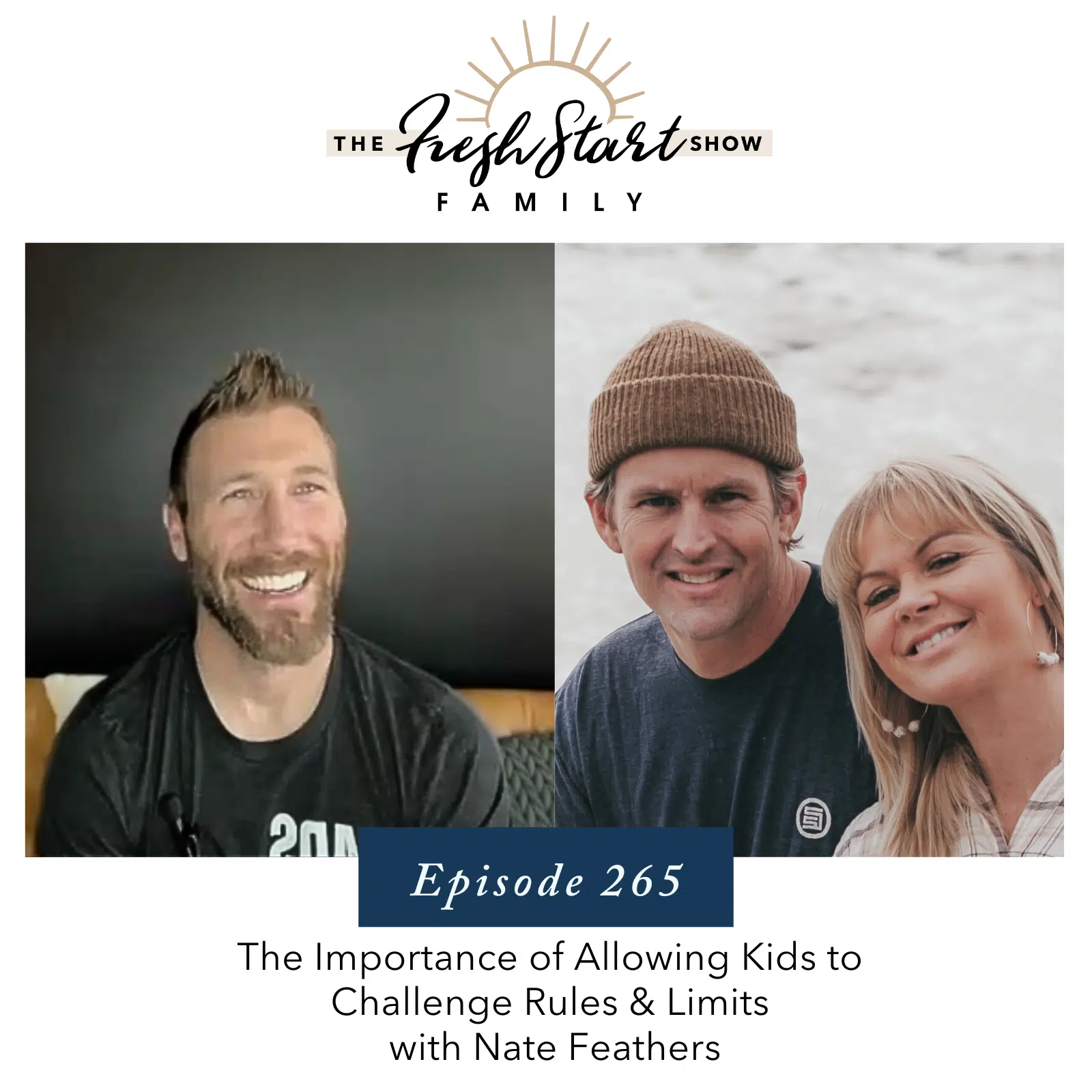
In this lively and inspiring episode of The Fresh Start Family Show, Wendy and Terry chat with Nate Feathers, the fun-loving dad behind the popular Instagram account Dads Don’t Babysit. Nate shares his incredible journey from a traditional upbringing and a career as a pastor to becoming a passionate advocate for conscious parenting. With humor and honesty, Nate opens up about raising five kids, navigating past regrets, and how those experiences shaped his unique approach to fatherhood.
Together, Wendy, Terry, and Nate dive into what it really means to lead by example, highlighting how self-discipline and intentional living can transform both parent and child. They discuss the power of modeling the behavior you hope to see in your kids, setting boundaries that are both firm and compassionate, and raising children who aren’t afraid to question the status quo. It’s a heartfelt, down-to-earth conversation filled with wisdom, laughs, and practical takeaways that will leave you feeling encouraged and ready to parent with purpose!
Are you ready for a LIVE & IN-PERSON immersive learning experience with me?
Join me in sunny San Diego, California for a learning experience like no other!

** There are very limited spots and they are filling up quick, so save your spot now!! I can’t wait to see you!
Episode Highlights:
- Conscious Parenting: Emphasizing respect and understanding over mere obedience helps develop more meaningful relationships with children.
- Self-Discipline as a Tool: Instilling and modeling self-discipline is crucial for teaching children how to navigate their own emotions and behaviors.
- Flexibility in Rules: Allowing children to question and understand the reasons behind rules can strengthen their critical thinking and ensure meaningful adherence.
- Challenging Traditional Norms: Fathers today are redefining involvement and emotional availability against outdated stereotypes.
- The Importance of Vulnerability: Sharing personal experiences, mistakes, and growth openly with children promotes a healthier family dynamic.
Resources Mentioned:
Follow Nate on Instagram
Check out Nate on TikTok
Email Nate [email protected]
Catch the full episode on YouTube!
Wendy, Terry & Nate’s IG Live
Not able to listen, or prefer to read along? Here’s the transcript!
0:00:02 – (Wendy): Well, hey there, families, and welcome to a new episode of the Fresh Start Family Show. We’re so happy you’re here. I’m your host, Wendy Snyder, positive parenting educator and family life coach. And today I’ve got my better half, Terry Snyder, with me. And also Nate Feathers, who is the voice behind Dads Don’t Babysit over on Instagram, and a father of five. And today we are going to be talking all about how we can set rules in our families that make sense. Welcome to the show, Nate.
0:00:33 – (Nate): Thank you so much. Glad to be here.
0:00:35 – (Wendy): We were just telling you a little bit before we started recording. But, Nate, seriously, we are so inspired by your work and also just so thankful. Like, thank you for being what we call in our community a rad dad who is just so willing to show up and change the story around fatherhood and what it means and raising children in just firm, kind ways with connection, prioritizing relationship. Like, just all the things you talk about so beautifully on your account, it’s just a big deal. And so we’re really thankful that you dedicate so much time to spreading light in the way that you do. And thanks again for being here.
0:01:18 – (Nate): Absolutely. Glad to do it.
0:01:20 – (Terry): Yeah. Yeah, thanks, Nate. There’s just, as I also was expressing too, there’s, you know, while there’s a lot of great dads out, out there, sometimes, like, you know, there’s this, like, lack of willingness to, like, put yourself out there or to, like, show a dad in progress or in progress of growing or just kind of working through things. You know, I, I, I think for some reason there’s this default attitude that dads should, like, have it all figured out. So thank you for being another dad that’s out there just, you know, getting messy, being vulnerable, sharing the journey, because I think, you know, it helps, it helps so many people out there. So, yeah, really, really stoked that you’re, you’re doing what you’re doing.
0:02:06 – (Nate): Thank you. Yeah, no, absolutely. I’m happy to do that. It’s, it’s one of those things where I, I used to be a pastor and I always felt like in the church, it always felt like the preacher guy was the guy who had it all together. And I don’t really feel like, I don’t really feel like that’s fair. So when I preached, I’d be like, look, I’m screwing up here. I’m screwing up here. Like, you know, so it just feels like it’s pretty natural for me to just turn around and talk about fatherhood. And be like, I don’t have it all. I mean, it’s hard on Instagram because you have 90 seconds to really give something out there.
0:02:35 – (Nate): Instagram can be that highlight reel, and I try really hard not to let it be. You know, I have these thoughts or whatever, and I toss them out there, and then. And then when I get on a podcast, I can. I can talk a little bit more about them and say, yeah, it’s stuff. I’m like, this is a great idea, and I’m trying to work on that. Or it came to me, and I thought, wow, I should use that. But at the same time, it doesn’t mean that it happens every single time. You know, I’m definitely falling on my face a lot and apologizing to my kids a lot.
0:03:04 – (Wendy): Yes. Well, okay. This is perfect, because I did not know that you used to be a pastor, so that’s rad. Let’s talk about your story, Nate, what brought you to here? I did your intro before we started so everyone could get to know you a little bit better. But tell us, in your words, how did you get here? Because you’re a dad of five, and I don’t think you’ve always done things like this, and you have a pastor background. So, like, how did you get here?
0:03:28 – (Wendy): Tell us your story. Tell us all the things so listeners can really get to know you.
0:03:31 – (Nate): Yeah, sure. It’s. I. I guess I would say there’s some darkness in there that. That you kind of. I. I’m okay with, just because when I come out the other side, I’m able to say, that was my darkness. This is where I lived, and this is why I. Like, this is why I am where I am. So I was previously married. Like, it’s almost like pastoral life, was a previous life. Married, and was working in the church for practically free.
0:03:55 – (Nate): And I just went through a really dark time of loneliness and sadness. I had two children by the time I was. At 24, I had my first. I’m 43 now, so he’s almost. He’ll be 20 this year, which is just. That’s insane. But. So at 26. 20. Yeah, 26. I had. By 26, I had two kids, and. And I was not really understanding how do I take care of all of this stuff. Like, I just felt like I had no idea what I was doing in. In life and in the church. The church didn’t feel. It felt like it was failing, things like that. So it went through a really dark time.
0:04:34 – (Nate): I actually ended up having an affair, which really broke our our relationship pretty hard there. And we kind of limped along for a little while, but in the midst of that, that got me kicked out of the church. I wasn’t allowed to go to the church. And that’s where all of my people were, right? That’s where, like, the friendships. You build all these relationships. And so we were a church inside of a large, a large, like, denomination.
0:04:57 – (Nate): And the denominational heads said, yeah, no, you can’t go there. And my own church was like, this is stupid. He should be here. Like, he’s part of us. But anyway, so I felt, like, very left out in the cold and things like that. And in that time frame, that’s. That was like, you know, there were times of wanting to. Wanting to end my own life. I had an insurance policy. Like, if I just do that, I mean, my family will be taken care of and I won’t have to worry about it. And rough times.
0:05:23 – (Nate): So we ended up. We ended up like. We. We ended up getting divorced. I got remarried, ended up having now three more children and a fourth on the way. So it’ll be six. I’ll have six by the end of February, I guess. And so this is like a very condensed version, but, you know, we got. We got married, had had our first kid. So that’s like number three. It. Like, life was changing there. But really the biggest change for me when it comes to being a dad was when my oldest went to college. That’s when it really.
0:05:59 – (Nate): I. I say it punched me in the face because it really was like, if you’ve ever been hit, like, a lot of guys that may hear this, they’d be like, yeah, like, you know, rocks you back. And you’re like, what is going on? That’s what happened to me. He. He went to college and I drove home. He’s. He only goes, like, 20 minutes away. But it’s a whole life, right? It’s. It’s not like he’s. It’s crazy because we were literally at one point going, go to Amsterdam, go to France. Like, figure something out. Like, get out. And then he’s like, I want to do music.
0:06:25 – (Nate): And we go, you should stay in Nashville. You know, like that.
0:06:28 – (Wendy): Stay in Nashville? Yes.
0:06:30 – (Nate): So he only goes, like, 20 minutes away. But, I mean, I know that even if I had gone 20 minutes away from my parents, I wasn’t going to be going home all the time. I would have been on campus doing things. And so I just realized I had one of those, like, your life flashes before your eyes only it was my. My child’s life. And it was just like, man, I could have done so much of that way better. I could have been way more relaxed. Like, why was I so upset about stuff? Why did I care about those things?
0:06:57 – (Nate): And not that I don’t have those moments now with the other littles, but I just felt to myself like, I regret a lot of his childhood. And one, I don’t want to regret the childhood for the rest of the other four and. And now five, when this one comes along. But I also thought, no man should feel this way. Like, I don’t want no dad should get to the end of his time having his children in the house and feel the way I feel right now. This is awful. So then I was like, I’m change, and I’m going to start sharing the way I feel about those changes and what that looks like for me. And so that’s kind of where all this came from.
0:07:31 – (Nate): And then resonated.
0:07:34 – (Terry): Well, what a blessing. I mean, to have so many opportunities now with the five and six, you’re like, you know, some people, they’re like. They have the two that are maybe close in age. They come and then they go, and then they’re like, oh, I don’t have any more chances. So that’s beautiful that you. That you’re able to now apply it to. More on the way. But.
0:07:54 – (Wendy): Yeah.
0:07:55 – (Terry): Wow, what a. It sounds like an. An epiphany. Like, big moment for you right there. You know, I’m sure that. That you.
0:08:05 – (Nate): You.
0:08:05 – (Terry): You called it regret, but, like, yeah. How did. How did you reset yourself? Or is it. Was it just kind of, you know, how did you unpack that and then apply it?
0:08:16 – (Wendy): Did you find a class where you, like, I’m gonna go get certified, or was this always just been in you? Because you are like. I don’t know if you’re a certified educator, but you are profoundly wise with all this work. So how did that look? Or did you just snap your fingers and you’re like, I’m done with that.
0:08:34 – (Nate): I was like, done? No, no, I think it really just started. I just really started asking, like, why do I do the things I do? Like, why do I get a. Like. And when guys ask me, like, how do I start? I. I just started saying, well, think about those times where you’re really frustrated with your kids. I know moms get that way and all that, but we dads kind of tend to get like. I feel like we get angry and then it comes out that way. Right. I don’t Know if moms can just hold it better or what. But I didn’t, I didn’t hold it. I mean, there were times where I just told my oldest this story. I don’t know if he remembered or not, but he’s probably three or four.
0:09:07 – (Nate): And I remember sitting there, he did something and I don’t know what it was like, I’ll. I’ll never remember, but I can see the whole scene. And I started just like breathing. And this is when he was little. So I was. And he looks at me, he’s like, daddy, why are you breathing like that? And I was like, because I am, I am trying not to hurt you, my man.
0:09:23 – (Terry): Yeah.
0:09:23 – (Wendy): Yeah.
0:09:23 – (Nate): And it’s those things where. Why was I so mad about whatever it was? Because now that I look back, I can’t even remember what he did. Right. And so a lot of times it’s me just kind of drawing back out of the situation and going, why do you care so much? You know, why do you. Why are you so hell bent on making them do it this way or getting your way? And just really starting to question my own self stuff.
0:09:49 – (Nate): And being able to do that in the midst of a, in the midst of the conversation or in the midst of it happening, I think is where the most difficulty is. And I attribute a lot of that to putting myself in stressful situations outside of being a dad. So heavy lifting, like doing things that I don’t really feel like doing and just going at it. So one of the, like, I do CrossFit, but I just love lifting heavy. And so in the mornings you spend doing something that, you know, I have plenty of times where before the timer starts, I feel this stress of like, can we just get started? I feel like I don’t even want to do this. I don’t want to be here.
0:10:25 – (Nate): And so putting myself under that kind of stress allows. I just feel like it allows your nervous system to handle some of that to where I can start pulling out a little, a little bit and say, okay, why am I, why am I doing this? Why am I responding this way and then coming back into the situation and making changes? And that’s just been like, that’s just been situational. So as I go, I just trying to learn as I go too.
0:10:49 – (Wendy): Yeah. And you probably just have read a lot of books, right? I’ve seen you do a real reading, like whole brain child speaking so perfectly to like the dads who think moms are like coddling their kids when they like connect like relationship wise emotionally, like in the triggered moment. So obviously, like, you had to have just started diving in, right? Because, again, you have a profound understanding of how this all works. And it’s not eas, in my experience, just to understand, like, how do you compassionately. Discipline versus punishment. I mean, it takes my members who are part of the frustrated experience, like, years to understand and to break the limiting beliefs. Especially for those who grew up in, like, more of the toxic evangelical circles. Right.
0:11:30 – (Wendy): Or what I’m now saying is unhealthy. Right? Like, there’s healthy circles and there’s unhealthy who just preach punishment and say, if you’re not. Like, we’ve had members. Who are they? We were just revisiting it today on a coaching call. They were. They share. We had a podcast where we interviewed someone about the most beautiful conversation around how to parent with the fruits of the spirit. And she shared it with her Bible study group, and they called a meeting because they thought she was experimenting with satanic, like, spirits.
0:12:02 – (Wendy): And it was just like, what is literally happening here? How is this possible? Right? So I’m just saying, like, it’s intense to, like, especially when you’ve been doing things for 20 years, to, like, then shift in. So I imagine you’ve had to have, like, gotten into some books or something. And then it sounds like it’s just a gift from God that you were blessed with this realization and you were able to shift. Or was there, like, therapy and stuff like that, too?
0:12:26 – (Nate): Well, I mean, I’ve gone through therapy in the. In the past for. For different things, I guess I do feel like they’re like. I feel like in my situation here, it kind of felt. I felt all alone in this idea as a guy. Right. And so sharing it, I. I knew I was going to get hit. I knew I was going to hit. Get hit by guys that might say, like, you’re a snowflake or this is why children are entitled. And so what’s funny is I made a post about, like, the kind of, like. Like, things from being a dad, like, being a father for, like, a veteran father. Right. Veteran advice from a father of five is what I called that.
0:13:08 – (Nate): And then. And that got some hits. And then I did one about, like, the cellular understanding of how a baby is attached to his mom and it’s different than how it is to a dad. That’s the one that really, like, caught on and gave me some. Brought on the. The following and things like that. And then I get. I did one about how I’m like, yeah, I don’t Think we should spank our kids? Coming from an evangelical background, being in the church, like touted as the way to handle things and like you said, punishment, I knew that that one would be very controversial.
0:13:39 – (Nate): And the moment I started getting like, you’re a snowflake and all that, I looked at my wife and I said, you know what, I’m on to something here. Something tells me that this is actually the way we should be going. And they’re fighting it because it’s the status quo. And so I leaned into that and that’s really what that, that’s what started that process. But then guys like, like Dr. Shefali showed up in my world and Gabor Mate showed up in my world and then, you know, like the whole brainchild. I think I had that book in my house and it just been on the shelf. I looked at it as like a gentle parenting and as a, as a, like Dudley guy. I was like, no, that’s not something I’m going to read or even do. And then I read it and I’m like, oh, wow, I should have read this a long time ago. You know.
0:14:25 – (Wendy): Brilliant.
0:14:26 – (Nate): Yeah. When the, when the student is ready, the teacher appears, I really feel like I made that choice to start trying to do things differently. And then all these people showed up in my life like through YouTube and Instagram. It was pretty crazy how that all came. And then, yeah, you know, you just start implementing that stuff and, and trying it out and seeing what happens and here we are.
0:14:49 – (Terry): Well, real quick, I love what you just said. Well, when the student is ready, the teacher appears. That like, that’s, that’s super cool. But even backing up though, like with that, that time that you were unpacking with your then 3 year old of like, you know, wondering why you would be so like out of sorts or so bothered or so quick to react. Like, we talk a lot about, and Wendy teaches a lot about this idea of like putting some space between the stimulus and the response so that it’s not just this like mousetrap, you know, like that, you know, when you can like separate those two things and you can almost like slow down time and actually like have like a moment to yourself.
0:15:38 – (Terry): Like you end up making a decision that’s more in line with yourself that you don’t have to clean up, you know, the mess later. And it’s, it’s amazing. If you actually have a little bit bit of time to talk to a guy about that, it’s like, which one feels more in control to you? The, the guy that’s, like, going to flip out immediately. Or the guy that actually can control himself and the dad that can actually sit there, see it for what it is, not, like, act in a way that. Where he’s just going to make a bigger mess.
0:16:10 – (Terry): It. It’s like, to me, all of these, like, naysayers and these, like, stereotypical dads, men’s men, whatever, you’re like, if you could really just, like, have their ear for a second, you’d be like, which one sounds, like, more in control to you? Which one sounds more calculated? Which one is true power to you, you know? Yeah, because I. I think that’s kind of the exciting part. Like, once you actually, like, get in there, maybe you feel a little bit of the backlash that you got, and then you’re just like, you know what? I’m doing this anyways. I don’t care what you say. And maybe you’re just not ready to hear it yet.
0:16:47 – (Nate): It’s totally true. And, you know, I. I used to fight, and one of. There are two types of fighters. There’s the guy that walks into, like, a bar, if you want to call it that, And. And he’s, like, brash, and he. And he’s looking for a fight, right? And usually he’s the loudmouth. Sometimes he’s really good, but usually he’s not all that great. He just. He’s a fighter and he wants to get in fights. And then there’s the guy that walks in that never says anything, and he’s probably the most dangerous man in the room.
0:17:11 – (Nate): And I always wanted to be that fighter. I wanted to not, like, I didn’t want it to be known that that’s what I could do. Because then you have the guy that wants to fight that’s going to start, like, egging it on. But it, like, it’s not just those fighters. If you talk to guys that have been to war, guys that do martial arts, like these really manly men, like, when you think about it, you’re like, that dude.
0:17:32 – (Nate): That’s a real dude. He’s the guy that’s going to be like, well, why wouldn’t we just, like, buy a drink and, like, calm it down and. And breathe? And they’re the guys that want the peace, not the guys that want to just bang real fast and get upset. So you’re ab. I think you’re totally right. I mean, it’s more discipline to pause calmly, look at the whole situation and go, how do I want to handle this based on who I am and what I believe?
0:17:57 – (Nate): Step back into the situation and use it. I think that that’s, that’s more disciplined and in my opinion, more, more manly, if you want to call it that. Because like you said, I love the word you use. It’s more calculated that, that hits dudes on all sorts of levels. And, and I think I agree with you there. That’s, that’s a, that’s. You said it. If, if you could pull them out of a situation and go, how do you think is the best way to handle this?
0:18:20 – (Nate): You know, which one is more controlled? Which one has more power? It’s that one. And so when people fight me on stuff, I’m just like, you know, I’m just coming back to my own self discipline is the best way to discipline my children. So they, they get the example of my own self discipline not just because I get up early and go to the gym or because I do X, Y and Z, or I work. It’s because they see me in certain situations, take a pause, breathe, and they go, hang on one second, let me, let me breathe. Just give me a second. And then come back into it.
0:18:48 – (Nate): That is an example of self discipline that they get to learn firsthand.
0:18:53 – (Wendy): Heck yeah. And that, I love it. That is like your chosen. I know our Instagram bios are like, chosen prop, like their precious property. You get two lines to tell people what you do. And one of yours is self discipline disciplines our children. And man, we are all about that here. We’ve been teaching it for a long, long time here at Fresh Start Family, but we actually got an opportunity to, like, live it out this year. I mean, we, we try our best to live it out in everything that we do as parents and everything we teach our students to do too.
0:19:21 – (Wendy): But this year we had a 15 year old. Our beautiful, strong willed 15 year old. We have two kids, 13 and 16 now. And just like every kid, like, she started experimenting a little bit with like, drugs and alcohol here and there. And it was like we were shocked. We were like, no, this can’t happen. Like our kid positive parenting family, like, no, right? And we looked at each other and we’re like, huh? Well, we’ve been drinking since we were, you know, 14 years old. And we learned very, very young. Like, that’s how you numb emotions. That’s like when you have a hard day or your parents suck or like, you know, you feel like your parents suck or you had a fight or school’s so uncomfortable or like you just start drinking, right? And so we realized at that time we were like, huh, that’s interesting. Do we have the self discipline for the life skill to go out in the world and be able to go to a wedding or vacation or a party and just be like, thrilled about the life without a numbing substance?
0:20:14 – (Terry): It felt a little hard.
0:20:15 – (Wendy): Or just a Tuesday that felt hard, or are we modeling that like, we need a substance? Wine. Mine was mine. His was beer. That, like, that’s what’s gonna make us chill after a long day or when we’re at a wedding, that’s what’s gonna be right. So we’re literally modeling for our kid. No. Like, if you go to a party, if you go to a hangout, like, this is just what you do. And then we’re like, you can’t do that. Right? And so we looked at each other and we’re like, let’s stop drinking. And so we did it. And we’re on a year now of no alcohol. And it feels just really good.
0:20:47 – (Wendy): Because let me tell you, that’s probably the most intense thing we’ve ever done as far as self discipline. And we did it together. And now we just feel so in integrity with not being a hypocrite when we’re trying to teach our kid a lesson. And we’re not perfect. We don’t live like that everywhere. But this one felt really dang good. And we feel like a million bucks now. But. But it just was like so pivotal to. To get to that place of fluency where you look at your kids misbehavior and you’re like, they are lacking self discipline, they’re lacking a life skill.
0:21:19 – (Wendy): And how has. How’s it. How are we modeling? Like, are we modeling it? Are we mod. Like, are we pros on that life skill or not? And then enter in the invitation for increased self discipline. And it’s like, that’s adulthood, right? Especially once you have kids and you’re influencing these little human souls. You’re like, it makes a big difference if they’re watching you, like, blow your lid or people please.
0:21:44 – (Wendy): Or hit when you’re telling them not to hit. Like, it just. They soak that in. And most people, I don’t think realize because nobody wants to hear this, but a lot of times they’re just little mirrors.
0:21:58 – (Nate): Yeah. Yeah. Well, and that’s the thing. They are little mirrors. And they’re all like, they’re reflecting what we’re. What we’re upset about is they’re reflecting back the disgusting parts of us that we don’t like, we don’t want to see it in them. You know, like if honestly my handle is dads don’t babysit. The other option was my kids cuss, because I do. And that was way too long of a handle. So it’s like, but when you hear a three year old say a word that they shouldn’t say, you’re like, oh, okay, you can’t say those words.
0:22:22 – (Nate): And then you have to step back and go, but I say those words and they start hearing that. And for our family, like, we’re like, words are words. It’s not that huge of a deal, obviously, and certain things in certain situations. So I’m trying to teach my children how to, how to have a vocabulary that fits the situation you’re in. But it’s one of those things where, yeah, you can’t expect. You know, I’ve said this before and I didn’t live it until recently when I started thinking about it. It’s one of those things where I was like, weird. If you want respectful kids, be respectful to them.
0:22:56 – (Nate): Right? Like, that’s the thing is when they feel the respect that they’re getting from you, they’re, they’re being told by our actions. This is how I live. Right? So I want respectful kids who are kind and, and, and night, like nice in like, as it’s, as it’s necessary. Well, then I have to be that respectful, kind, human to them. You know, if I want kids that are patient, I better learn patience. And they’re going to stretch that really thin, right?
0:23:26 – (Wendy): Yes. Which is so the way Jesus lived his life, let’s just say. But like, oh, it’s so good. I mean, there’s so much goodness there.
0:23:34 – (Terry): Yeah, it’s gosh, I think there was a huge aha moment for both of us. Like, I think the initial thing was like being challenged by parenting, but really it was an invitation for a lot of just growth in ourselves. I think a lot of parents like us started off with like, okay, whether it’s like a book or your friends telling you what to do, or you just doing what your parents did. And then some people dive even further, deeper into that and say, okay, what do I have to have my kid do to behave?
0:24:12 – (Terry): And we were blessed enough to get, you know, in some circles that were like all about like, hey, let’s work on you. And I think some people are really weirded out by that if they ever even get that invitation. But it was like us just saying yes to that and being like, huh, let’s, let’s see what that does. Because it really, they didn’t even want to just. They would. Didn’t even want to hear anything really about the kid other than just the basics. It was like, okay, cool, now let’s do a deep dive on you.
0:24:45 – (Terry): And once we did that, and it sounds like, I mean, you, you had that, that moment, you know, when you sent your, your first off to college where you’re just, okay, I’m gonna do the deep dive on myself. And it’s like. And, and that, that is just. That was just like the, the turning point. So, like, you know, any dads that are listening right now? You know, maybe it’s just out of curiosity, maybe your, your spouse, you know, put this, this podcast in your ear or whatever. It’s like, you know, just know that there’s an invitation out there that I can honestly say you, you will never regret. You know, you.
0:25:20 – (Terry): You’re you’re only going to deepen your relationships, clean things up. And even when you do, like, make a mistake, it’s like, oh, man, it can be like such a beautiful, like, bonding moment and air quotes lesson for your kids too. You know, it’s just. It just makes life that much fuller. That much. You know, I just think vulnerability is a strength, you know, so. And that’s something I never would have discovered had I had just like, stuck to like, what society tells you or what previous generations tell you or what a lot of books tell you or, you know, it’s like, you, you gotta just say yes to that invitation.
0:26:00 – (Terry): So, yeah, I.
0:26:04 – (Wendy): So good. And what I, What I love about your work, Nate, is after getting to know you a little bit, it’s like you, I feel like you make it so simple. You’re like, I didn’t really need, like, to be a student of the frustrated experience for years and years or have 17 therapy sessions or like, get a psychology degree to understand that if you want to teach your kids to be respectful, you respect them. If you want to teach your kids not to hit you, like, and I love that because, like, we, we. I feel like we have a little bit of like, like a psychology down approach here, right? So we’re like rooting people in the science and the psychology. And then it’s like, let me help you figure out how to do it. And you’re just like, no, you just do it. Like, I just decided I didn’t want to do it like that anymore.
0:26:50 – (Wendy): And now. And I’m sure there was a million moments where you’re like, crap, how does this work if I’m not going to spank or I’m not going to, but you just make it so simple and very like layman’s terms. And so I appreciate that about you and your perspective.
0:27:02 – (Terry): Well, I think, like, what I’m reading too is like, for anybody, it’s like, how tight are you holding on to your way of doing things or you’re all knowing this.
0:27:14 – (Nate): Yeah.
0:27:14 – (Terry): And I think the, the simplicity that, that Nate is displaying is like you were able just to like, let your grip go and say, okay, cool, blank sheet of paper with all of my knowledge and experience in the rearview mirror. But like, let’s literally. I mean, that’s why fresh start family is fresh start. It’s like if you can just let go, like, just stop holding on, like you’re your trajectory. Like, the growth can happen really quick if you just let go, you know?
0:27:46 – (Nate): Yeah, totally agree with that. Yeah, absolutely. I think that it, it comes back to that humility. Right. It just. If I’m just willing to know that I don’t know everything, then like, some of the things that, God, like, I’ll say to guys is like, okay, what’s the worst that can happen by becoming the best self? Right. What’s the worst that can happen if you strive to become the best human being? You could be like, worst case scenario, you’re just a better person.
0:28:10 – (Nate): Right. That’s the worst case scenario. Best case scenario, you have better relationships and your kids are watching you, so they start doing the same things you are, and they start off at a level that’s way above where you started off. That’s like, these are great things that can happen. So worst case scenario, you just get better. And I mean, honestly, I don’t think it stops there ever. You know, once you find discipline in one area, you start to learn how to have discipline in all the other areas of your life.
0:28:34 – (Nate): And so if you, you know, I, I tend to tell guys, get in the gym. That’s the first one. Because it’s like, you can have physical results and actually see a difference. Get in the gym and start eating. Eating. Right. And. And then we can go from there. But what’s going to happen is you’re going to find discipline there. And then you’ll find discipline in how you, how you parent as a dad. Because now it’s like, wait, I don’t want to do that. So I made the decision every morning to get up and go to the gym. Now I’m making a decision every day to, when I get into this situation, calmly try to enter it and see how it can be different. You know?
0:29:06 – (Terry): Yeah.
0:29:06 – (Wendy): So cool.
0:29:07 – (Terry): Yeah, I. I think inspiring somebody just to, like, live out their intention, clean up some of the things that might not be making you feel great about yourself, too. So, I mean, if you’re. If you’re feeling physically fit, you’re getting more oxygen in you and you’re eating right, you’re, like, more likely to be like, okay, I. I’m. I’m running at whatever my optimum is. And then you’re just that much more apt to make better decisions and take on the rest of your day and the challenges that come your way. So I think that’s a great start.
0:29:39 – (Terry): That’s a common language for guys. That’s awesome.
0:29:42 – (Wendy): Yeah. Two things. And then I want to touch on our. This beautiful conversation. We still have a subject to talk about, but we’re touching on it right now, but two things. So I just think it’s so cool how God will often use your worst pain, like, painful moment. Right. So it sounds like for you there was, like, the affair was this painful regret moment of just, like, you know, whatever, and then this feeling inside of you of regret.
0:30:09 – (Wendy): Like, it’s so beautiful how it can actually be used. I find that for me, like, some of my worst moments as a parent and I have many stories, but they were the. And like this last year when we decided to stop drinking, like, I had a profound healing moment with God where he was like, like, dude, boo. Like, lightning bolt to my heart of, like, all this realization of, like, the suffering that I was happening for me because of this substance, blah, blah, blah.
0:30:37 – (Wendy): But it’s just wild how much I see in my community, too, that the. What feels like the worst moments and the biggest mistakes or, like, for your story of, like, living with this idea that, like, you could have done 20 year or 18 years differently, like, it feels so nasty, but yet it has such power to actually change our direction if we allow God to use it in a way that, like, we are open and we, like, release the grip. And then all of a sudden, like, you just, like, it just feels like you can. You can pivot fast, but because it’s like, kind of experiencing the pain actually can, like, support us to. To make a change.
0:31:16 – (Wendy): So there’s that. And then second, Nate, I just want to say, what would you say to the guys, like, when you say, what’s the worst case scenario? You’re going to, like, make yourself better, but yet they’re, like, making myself better is not, like, weakening myself and buying this, like, permissive Kool Aid and woke juice. I don’t know, picturing like something like.
0:31:39 – (Nate): I like that actually. That’s awesome.
0:31:42 – (Wendy): But like, the guy that’s like, that’s not bettering myself. That’s like succumbing to culture. That’s like, I’m all for bettering myself, but this is like, this isn’t teaching my kids to respect. Like, what is your response? Just to settle some nervous systems in case that’s going on for any of the listeners before we get into just this, this quick discussion around setting rules that make sense.
0:32:05 – (Nate): Well, I think the wonderful, like, the sad perspective is that I had is that I was that guy. So, yeah, I can say that for the first 18 years of my fatherhood, that’s, that was me. So, like, gentle parenting. To this day, to hear the word gentle parenting, I’m like, oh, come on. Conscious parenting makes so much better sense to me.
0:32:24 – (Wendy): So I’m like, me too, me too.
0:32:26 – (Nate): It hits me in the. Feels better to where I’m like, that’s what we’re doing. We’re conscious. We’re conscious of, of their personhood, of their humanity, and we’re conscious of, of our own issues, right? So I guess when guys are like, yeah, I don’t, I don’t want to be weak. I’m like, okay, well, talk. Let’s talk about discipline then, right? Let’s talk about your own self discipline. You’re in the midst of a conversation with. Let’s, let’s take the kid out of it and put an adult there.
0:32:51 – (Nate): Are you gonna scream and yell at that person and like, threaten to spank them? That’s the weirdest concept on the planet, right? I’m sorry, you’re 20 years old. I’m gonna, I’m gonna spank your butt. That is so weird that that would be something to say. Or I’m gonna take your phone, like, what? You know, like, yes, it does it. Would it get me with my children? Does it get me an immediate response? It sure does. But let’s go back in time.
0:33:13 – (Nate): Think about when I was a kid. My, like, my thing is if I can go back and be 8 years old, right? I have an 8 year old and a 7 year old. If I can go back to when I was 8 and I’m being told, like, this is the way it is and you’re going to do what I say, I don’t like, whoever that is that’s telling me that it doesn’t matter that they’re my father or my mother. Like, if my boss is doing that to me right now at 43.
0:33:37 – (Nate): That guy can take a hike, right? Like that’s where, that’s how you know. So I’m not connected to that person. I’m not, I’m not, I’m. I don’t respect that person. And when I think about. And I, I did a reel on this, but I should probably like re up it. It’s like when I think about the guys that I respect right now, yeah, they’re hard nose, like, like. But they also have the things I want. So why don’t I become the guy that has the things that my children want so that they look to me for, you know, if I’ve got the finances or the body or the relationship, like all of those things. If I have all those things that are an exemplary status for them, like I want that my dad has that I become the example. I become the person, the go to example.
0:34:22 – (Nate): And I just, I don’t see that, I don’t see how you see that as weak, right? Being able to. And so it’s re. It’s restating or reframing the concept of patience. I think again, we can. I always. My background is the church, so I use it. But think about Jesus himself, right? If, if Jesus really was God in human form, that means that all the power that we understand that the universe and beyond has was in one human being.
0:34:50 – (Nate): So when they’re mocking him and he’s on the cross and like, well, come off, why don’t you come off the cross and prove that you’re messiah instead of like smiting everyone, which he could have done, could have called angels down from heaven and been like, did I? You need more proof? He could have done all that. He had what we call meekness. Now that word from what I understand in the Greek was like a sheathing of the sword. The idea there is you are the most badass person in the room and yet you’re the one who doesn’t draw the sword.
0:35:20 – (Nate): That’s power under control, right? And so like that’s. He’s the best example of that. So again, when I’m in evangelical circles, I’m like the, the, the best example we have is the Jesus you tout as the guy that’s the savior and all these things. And yet you’re the most. Like, I could, I could destroy my children physically, right? Like even my 20 year old or almost 20, I can destroy like if I wanted to, that I can do that.
0:35:48 – (Nate): I don’t want to do that. Why in the world would I want to do that, right? But they’ll push you to that point, right? They’ll be like, oh, my gosh, I’m gonna go crazy, Whatever.
0:35:56 – (Wendy): Yeah.
0:35:57 – (Nate): Again, as a parent having power like that, but then being under control, that is not a sign of weakness. It is a sign of power to be able to go, this is what I want to do, and this is what I can do, but I’m going to work with you because I don’t want to have that. The thing I want the most is on my deathbed, my children to come into that room and be like, this was like, we had the best life. Like, I want them to talk about all the good times and be able to. And. And honestly, I want them to want to be there.
0:36:27 – (Nate): Right? How many dads just don’t even think of that, right? We’re just, oh, get out of my hair, or get out of the way, or you’re in, like, all of these things. And what they’re doing is they’re just pushing. They’re pushing their kids away to a level where when their kid doesn’t want to be around them anymore, their kid will push them away. Right. That’s the last thing any dad wants. I mean, the most angry guy in the world is still going to say, well, when I die, I hope they’re at the. I want them there. Yeah, well, then do the things now that make them want to be there.
0:36:55 – (Nate): That is. There’s. I don’t see. You would have to explain to me how that’s weak.
0:37:02 – (Wendy): I love it. There’s that beautiful book. I’m not going to remember it right now, but it was like, the regrets of the dying. I want to say the book is. And, like, the number one regret they have people have on their deathbed was that they wish they would have lived a life true to themselves. Right? And so, like, really listening to what you just said, Nate, like, it’s. Of course that’s what we all want, but culture and conditioning and past generations who just didn’t have the same opportunity to learn what we’ve all learned these days.
0:37:32 – (Wendy): You know, they will challenge you to not believe in yourself, but that is just the way I want to live my life and the way I want to have relationship with my kids. So beautiful. Thank you for that. Okay. All right. So when it comes to setting rules that make sense, but how I actually found you was somehow the algorithm put up. Put up a video of you and your wife. I think it was your wife. I don’t think you have. Your wife looks very. How. How do you have a daughter do you have a daughter?
0:37:58 – (Nate): She’s 17. I have two daughters.
0:38:00 – (Wendy): 17.
0:38:00 – (Nate): Maybe her challenging the. Like, challenging the rules?
0:38:04 – (Wendy): Yes. Was it her?
0:38:05 – (Nate): Yeah, that was her. That’s my daughter.
0:38:07 – (Wendy): Oh, that’s your daughter. Okay, cool. Oh, she’s so cute. But you. You made this video about how you actually think it’s healthy for kids to, like, challenge the status quo and, like, be willing to, like, what I call bend with parameters when you feel like a rule might be outdated or need updating. So talk to us a little bit about this concept. And, I mean, we just had such a great conversation around everything, but when it comes to setting rules that make sense, like, tee us up with your thoughts on this and how you guys do it in. In your family.
0:38:39 – (Nate): Obviously, with the littles, it’s a little bit different, right? With little ones, you got to have parameters. And honestly, kids are just chaos wrapped in skin, right? So you. When you. If you don’t have. If you all have chaos outside, they kind of don’t feel safe. They’re like, where do I stop? Like, what’s the story? They have a hard time with that. So with little ones, you. You kind of need to have a lot more structure and a little bit more boundaries on that. I still think that you can get away with letting them ask why. I mean, that’s the ask constantly. It drives us nuts, right?
0:39:09 – (Nate): My. My grandfather just used to say, Z. And then we’d sit there and be like, what is he saying? Like, y, Z. Like, I don’t know why that was a thing, but that’s what my grand used to say to get us to shut up. But. And so I took that on. Or I would say, you know, but at the same time, for littles, if they’re asking why, give them the short answer. I’m not good at that. But give them the short answer of why. Well, because if you do this, you could get hurt. That’s what I’m worried about.
0:39:37 – (Nate): And then I also. I’ve been in sales for a long time, and the one thing that I learned, like, right off the bat is if you don’t ask, the answer is no, right? So with my kids, I try to teach them that, and it can be frustrating because they’ll ask a lot of questions, but at the same time, you know, them asking why or them trying to find the reason respectfully gives them the ability to negotiate, and then it also forces me to go, yeah, why is that my rule? Like, why am I saying that?
0:40:08 – (Nate): Plenty of times they’ve said, well, why not? Or why And I’m going, yeah, I don’t know why, go ahead. You know, and it just changes my. But it forces me to change, to at least ask what’s the reason behind that? And if it doesn’t have a good one, then I’m, I’m all for tossing it. If it’s not a good rule, you know, if it’s just not beneficial, or if it’s really just arbitrary, what’s the point of that?
0:40:30 – (Nate): But at the same time, as they get older, you got to broaden the fence, right? You gotta, you gotta give them more ability to ask questions. And you also have to keep. Like with teenagers. My daughter is a great example. Usually her question is not a very respectful why. It’s more of like a why, why? You know, and, you know, yeah, you know, you get. And so we got to work on that part of it. But having the ability to ask questions about the rules and to push against that, I don’t know, I think, I think you can get.
0:41:02 – (Nate): It puts them in a position to be able to always do that. And when we make them just do what it is we tell them to and follow the rules, that gives them the ability to be, in my opinion, oppressed by authoritary, authoritary positions. Right. Whether that’s their boss or, and I can go political on this, but the government or whatever else, any of those situations, if you’re not letting your kids ask why and you’re making them just automatically say, well, you’re the authority, I just do what you say.
0:41:33 – (Nate): You’re setting them up to do that when they’re older. Because again, you’ve built in these systems in their life of just doing what they’re told. And I find that that’s not, that’s not healthy. And honestly, no one ever changed the world by just doing what they were told.
0:41:49 – (Wendy): Boom. Yes. Mic drop. I love that. And I, I love. Also. And so a lot of our listeners have strong willed kids. That’s another. I don’t know if they ever mentioned that at the beginning of our interview to, to help you understand our community really good. But a lot of our listeners have strong willed kids. Right? So that’s our daughter, 16 now, very strong willed. That’s how we got into this work because the traditional stuff just never worked with her. Right. But, but like, I think when you set rules like this or create boundaries in your home like this, it, and it stretches you also to become very clear and have confidence in who you are. And a lot of us who are doing this type of work we are.
0:42:32 – (Wendy): We are black sheep. Like, you are doing life differently, right? And so when you teach your kids, like, we have like a no violent video games things in our house, and our kids hate it. Terrence, 13 now our little boy. And it’s like his whole world is like his friends. I mean, yes, he surfs and skates and all the things and he has friends, but it’s like, it seems like they all. That’s just their world, right? And so to be this different, like, kind of rainbow unicorn, you just have to have confidence, right? Like, and that’s just one example where we get to model for him. Like, hey, I know for you it’s not a big deal for us, this is why, like, this is why we’re so passionate about it. This is why we believe in this so deeply. And we’re not down with the pretend murder games or whatever, right? Like, but it gives you an opportunity to model for your kids when you answer why with confidence and without, like, frustration and anger or permissiveness, like, hey, one day I want you to believe in something and do something differently. I just had someone in my coaching program last week say, hey, my. I think it was a 13 year old. My 13 year old’s on this text thread and there’s all these boys and they’re saying, like, really bad stuff. Like, what do I do when my kids in, like, a bad.
0:43:43 – (Wendy): With a bad crew? Like, how do you support them to, like, either speak up or not take part? And it was like, the question of, like, well, how are you? What are you doing in your world to speak up and be outside of the circle or have a strong boundary around something and not engage? Like, are you asking your church to remove the, like, creepy Toxic Dobson books from the shelf? Like, are you speaking?
0:44:04 – (Wendy): Right? Like, are you explaining why? Right? So it just helps us, like, strengthen our ability to become confident in who we are, even when our kids don’t like it. So that’s just one thing I thought of as I was listening to you, because it’s intense. Like, a lot of people think this conscious parenting is, like, permissive parenting, right? But it’s actually, in my experience, people who are quite often holding stronger boundaries. Like, I know in our circle, like, yeah, we let our kids curse and we go to heavy metal shows and like, like, we’re front row. But, like, we don’t let our kids have iPhones till high school and play murder games. Like, we are really strict.
0:44:41 – (Wendy): We, like, are gnarly with our kid and her helmet on her E bike. Like, in Their circles, we say no a lot.
0:44:47 – (Terry): We say, people think, oh, that type of parenting is that, is that like everything’s. Yes, it’s like, no, actually, I think we say no more than, than most parents. But we also spend the time to, you know, when the why comes up, to unpack it, to talk about it. I mean, our daughter definitely likes to talk more at length than say, our son.
0:45:09 – (Wendy): It’s such a difference.
0:45:10 – (Terry): But, and it can be exhausting sometimes. And it was very evident from a young age. I was like, oh my gosh, this, this little girl with the pixie cut, three years old, she’s gonna sit here and hammer me on this and I better have a good reason. And she’s going to come back and she’s going to come back at it. But what I have realized over time is like, it’s a conversation. You know, so many families the, the my way or the highway or the like, or even the parents that don’t even know why and they just say that’s it.
0:45:41 – (Terry): There’s no conversation. And so like here they’re able to, through this asking why, they’re able to learn more about us. What maybe we’ve learned some stories from our past. And then sometimes the answer is like, oh, that’s just my thing. Yeah, why am I holding that over them? And then you have this moment of self discovery. You’re like, yeah, that doesn’t need to be our rule anymore. Or maybe I was holding on to that so, so tightly. Or you know what, my kid is way more equipped to handle that than I ever was.
0:46:13 – (Terry): So let him do it. You know, so I, I think it’s, it’s just, it’s just more relationship, it’s more opportunities to have a relationship when, when these rules do get challenged again, acknowledging fully, it’s exhausting sometimes. And depending on what time of day or what’s going on, you’re like, oh man, I don’t have it in me right now. This is going to take some. But you know, hang in there. Or, you know, if you can take care of yourself in a way to where like you’re, you’re more open to having these conversations at times a day when you’re not at your, your best, then, you know, I, I, you get to know each other better. And isn’t that, isn’t that what we’re here to do?
0:46:58 – (Nate): Yeah, I honestly think, I think that’s what’s great about it. But I also think that like, like less is more in this situation. Right? So, you know, I heard it said about friends, they’re like, I’d rather have four quarters than 100 pennies. And just meaning that I’d rather have four tight, close friends that I trust that are like, my ride or die than a hundred, like, followers on Instagram or what? Or fans or whatever you want to call it. And I find the older I get, the more, the less I want to be around a ton of people. Right. You know, when I was a. In college, I wanted to be in it, and there would be, like, people everywhere. And, you know, I knew everybody, and now I’m like, if I got one tight friend, I’m good. Like, let’s just, like, let that guy and I, we’re gonna go have a beer, and we’re gonna hang out, and that’s gonna be it, you know? Like.
0:47:41 – (Nate): And I feel like it’s the same idea for rules in your house, right? If your rules are more like principles, then you can, like. And I think that them asking why is actually finding the principle. Like, they don’t know they’re doing it, but you’re actually giving them the principle behind this particular, like, law in the house or rule. And. And if you. If you can talk about family principles and family values, like, you know, we treat people with respect.
0:48:08 – (Nate): And then when you. When they’re not doing that, you can be like, hey, this is a rule in our house. Right? This is one of our values. And so you’re really teaching them the values and the principles of life. And I think that there’s, like. I mean, let’s just. I don’t have them all, like, written down, but let’s just say there’s five instead of 50, right? Like, I feel like the. My way or the highway. And that style parenting, there’s so many rules, and they’re always navigating, like, what.
0:48:35 – (Nate): Why is this the rule? I don’t understand what’s happening. And it probably is.
0:48:38 – (Wendy): I said so.
0:48:39 – (Nate): Exactly. And I hate that so much. Like, imagine if you had a boss that. That’s what they said. Hey, you have to do this. You have to do this. Because I said so. Like, the moment that happens, right? Like, your kid’s not gonna like you, you’re not gonna like you, and you don’t like your boss for saying that. So it. It’s. I guess it comes back to that. It’s. How do I. How do I find what the principle is inside that?
0:48:58 – (Nate): And then. And then we work from those principles as opposed to, you know, making up rules in the midst because my kids making me annoyed or Driving me nuts or because I said so, you know, it’s so true.
0:49:10 – (Wendy): And, like, just knowing that it’s not weak to bend with parameters sometimes, right? So we actually, just because it’s recent, like, it’s up in my mind of. We decided. Our kids have been hounding us to have these, like, games in the house for a while. One of them’s Fortnite, right? Seems so innocent. But to us, our family, it’s a big deal, right? Like, we just don’t. We’re just not down with the pretend murder.
0:49:29 – (Wendy): And. And so we decided to bend. They made a case. They made a presentation before holiday break, and they said, can we please just download this free version? And we were like, you know what? We’re willing to bend with parameters. I would love to see it again. Just so. And after, you know, they had it for, like, seven days or something. And I witnessed it, and I was just around constantly that, like, this. The machine gun blowing down people. I was like, so that was.
0:49:54 – (Wendy): We tried that. And that’s getting deleted the day, you know, and then they negotiate.
0:49:58 – (Terry): Well, they knew it was temporary.
0:49:59 – (Wendy): Yeah, they did. But still, it was so beautiful for me to, like, be really grounded in what I believe in. And I was like, oh, beautiful. This has shown me why. Because before I was, there was times when I was like, oh, am I just being crazy? Like, you know, when you set, like, when you have firm rules or when you’re, like, outside of the. The norm, like, with the iPhone. Not till high school. Like, there have been many times where I’m like, are we being too gnarly? Are we torturing this kid? And then you get in touch with, like, why you really believe in something.
0:50:28 – (Wendy): That’s just an example of, like, I don’t feel weak because I caved to that over holiday break, and now it’s gone, and I feel more rooted in, like, my why, right? So, like, sometimes being having, like, fluid fluidity, like, helps you just understand, like, what is really important to me and what’s not. And I always say to parents, like, when. If you decide to bend with parameters, let them know, like, let’s try it out.
0:50:54 – (Wendy): And should this later bedtime, like, not work so well? Or if you’re so exhausted in the morning and you can’t wake up, then we’ll pull it back again and we’ll just keep. We’ll just keep figuring it out, but cool. We can push bedtime till nine. And again, like, should it not be go the way we want it to, we’ll pull it back to eight. So you still have that like, authority. Right? Like you, you still are the firm, kind leader of your home. You don’t become permissive, but there’s just beauty in the fluidity and being willing to be proved maybe that your kids have a good case that you hadn’t considered or something before. But in our experience, there’s a lot where they, they do, like, they do convince us to bend with parameters. And then there’s a lot of cases where it’s just like it’s not going to happen. I mean, all of our stories now are like teenagers. But just last week we were skiing and my daughter was really upset that I still wouldn’t let her go into the room alone and scroll social media.
0:51:51 – (Wendy): And so it was like an hour, hour long conversation. It was intense.
0:51:56 – (Nate): Yeah.
0:51:57 – (Wendy): And it was just in that moment.
0:51:58 – (Terry): I. Ups and downs and twists and turns and tears and.
0:52:03 – (Nate): Yeah.
0:52:04 – (Terry): Yeah. But it was like I was down at the, by the fire with my son. Just like, I wonder when they’re going to be done.
0:52:12 – (Wendy): And I was pissed. I honestly was pissed. As I went to bed. I was like, dang it. Like, I didn’t want to spend my last night at the, the cabin doing that. And then I woke up in the morning and I was like, oh, God, I’m so thankful.
0:52:24 – (Nate): Yeah.
0:52:25 – (Wendy): That I didn’t just rush that and tell her to do what I freaking say or else. Or expect instant obedience. Like, I love this kid more than anything that she challenges the hell out of everything. Like, I, I told her, I was like, please don’t ever change. Please don’t ever change. And the answer is still no. Here is why. One day you will thank me. I promise you. If you want to scroll, come lay down on the couch. And.
0:52:48 – (Wendy): And so it’s just worth it. It’s all worth it. Right? Like, it may seem so triggering in the moment and. But when you, when you move through life in this way as a parent and set rules up like this and put relationship at the forefront of your parenting walk, the long term benefits are just so amazing. So, Nate, thank you so much for being here with us today. What an awesome conversation. If you are ever in SoCal, please look us up. We’d love to take you out to lunch or teach you how to surf or something.
0:53:19 – (Wendy): But thank you for being here. Please tell listeners where they can come find you and all that good stuff if they want to check out your work more.
0:53:29 – (Nate): Absolutely. So best place to find me is at Dads don’t babysit on Instagram. I have Started some stuff on TikTok. It’s very similar, or it’s some stuff like that, but just trying to get out, like branch out. And then Nate at Dads Don’t Babysit TV is my email. If people have questions or if they want to connect with me there, they can. Working on getting the website up and doing some other things I’ve been writing.
0:53:52 – (Nate): So a book should be coming out hopefully this year and then. Yes. Yeah. Working on that whole concept of reprogramming our, like, our fatherhood and how we, like, basically my. My journey from what I used to think to what I think and kind of coming from that concept of what my default programs were and why I did what I did and then how I started to, like, change the story. So that’s coming out. That’ll be out this year, so that’ll be a new one.
0:54:19 – (Wendy): That is amazing. And tell us just real quick, I forgot to ask you what’s. What’s the. Dads don’t babysit. Does that mean, like, no, we’re in it for everything. We’re not just babysitting when mom wants to get her nails done or something. Is that. Or what is it? What is the story?
0:54:31 – (Nate): That is where it came from. A friend of mine was on the phone with me and we were doing some kind of meeting. I don’t even remember what it was for, but he had just recently had a baby. It was his first. And so he had his newborn, like, strapped to him or somehow there’s. And he’s like, hey, man, if you hear the baby, I’m babysitting. And I said, before we go any further, I think I was a father of four by that point. I was like, you just need to know that you are not babysitting. You are being a dad. Like, this is part of fatherhood.
0:54:56 – (Nate): I was like, dude, dads don’t babysit us now. We don’t do that. And. And then like, for me, it just kind of, as. As this kind of worked out, it just tended to be what I. From there that. That’s kind of been the mantra for me is like, yeah, you don’t. You don’t babysit. You don’t. You don’t help out around the house. I know I just put one of those up and on Instagram. But it’s like, I don’t help out. It’s my house. Why would I be helping? Right?
0:55:19 – (Nate): I’m doing. I’m living. So I’m. I’m part of it. I’m. I’m in it for the. For the whole deal, so.
0:55:25 – (Wendy): Amen, brother. Oh, amazing. All right. Well, thanks so much, listeners, for being here today with us. Make sure you go check out all of Nate’s incredible stuff, get his book when it comes out. Nate, thanks again for being here.
0:55:40 – (Nate): Thank you.