

Is step-parenting feeling harder than you expected? You’re not alone — and you’re not doing it wrong.
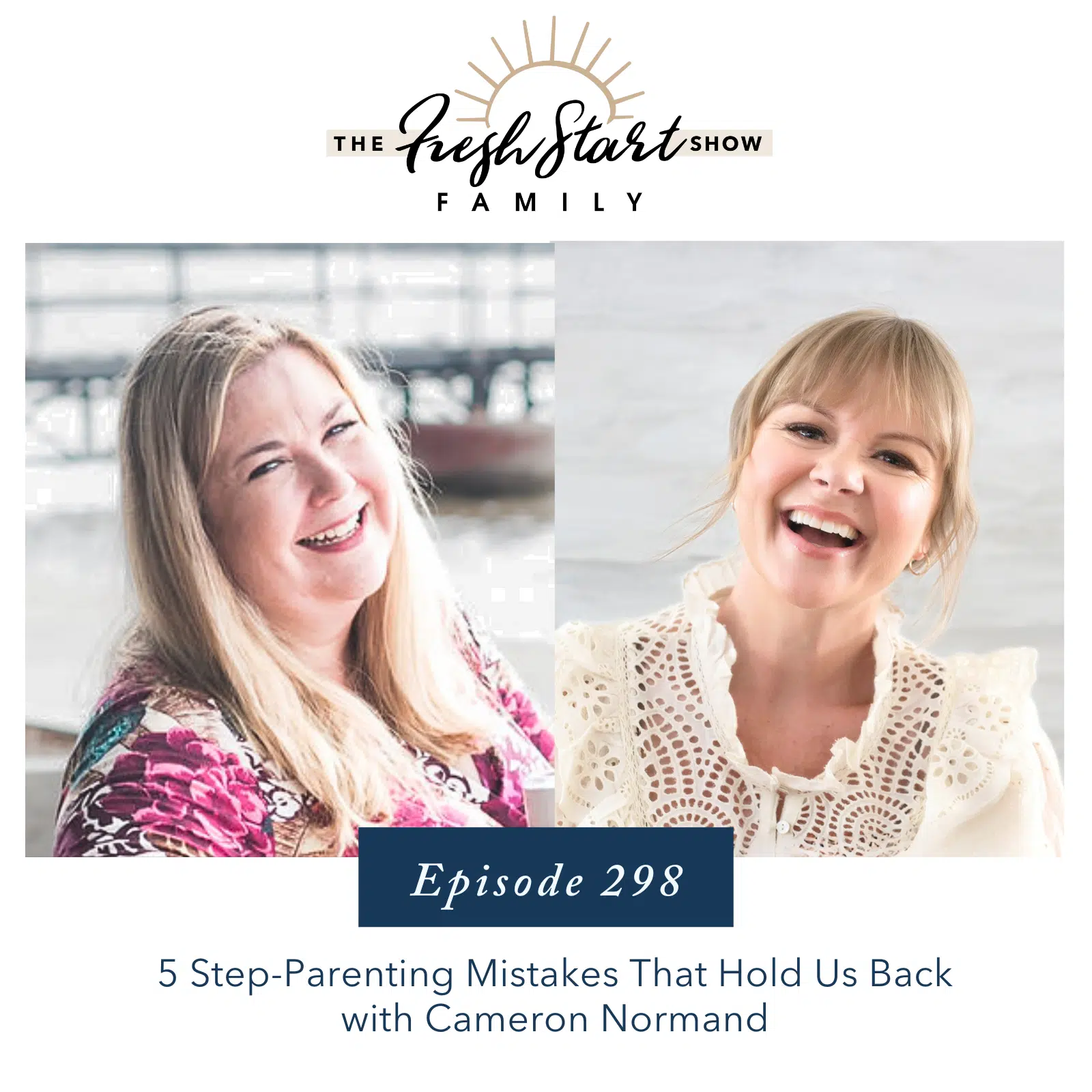
In this heartfelt and practical episode, Wendy talks with Cameron Normand, founder of Step Family Solutions and host of The Stepmom Diaries, about the five most common mistakes stepparents make — and what to do instead.
Drawing from her own experience as a stepmom of four (including one with special needs) and years of coaching stepfamilies, Cameron shares real-world tools for building connection, setting boundaries, and finding peace in the beautiful chaos of blended family life.
Want to learn how to escape a punishment mindset?
This free bundle comes with an extensive learning guide & workshop with me, where I’ll teach you ways to build a strong, compassionate, FIRM & effective discipline toolkit that works with kids of ALL ages!

Inside this FREE learning bundle, I’ll teach you:
- Methods to build intrinsic self-control muscles
- Strategies that unite you
- The importance of self-calming
- Natural Consequences
- Logical Consequences
- Creative Problem Solving Methods
Grab your free bundle & start learning today!
Episode Highlights:
- Perfection isn’t the goal—connection is. Trying to be the “perfect” stepparent only leads to burnout. Your stepkids don’t need a superhero; they need your authentic, calm, and consistent presence.
- Connection before correction works best. Let the biological parent take the lead on discipline early on, while you focus on building trust, empathy, and relationship with your stepchildren.
- Boundaries are acts of love and self-care. Healthy limits—whether around time, space, or communication—protect your peace and model emotional maturity for your family.
- You can’t control everything—and that’s freeing. Learning to focus on your “circle of control” (your reactions, tone, and choices) instead of what others say or do helps reduce stress and resentment.
- Stepfamilies are not first families—and that’s okay. They grow differently, with unique rhythms and bonds. Building small, consistent positive memories over time creates lasting connection and trust.
- Avoid loyalty binds by never criticizing the other parent. Kids naturally feel torn between households; speaking respectfully (or staying quiet) helps them feel safe and loved by all sides.
- You don’t have to do this alone. Coaching, therapy, and community support help you navigate complex dynamics and remind you that you’re not “failing”—you’re learning.
- Healing old patterns brings peace to the present. When perfectionism or control show up, it’s often a signal for deeper healing. Growth in yourself creates growth in your family.
Resources Mentioned:
Find Cameron on Instagram
Cameron’s website
Cameron’s Podcast The Stepmom Diaries
Wendy on The Stepmom Diaries Podcast
Grab Cameron’s freebie – Smooth Talking: 10 Essential Scripts for Stepmoms
Catch the full episode on YouTube!
Unable to listen or prefer to read along? Here’s the transcript!
Wendy (00:03.928)
Hello families and welcome to a new episode. I’m so happy to be here today with Cameron Normand from Step Family Solutions. Welcome to the show, Cameron.
Cameron (00:13.255)
Yes, thank you. I’m so happy to be here.
Wendy (00:16.632)
Yes, I am happy to have you. We have many, many parents in our community that are step parents. So I’m excited to glean your wisdom and hear you speak today about the five most common mistakes that hold us back for step parents. So before we get into that, will you please share with us why you became passionate about this subject and helping families in this capacity? I would love to hear your story.
Cameron (00:45.749)
Yes, so I got married at 41.
I had built a big career in Washington DC and lots of friends and all that kind of stuff and I kind of just hadn’t met the right person and figured, you know, I have a great life. This is where I’m supposed to be. And in comes my husband who disrupted it all and brought four kids, one with special needs. And we met and got engaged, I want to say less than three months later. And you know, when you know, you know, and we both knew.
I had been a stepdaughter since I was, let’s see, my parents. So was about, I guess, eight or nine. And so I kind of felt like I knew what to expect as a stepmom. I certainly knew the things that I didn’t want to do or the things that I wanted to do differently.
I got into it and I’m a lawyer by training. I’ve been a lobbyist for many years. I’m reasonably smart and educated and I figured, you know, I can figure this out.
And I got into it and realized, no, this is much different than I thought it was gonna be and much more difficult and much more chaotic and all of the things. And I just did not anticipate the chaos and the drama and all the stuff. And so I started looking for resources and they’re pretty thin on the ground. And so I started doing research and
Wendy (02:16.301)
Mm.
Cameron (02:21.239)
ended up getting certified as a step-family coach largely just to understand our dynamic and figure out why I couldn’t make it work.
And then I realized that if I was having this much trouble, other women out there had to be having this much trouble too. And, know, of course you get online and they are, they’re really challenged and the resources, there are more there now, but there still are not a ton. And so I started coaching and I sort of started building this business, started a podcast and ended up leaving politics, um, about two years ago to kind of build this thing that I’ve got. And now I train.
step-family coaches.
And I’m in the process of getting my master’s in counseling to kind of supplement all of the stuff that I’ve been doing. But it has been a crazy ride and one that I feel very passionate about because I just, think that joining a family as a stepmom, as a stepparent really, is one of the most difficult things that you can do that you don’t realize is going to be one of the most difficult things that you’re going to do. And so
even if I can help one person make it a little easier and be a little less hard on themselves, then I feel like I’ve done my job. So that’s kind of how I got here.
Wendy (03:42.389)
How beautiful, Cameron. my goodness. And how old were your step kiddos when you got married?
Cameron (03:49.846)
Yeah, so when we got married, they ranged from 8 to 14. 8, 10, 12, and 14, if I get that right. Yeah.
Wendy (03:55.213)
Right? Yeah, that’s a lot.
Wendy (04:03.039)
amazing and how long has that been now? How long have you been married?
Cameron (04:07.753)
Well, we just two days ago, two days of this recording, celebrated our eighth wedding anniversary. So we have been, we’ve known each other for nine years, been married for eight. And, and it, you know, it has, it has not been totally smooth sailing. Like there’s been a lot of craziness. and I always, I always say that it’s, it’s a good thing that I put all of my experience into helping other stepmoms because there are very few things that they can bring to me that I
Wendy (04:13.452)
No.
Wendy (04:17.751)
Congratulations!
Cameron (04:37.687)
have not dealt with in my own life.
Wendy (04:39.369)
Mm. Yes. And isn’t that such an important part of being a coach or someone who is holding community containers to know that there is no perfection, which we’re going to talk about here in a second. But the just knowing that you’re working with someone who has been through it, right? That is so important. It just makes me think of like,
Cameron (04:52.169)
Yes.
Wendy (05:01.803)
totally different, like just finding that community is so important. My sweet little cousin, who’s more like a daughter to me, she’s like a daughter’s sister. She had a stillborn, a full term stillborn this last January. And it was the most heartbreaking thing that’s ever happened in our family and supporting her and just being there for her. But when she found the community of people who have been through this and now that she’s like actively in her therapy search.
Cameron (05:12.483)
that’s so hard.
Wendy (05:28.405)
She really wants a therapist that is not just trauma informed, but a lost mom particular, because there’s just something different when you know you’re working with someone that really has, like you said, there’s not much they could bring to you that you haven’t been through yourself. And so that just means so, so much. So talk to us about, yeah.
Cameron (05:33.459)
Yeah.
Cameron (05:44.918)
It does. And yeah, sorry to interrupt. I just was going to say, I think, um,
One of the things that I hear the most from stepmoms that find me when they will explain how they’re feeling and then we’ll start talking about it and they’re like, oh, it just feels so good to know that I’m not crazy. Like I’ve been feeling like so alone in all of this and it’s just so nice to have somebody that like understands what I’m going through. You know, I mean, it really having that community of other people that have been in the trenches like that, it really makes a difference no matter what it is you’re going through.
Wendy (06:19.383)
Yes, absolutely. OK, well, let’s start with this first point of ours today, this first mistake that step parents make that really hold them back from probably feeling like they’re thriving as a step parent. But number one is pressuring yourself to be the perfect step parent. Spoiler alert, it’s an impossible standard. Talk to us about that.
Cameron (06:40.649)
Yes. Yeah, this one I learned the hard way.
Yeah, when I when I got married, I mean, know, you hear all the time, you’ve got your instant family. And, you know, I was really excited. I was an only child. I had always wanted siblings. I was so excited to have a big family, you know. And so I got to work. I mean, I had dinner on the table every night and made these, you know, elaborate casseroles and other stuff and holiday dinners and birthday parties, you know, that would make Martha Stewart swoon. I mean, I was like in it and I was
killing myself. And my husband finally was like, you know, the kids don’t expect this, right? Like, they’re happy with like a store bought cake and, you know, some streamers like you do. You don’t have to do this. Like this is this is insane. And I think part of the problem, you know, coming in as a step parent, you’re so sensitive about your role. And there’s so much there’s so much societal pressure there, right? Like they
Disney, Evil Stepmom and all this stuff that you know there’s sort of this feeling especially with stepmoms that you kind of have to come in and be this like super mom and you end up just burning out and it’s it’s not a great place to be and I think a lot of times stepmoms in particular also feel like particularly if there’s a high conflict dynamic with the ex or you know if she’s particularly flawed or
Wendy (07:50.765)
Yeah.
Wendy (07:58.692)
Mmm, really?
Cameron (08:17.417)
whatever they feel like they need to come in and kind of be the parent that the kids deserve you know because maybe they see some parenting deficiencies that the kids aren’t getting. No, not our role and I…
Wendy (08:30.167)
Mm. Yes, thank you, amen.
Cameron (08:33.237)
Yeah, I always you know when I when I work with stepmoms we kind of have a conversation about like well Let’s let’s talk about what your role is and it’s not to be perfect. It’s to be you right like You’re a partner fell in love with you for a reason these kids are gonna love you for those same reasons You do not have to come in and make up for what anybody else has done or not done
And nobody else is out there trying to be perfect. Every mom I know kills themselves. Like you don’t have to do that, you know. It’s it’s a standard you’re never going to meet. And I think especially for those of us that may be slightly type A, it can be really grueling and it can add to already feeling alone in this role, already feeling.
Wendy (09:05.355)
Yeah, absolutely.
Cameron (09:24.669)
or questioning whether you’re going to measure up, it’s just too much pressure and it’s not sustainable for anybody.
Wendy (09:30.497)
Yes.
Absolutely. Yeah. And what’s so interesting is I’ve learned over the years that perfectionism is often associated with shame, right? Like I should be better. It’s like them. always say that like perfectionism or shame loves perfectionism because perfectionism quiets shame. And so it’s like, if you find yourself like thinking that you need to be perfect or have it all figured out, or I do want to address that.
Cameron (09:44.85)
Absolutely.
Wendy (10:01.709)
that part of the flawed parent here, the flawed other parent in a second. But it could be a signal that there’s something probably deeper within you that is looking to be healed. Because I think all of our children, stepchildren or regular kiddos, they all can be our greatest teachers if we accept the invitation into the healing that they point out. Some more than others are really good at just
Cameron (10:13.385)
Mm-hmm
Wendy (10:31.553)
helping us feel triggered or whatever it may be. But a lot of times, there’s such a deeper invitation into healing if we will listen and see. And if you find yourself really thinking that you need to do it all and make up for anything, then maybe that’s an invitation to look at that. Because for me, was, it took me about five years, even probably longer, to unravel some deep patterns of shame within me that I didn’t realize I had till probably like,
Cameron (10:50.1)
Yeah.
Wendy (11:00.109)
pretty late in my self-discovery journey that’s been 14 years.
Cameron (11:03.925)
Totally. And I think there are lot of insecurities that come with being a stepmom too. And I think that that strive for perfection, there’s a lot of compensation there, right? Like we’re, we’re nervous about being accepted into this new family. We already feel a little bit like an outsider. We’re nervous that, you know, it’s interesting. A lot of times mom is nervous about stepmom coming in because she’s afraid she’s going to be replaced. And most times stepmom’s not concerning about,
about replacing mom, she’s concerned about just being liked. You know, are the kids going to like me? Am I going to fit into this new family? And all of that means she ends up working extra hard and killing herself in ways that she just doesn’t have to.
Wendy (11:52.044)
Yeah. And what’s so interesting is I imagine you help parents that go, step parents that go one way or another, because I’ve seen this go both ways, both in my own personal experience, knowing, loving people, and also within my community of students. you know, this like trying to appease, please, like be this like wonderful everything.
And then sometimes you see it go in the opposite way of like, it really is like high control, like, whoa, I’ve seen it really play out with that. And I know the step parent community probably hates this, but that evil stepmom kind of scenario, I’ve literally seen that kind of play out where I’m like, whoa, this is so heartbreaking. What is happening here? And it creates so much division and harm.
Cameron (12:25.521)
Mm-hmm.
Wendy (12:48.597)
with the kids and then there seems to be, and tell me how you address this because it seems to be one of the mistakes too, we don’t have on our list today, but I do want to hear your thoughts, is this idea that you think you have to constantly be addressing the other parent’s flaws and then making up for it. It is so hard to witness someone do that. And I have witnessed someone do that for a long time. And it’s just heartbreaking to see the results of that because it doesn’t work.
So speak to that a little bit. Is that just a personality thing when you become a step-parent? Some people are going to go to the more pleasing or trying to over give themselves, and then some people go to the more control and trying to make up for the perceived flaws of the other parent.
Cameron (13:36.328)
It’s interesting. mean, control itself is an interesting issue in the step family because for stepmoms, there’s so much in their new life that’s out of their control, right? Like where they live, they probably, you know, if they’re splitting custody, they’ve got to live in the school district or close to the kids’ moms. So they have very little control over that. When they vacation, if they’ve got to consider custody agreements and school breaks, you know, that’s out of their control. mean, there just a lot of things that maybe they’re used to controlling and
Wendy (13:40.641)
Yeah.
Wendy (14:04.365)
Mmm.
Cameron (14:06.231)
in their life that now are out of their control. And so, you know, that kind of adds to the dynamic in terms of, you know, them sort of trying to step in that actually goes to, I mean, it goes to something you work a lot on around, which is discipline. And it’s, it’s sort of this idea that
Wendy (14:08.802)
Yeah.
Cameron (14:28.533)
So many spouses when they marry someone and bring someone into the situation and they’ve got kids, they’re looking for a parenting partner, right? Like they, and my husband and I went through this too. He wanted a full and equal parenting partner and I was ready to do it. I sort of assumed that I needed to step into that role. Well, how does that play out?
when you’re a quote, big air quotes here for those listening, full and equal parenting partner. A lot of times the stepmom can step into doing a bunch of discipline that isn’t going to go well. And by discipline, I mean enforcing consequences.
Wendy (14:57.836)
Yeah.
Cameron (15:16.209)
that something that step parents need to really, really shy away from, they can have lots of really productive conversations. And I’ll tell you kind of one of the ways that we dealt with this. But if they start engaging in discipline, when before they are bonded with the stepchild,
that stepchild is going to reject, reject, reject. It’s going to make the dynamic worse and worse. And their very well-meaning intent of stepping in to help parenting is to help parent is going to blow up in their face. And a lot of times it’s not necessarily that they’re trying to antagonize the ex-spouse. They may be trying to make up for perceived deficiencies, but it’s
I think more often than not, they’re trying to kind of step up and be a partner to their person. What I have found over time has been, and research shows this too, has been a nice role for a stepparent is instead of getting super involved in doling out consequences,
Wendy (16:13.27)
interesting.
Cameron (16:29.127)
in our house and I did not start out this way I should say I made all these mistakes and then go back and correct right.
Wendy (16:35.5)
Yes.
Cameron (16:40.049)
what I found was very effective is if one of the kids did something and there was a consequence, you my husband would handle that and then I would go in after and you know, knock on the door. Hey, how you doing? Hey, how was that conversation? That it must be tough to hear. How are you feeling? And just have a conversation with them.
Wendy (17:00.269)
That’s beautiful Cameron.
Cameron (17:05.329)
not necessarily as a friend, but not really as a parent, more as sort of an other adult person in their life that they can talk to, they may not want to open up to you, that may not work the first time, but it, it gets you out of feeling like you have to pile on, and that you have to be this, you know, strict.
you know, disciplinarian or whatever it is in every family dynamic, how they deal with consequences is different. But Patricia Pappernow, who’s one of the top clinicians and researchers in this area, talks about connection before correction.
And so really, as a step parent, instead of focusing on being the parent that maybe you feel like the ex isn’t, or instead of focusing on being the quote, parenting partner with your spouse, you should be focusing on really building that relationship with your new stepkids, really being an additional adult in their life that they can have a relationship with and
Wendy (17:47.927)
Heck yeah.
Cameron (18:17.751)
I always told my stepkids, you know, the cool thing about us being in this family together is I’m not your mom or your dad.
And you and I get to figure out what our relationship looks like. I don’t have to be like a parent, like we get to figure that out. And it doesn’t have to look the same as your brother and sisters either, by the way, like it’s different, you know. And I think that is a really lovely way to kind of engage them in, hey, let’s figure this out together. You know?
Wendy (18:50.771)
Yeah. that just feels so healthy and beautiful, Cameron. Because yeah, yeah, when I’ve seen it go the other way, it is like, I think sometimes as you said, if you come in as this like strict disciplinarian, which we don’t recommend for anybody, any parent, you know what I teach about compassionate discipline, but let alone let alone a step parent, but then to
Cameron (19:08.243)
Yeah.
Wendy (19:14.637)
to like I’ve also seen yes, some kids will reject that and they’ll rebel, but then I’ve seen kids that are more of the people pleaser type. And so they do become more quiet. And yes, they rebel, they reject it, but they kind of like push it down. And then as soon as they are 18, they are gone so far away that they want nothing to do with that side of the family. And that’s heartbreaking to watch and to have, you know, I’ve seen people just have zero awareness around that. So.
Cameron (19:36.636)
Mm-hmm.
Wendy (19:43.446)
Yeah, and so it is interesting when you have that other parent in the picture. You know, I’ve seen that, like, if there is any type of pointing out flaws in front of the kid, it seems to also correspond with, like, heavy disciplinarian-type people who fall into that. But would you agree that that is a mistake to talk negatively about the other parent?
Cameron (20:05.37)
my gosh.
Wendy (20:08.001)
For some reason, that’s not on our list. I must have missed that today. it feels like almost the number one thing. Don’t ever, ever, ever do that, right? Yeah.
Cameron (20:14.661)
It is huge, yes, and you know, it’s hard. There are a lot of the women that find me are in…
these really difficult circumstances that their spouse’s ex is very high conflict and just does all kinds of stuff to undermine them and all of these awful things. But the best thing they can do for those kids and for the family dynamic in general is never trash the other parent. Never talk about them. Never. And it’s hard because in some of these situations, you can have an ex that’s trashing you.
Wendy (20:24.941)
Hmm.
Wendy (20:28.929)
Really.
Wendy (20:42.785)
Never, right? Yes.
Cameron (20:52.605)
to the moon and back with the kids. How do you respond to that? You say things like, well, gosh, I’m sorry you had to hear that that must have been really hard. And then full stop.
Wendy (21:02.731)
Yeah, exactly. Great response, Cameron.
Cameron (21:07.673)
You do not engage in the back and forth because what that does is puts the kid in the middle. And even when all the parents get along, kids in a step family have what’s called a loyalty bind. They are bound to both of their parents, right? And so you come in and you’re new. They there is already a tension between mom and stepmom, even if they get along great, kids feel torn, right? Even if everybody is on the same
Wendy (21:22.285)
Mmm.
Cameron (21:37.48)
kids feel torn between stepmom and mom. And so the worst thing you can do as a stepparent is trash talk mom because that loyalty bind is not going to come out in your favor. It is not going to end well for anybody, but it’s really not going to end well for the stepmom because kids are attached to their parents and they should be. As a stepparent, know, mom might be a horrible person. She could be, right? She could be a horrible person, but she’s their mom.
Wendy (21:57.89)
Yeah.
Cameron (22:07.453)
And it is not your place to get in the middle of that relationship. And let’s also remind ourselves, kids are smart. They figure out what’s what you do not have to tell them what mama’s up to. If she’s up to no good, they will figure it out. But let them figure it out on their time, not yours. It’s really hard. I mean, that is, it’s a very, very, very difficult thing to do.
Wendy (22:25.107)
Exactly.
Wendy (22:30.067)
Ugh, it’s-
Cameron (22:37.265)
It’s hard to hold your tongue when things get back to you. But you have to just, you know, I don’t want to say take the high road because stepmoms are called way too often to take the high road. But you do have to hold your tongue at certain moments. Talk about it all you want with your spouse when the kids aren’t there. You can bitch about it all day long, but wait until the kids are gone.
Wendy (22:48.813)
Mmm.
Wendy (22:54.817)
Yeah, exactly. Yeah.
Yeah, which really, like when you’re talking about that, it’s like the feeling is hurt, right? When you hear someone has said to you like, oh, you’re a stupid idiot, it’s hurt. And so that’s, again, an invitation to learn how to feel hurt in a way that respects yourself and others. That is a journey. That is like out of the five core emotions, happy, mad, sad, hurt, and scared, hurt has been the biggest journey for me to learn how to process. For me, it’s always been a me and God thing. Like it doesn’t, like it’s just an inside job.
Cameron (23:07.336)
It’s hurt.
Cameron (23:23.669)
Hmm.
Wendy (23:31.261)
And nature has always really helped. yeah, but thinking that the comeback is going to make you feel better. It’s like, no, it’s and it’s just such a gift to the child. It is such a gift. And I will say that any time I’ve been around someone who talks about someone behind their back, you almost feel like that’s just what they’re going to do about you when you’re not in the room. So it’s like it just never, ever works out. Right. Like.
Cameron (23:54.845)
Yeah.
Wendy (23:58.732)
gossip, talking about people to the kids. really creates that kink that is, I would assume, not wanted.
Cameron (23:58.921)
No, and-
Cameron (24:06.119)
And even if the kid has got a tricky relationship with mom or dad, whoever’s in the other house, that parent is still 50 % of that child of their DNA. And so when you are criticizing that parent, guess what that child hears? You’re criticizing them. And so that hurt just keeps getting perpetuated.
Wendy (24:20.703)
Yeah, yeah.
Cameron (24:35.253)
And it’s hard. mean it is hurtful. Nobody likes to hear that somebody’s been talking about you and I think at our core I mean look I went through life as somebody that like most of the time people like me. I’m easy to get along. I mean I was a lobbyist. I can talk to a brick wall. And I mean there definitely were times my first couple years I’m like I don’t understand people like me. Why won’t you like me?
Wendy (24:35.554)
Yeah.
Wendy (25:00.341)
Yes.
Cameron (25:01.865)
but you have to sort of like, muffle that in front of the kids, you know?
Wendy (25:06.635)
Yes. OK. Point number two, Cameron, second mistake, trying to do it alone. You know, don’t be afraid to ask for help and support when needed. Rift to us a little bit about that.
Cameron (25:10.228)
haha
Cameron (25:19.259)
Yeah, I mean, this one sounds pretty easy, right? Like, just ask for help. But I think that
A lot of times we feel like we should and you and I were kind of just talking about this in terms of parenting. Like we feel like we should be able to just do this. Like I should know what to do. I’m an adult. I should, you know, I grew up in a step family. I should just know how to do this. I should be able to figure this out. Why? I must, there must be something wrong with me. No, there’s not. You need help. These are step family dynamics are very different than first family dynamics.
and research has shown and there are many articles that talk about that you cannot use the same strategies in step families that you use in a first family. So if you’re in a step family and you’re struggling, that’s normal, it’s okay, and you need help.
Wendy (26:19.787)
Yes.
Cameron (26:20.379)
So whether it is going and buying a book, which there aren’t that many, but there are a few, getting online and finding somebody like me or another step family coach, going and getting a certification. mean, whatever that looks like for you going to therapy, I’m a big, big fan of therapy. And I think that coaching and therapy can work really nicely together. It’s a great combination, but whatever that looks like, get help.
Wendy (26:42.719)
Yes, they’re the best layer.
Wendy (26:50.581)
Yeah, and just entrench yourself in community, right? Because as soon as healthy community, right? Like I see a lot of people go get in to like, well, do you have a community of like students who are in your like a membership or something, Cameron? Okay, cool.
Cameron (26:50.663)
It’s totally okay. Yes.
Cameron (27:04.661)
I
I have a monthly community that stepmoms can join and we do group coaching several times a month and we have a chat forum and it’s a great place for and it’s one of the places I mean I you know almost monthly I will have somebody say my god I’m so glad that I have this I’m so glad I look forward to these calls that I can come and like talk about this with people that understand because it’s so hard and it is if you don’t have friends that are in a stepfamily or you don’t have a lot of
you know, didn’t have a lot of exposure to a step family growing up. Like it’s really lonely because you’re going through all this and your friends do not understand. I mean, they want to. Your friends and family really want to understand, but they don’t. Yeah. Yes. Oh, yes, we’ll talk.
Wendy (27:47.756)
Yeah, yeah. well, let me know if you ever want me to come in and teach. I could teach a free workshop, like a discipline workshop for your people. But what I was gonna say about that, yes, what I was gonna say about that is finding community, but like really high quality community, because what I see is a lot of people get into like free Facebook groups. And honestly, like it’s a little scary for me because they start just asking whoever and it’s…
It’s good to find the community of like-minded people, but then there’s going to be a lot of people who haven’t gotten the support yet. So they might be offering suggestions and tips that often end up being very confusing. That happens, feel, a lot in my world. help a lot of Christian families not repeat generational cycles and heal from the awful stuff that was done to them as a kid in the name of God, so to speak.
Cameron (28:29.799)
Yeah, and.
Cameron (28:37.567)
Mm-hmm.
Wendy (28:42.545)
which is just so sad. But then sometimes people will get into these free groups and they’ll just start asking for advice. And it’s really kind of hard to see some of the stuff that gets dropped in. Whereas the high quality group where you have a trusted mentor and you’re surrounded by people who are going through what you’re going through, I think is so, valuable. okay.
Cameron (29:04.052)
Yeah.
Definitely and there are a lot of Facebook groups for stepmoms and I have one too that’s free but I monitor it very closely because a lot of these groups will get down rabbit holes of people who just want to come in and complain and you know, they have a lot of hurt but but it’s it’s not necessarily providing real help to other people. So yeah, having having a community that has trained mentors that you know understand these dynamics.
Wendy (29:13.485)
Nice.
Wendy (29:20.48)
Exactly.
Wendy (29:28.535)
Bingo.
Cameron (29:34.717)
and really are providing valuable guidance to the members. It’s really important.
Wendy (29:39.949)
That’s so beautiful, Cameron. OK, number three, as far as the five step parenting mistakes that hold parents back, is being afraid to set and enforce boundaries. The reality is that they will actually help us. Talk to us about that.
Cameron (29:55.05)
Yes, boundaries, people are scared of boundaries, it seems a lot of times. Or they will come to me and say, well, you know, the ex doesn’t respect our boundaries and she keeps, you know, violating them. Well, what kind of mechanisms have you put into place because the boundaries, she doesn’t have to respect them, but
if you’re going to enforce them, they’re for you, not for anybody else, right? And, you know, a lot of what stepmoms will come to me with is it’s actually, there are some times when they need help setting their own boundaries around, you know, maybe…
Wendy (30:26.637)
Mmm, yeah, so good.
Cameron (30:44.243)
the X is really high conflict and they need to remove themselves from situations where they have to deal with it. So maybe they’re not going to as many school functions. Maybe they’re not going to pick up and drop off times, but they’ve kind of set a boundary around what those interactions, minimizing interactions that are going to be harmful to their mental health.
But a lot of times the ones that I see having the hardest time with boundaries are their spouses. And you know, a stepmom will come to me and say, know, the ex is texting my husband at all hours. And you know, I see him in bed at two in the morning and he’s getting all these texts from, she’s just blowing up his phone. And I’m like, well, has he set any boundaries around when he will check his phone or when he will respond?
That’s where, you know, again, the ex doesn’t have to like that. But getting with your partner and kind of figuring out what the boundaries are that are going to keep you healthy are really important. And, you know, a lot of times it’s that, all right, we’re not going to talk about the ex in our bedroom or in our bed.
Wendy (31:55.273)
I love that.
Cameron (31:56.36)
you know, something really simple. Sometimes, I mean, this may be controversial for people to hear, but I have step moms that are like, you know, the step kids come and get in bed with us all the time and I don’t like it. Okay, well, let’s set a boundary around your bed. That is for sleeping. And you can go read them, you know, but like, it doesn’t have to be a jerky boundary, right? Like, it can be a loving but
Wendy (32:16.555)
Yeah.
Cameron (32:26.283)
firm boundary. So there are lots of lots of ways that you can kind of set up systems that protect you. for me, boundaries have always been a really important part of self care.
and making sure that you’re bringing your best self into this family and that you know, you’re helping others show up as their best selves. I think boundaries can can be really kind.
Wendy (32:44.502)
Yeah.
Wendy (32:57.357)
Absolutely.
Yes, they are. And they do help kids feel cared for and safe, right? It’s very kind of weird to think that, they do. Versus like I see a lot of kids in our town, like now we’re in the teenage years. But like, yeah, sure, the kids are allowed to do whatever they want. Like they don’t have to wear their helmet when they’re on their e-bikes and they can just have their iPhones at 10 years old. But I know.
Cameron (33:08.863)
Yeah.
Wendy (33:24.673)
from seeing the difference, like how much a kid actually feels cared about when their parents are willing to firmly say no, because there’s yeses behind the no, always. But yeah, I love that. And I will say that I think that if a family understands what setting firm limits with respect and dignity and compassion looks like versus the traditional way, which is setting boundaries with threats and disconnection and raising your voice and punishment,
Cameron (33:31.517)
Huge
Wendy (33:53.656)
then it will become easier to enforce those boundaries, right? Like, but many of us grew up with the like, if there was a boundary enforced, it was gonna be drama. And you kind of hated your parent in that moment because there was always like a crappy thing on the other end of it. So I think the more people get their toolkits filled up on how to set and enforce boundaries, like we have a program called our Firm and Kind Parenting Blueprint that just teaches you four steps that are pretty easy.
Cameron (33:57.525)
Mm-hmm.
Because I said so.
Cameron (34:05.618)
Mm-hmm.
Wendy (34:22.815)
Once you learn those four steps that you can do over and over again to set boundaries and follow through with consistency, I would imagine that would help step parents too, because you don’t have to be the enemy and the bad cop. You can set firm boundaries as a form of self-care, as a form of respect for your family, your children, your spouse, and do it with respect. So I love that. OK, number four.
when it comes to the five step parenting mistakes that hold parents back is expecting wanting to have control over things we never will. We talked about this a little bit, but share anything else that you want to talk about, like what certain people might think or say about us.
Cameron (35:00.949)
Yes, that, I mean, control is just such a big thing and I know, yeah. I think we grew up around the same time. Not to age either of us. Yeah, I mean, it’s one of the…
Wendy (35:05.869)
I always think of Janet Jackson. Control! Isn’t that Janet Jackson? Control! I know, I think we did. The young parents are like, who?
Cameron (35:24.501)
hardest things to deal with, but it’s one that I find so many stepmoms struggle with and I did too. mean, because at least for me, you know, I didn’t get married until I was 41. So I had a pretty high level of control over my own life when I met Craig and then entering into step family life and realizing how much is out of your control. I mean, it’s a shock to the system, you know.
But among that being what people think about you. And I love Mel Robbins’ new book, Let Them.
Wendy (36:01.069)
She has so many, I didn’t know she had that one. my gosh, I still need to get high five habit.
Cameron (36:04.337)
So it’s fantastic because it goes to this just desire for control that we all have to control things that we really can’t like showing up at the softball game and wondering what all the other moms think about you because they’ve heard some story about you from the ex.
Wendy (36:25.483)
Mmm… yeah.
Cameron (36:26.993)
let them talk. That’s her whole thing is like, let them and then there’s a second part of it, you know, how you deal with it, but that sort of principle of like, you can’t stop showing up just because you think people might be saying thinking, whatever about you.
Wendy (36:30.348)
nice.
Cameron (36:46.643)
you have to let it go. You can’t control that. And when you I do an exercise with a lot of my stepmoms, the circle of control exercise, I don’t know if you’ve ever done it, but it’s thinking about all the things that you I literally draw a big circle. And you write down all the things that you worry about on a daily basis. The state of our country politics, the weather, you know,
Wendy (36:57.268)
no!
Cameron (37:13.617)
Is the X gonna do this? It’s just gonna do Y. Write all those down. Then you have a smaller circle. And those are all the things you can’t control, right? Like you have a smaller circle, which is the circle of influence. And those may be things that you could influence, right? Like where you’re going to go for spring break or custody schedules. Like you can’t control it, but you can, you know, support your spouse and maybe have some influence there. And then there’s a little tiny circle at the center and that’s your circle of control.
Because when you look at all of those things that you’ve written down, how many of them can go in that little circle of things that you can actually control? Your actions, your reactions. I mean, it’s when you think about it that way, you think about all the stuff you spend time worrying about every day. And really what you have control over is little bitty.
It really is a game. It’s kind of a game changer and it gives you a little bit of a new frame of reference on how you approach some of that stuff and it can help you let go of some of it and say, you know what, I don’t have time to worry about that. I can’t control that.
Wendy (38:10.551)
Totally.
Wendy (38:30.305)
Yeah, and it’s such an energetic drain to focus on the things you can’t control. if you, because that little inner circle, how you act, how you talk, how you respond, all that stuff, I mean, that’ll take up your whole life if you let it, which is beautiful. I always tell my students, like, fall in love with the journey of healing and growth. Like, it is so beautiful to realize that most of the time, I think, you know, we have like a very deep.
Cameron (38:35.445)
huge.
Cameron (38:47.637)
Mm-hmm.
Wendy (38:57.591)
personal healing weekend program that we teach where we focus on reducing blame in our lives, both of ourselves and others. And when you do that, you gain so much control and power because you just start becoming very influential and very focused on the air quotes, right things, which is yourself. And when you focus on yourself and you become more in line with your true values, when you end up
Cameron (39:18.677)
Mm-hmm.
Wendy (39:26.229)
like seeing where you may be acting in ways that you shun other people for and instead just try to change that and show up in the world and with your family in the way that you really want to be treated. It just changes everything, but you have to fall in love with that journey and know that those two little tiny things in the middle are gonna, they’re gonna take up a lot of time or you have the choice of.
Cameron (39:34.58)
Mm-hmm.
Wendy (39:49.3)
engaging with all those thoughts and worries, right? I’ve heard like worrying is like praying for what you don’t want, which the more I’ve studied manifestation and like co-creation with God stuff, I’m like, that makes sense. That’s really what you’re doing. But if you can just remember to keep returning. I love I’ve never heard that visual of the control cycle or bubbles, but I, I like it.
Cameron (40:09.437)
It’s a fun exercise to do. I think, you know, when you can let go of some of that other stuff and realize that even though you have control over very little, you can actually do a lot with it. It’s really powerful. Like you have a lot of power.
Wendy (40:25.739)
Yeah, yeah. And as someone who’s like a type A, go-getter, a little bit of alpha in me, I love power. And we teach, like, power is a healthy need, right? And I’m all about helping people fall in love with the power of love versus the love of power. But power is a human healthy need. And everyone wants to feel powerful. And if we can find ways to do that in healthy ways versus unhealthy ways, then boom, the secrets of thriving in life get unlocked.
Cameron (40:34.911)
Same. Yeah.
Cameron (40:51.495)
Exactly.
Wendy (40:55.699)
OK, Cameron, our last one, when it comes to mistakes that parents make, is expecting your family to look like a first family. It never will, but that doesn’t mean it’s any less beautiful. Speak to us about that.
Cameron (40:56.435)
Yeah.
Cameron (41:09.321)
Yes. Yes. This is one, you know, I mentioned at the beginning that when Craig and I first met, had a lot of people that were like, you know, instant family. Well, instant in that all of a sudden you are in a family. the step family dynamics aren’t the same. And I think that so many of us when we
join a step family and we become a step family, expect that to look like a first family and it just doesn’t. So if you think about the dynamics in a first family, you know, the parents meet, they fall in love, they make a decision to commit either they get married, they move in together, whatever that looks like. They have a child, they have time with that child to, you know, bond with them before they have to get into any kind of discipline.
or you know, any kind of negativity or any of that stuff. They have time to bond with each other. You know, they have time to kind of build all of these I like to call it the kind of positive memory bank, they are putting deposits in that positive memory bank for years before any negative actions, any discipline, any of that stuff has to come up, right?
So in a step family, you have a couple who is either moving in together, getting married, and one or both of them is bringing an already existing family unit into this family. They haven’t had that time together to bond. The step parent doesn’t have…
you know, that pre-existing bank of positive memories with the kids.
Cameron (43:04.935)
And it takes a long time to kind of build that memory bank up. Right. and it’s funny, I, we had a therapist that was working with one of my stepkids and I was having a hard time with him wanting to do stuff with me and, know, giving me a lot of attitude and stuff. And I was talking to the therapist about it and she said, well, have you guys, you know, what all have you done by yourselves? And I said, well, we do a lot of family stuff. have family game nights. We,
Wendy (43:30.956)
Yeah.
Cameron (43:34.792)
family this and she said but what have you two done? And she introduced me to this concept of the memory bank. You have to be building those memory banks with your stepkids because they’re not there. They don’t have when something negative happens with a parent, they get over it because they have this whole little piggy bank of positive memories and positive experiences that they can fall back on and they have this relationship with this person that they’re biologically bonded to.
with you that piggy bank is a lot emptier and they can’t draw on that positivity when something happens and so it just makes it a lot more complicated. So the strategies for step families and for healing some of these things are just really different than first families because the relationships are so different.
And I think one of the biggest mistakes that, you know, new step parents and parents make when they’re forming these families is trying to fit it into, you know, fit a round peg into a square hole. It just, the strategies are going to be different. And I always tell people, and as I’ve said, we’re big fans of therapy. Find a therapist, find a family therapist that understands step families. They don’t all understand step families. Find someone that has worked with
step families and understands the dynamic because it is different. Yeah, it’s hard because I think it’s, you know, there are a lot of things that…
Wendy (45:06.591)
I’d love that. Yeah.
Cameron (45:16.223)
There are lot of wonderful things about stepfamilies and a lot of wonderful relationships that can come out of them. But some of the challenges are just very, very unique. And it’s hard because people don’t realize that they need to treat them so differently.
Wendy (45:26.241)
Yeah.
Wendy (45:33.345)
Yeah. my goodness, Cameron, you are such a light in this world. And I am so thankful that you have built this community and that you are pouring into stepparents because it is such an important area of passion that you’ve decided to focus on. And just like in regular parenting, you see it go sideways a lot and it’s heartbreaking, right? And so
Cameron (45:38.751)
Hahaha
Cameron (46:01.048)
yeah.
Wendy (46:02.401)
The fact that you are providing this steady, beautiful, calm and grounded guidance for these families, not just as someone who is so qualified, which you are, but as someone who’s really been through it, it’s really, really beautiful. So thank you for all that you’ve shared with us today. Tell listeners where they can come find you or viewers where they can come find you as we wrap up.
Cameron (46:18.204)
Thank you.
Cameron (46:26.377)
Yes, stepfamilysolutions.com has all of my stuff, all of my courses, membership, you can access everything there. And then I am on Instagram, TikTok, Facebook, all of the socials at Step Family Solutions. So come find me, have a conversation. I respond to DMs, like come get to know, I’d love to get to know you.
Wendy (46:42.701)
Amazing!
Wendy (46:49.357)
Well, thanks again for being here, Cameron, and listeners, viewers. Thank you so much. Go find Cameron, and we’ll see you in the next episode.
Cameron (46:51.379)
Yes.
Cameron (46:57.193)
Thank you.