

Enter to win a prize package worth over $1700 now by subscribing to our new channel on youtube. Click HERE to enter
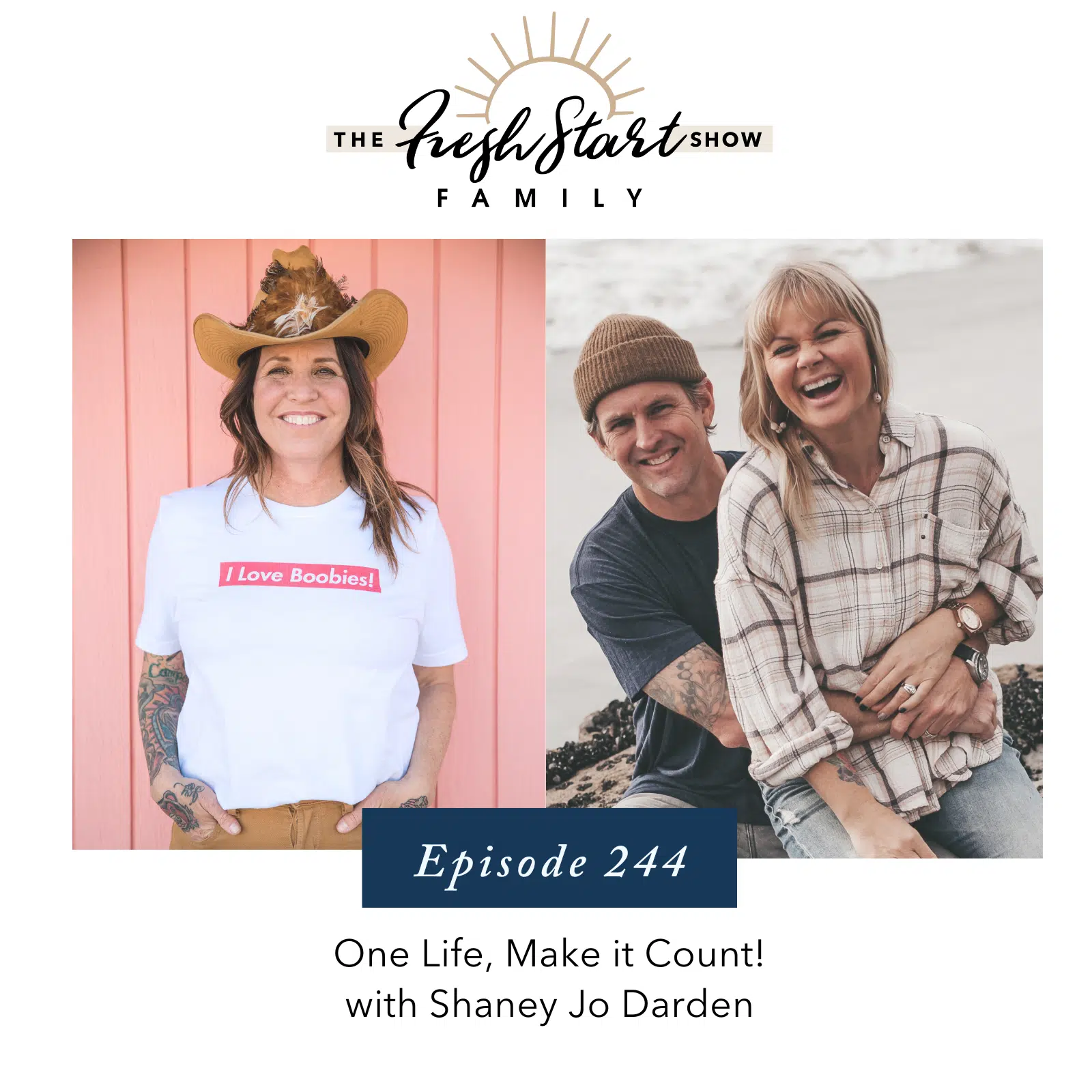
In this heartfelt and empowering episode of the Fresh Start Family Show, Wendy and Terry are joined by the incredible Shaney Jo Darden, founder of the Keep A Breast Foundation. Together, they dive into the powerful theme of “One Life, Make It Count,” as Shaney Jo shares the inspiring story behind her mission to spread breast cancer awareness and prevention, particularly among younger generations.
From her early days as a designer to creating a global movement, Shaney Jo walks us through the creative and innovative ways her organization has engaged communities around the world—like the iconic “I Love Boobies” campaign and artistic breast casts. With passion and purpose, she highlights the importance of early detection, education, and how Keep A Breast is breaking barriers to empower people to take charge of their health.
This episode is rich with wisdom as Shaney Jo, Wendy, and Terry explore the vital role of community, the strength in sharing personal stories, and how each of us can contribute to creating a lasting impact. Whether you’re inspired by their journey, looking to get involved, or eager to make a difference in your own way, this conversation will leave you motivated and equipped with the tools to make a meaningful change in the world.
What if you could be an effective, firm & kind parent WITHOUT relying on fear, force, bribery & rewards?
Imagine learning a new way of firm (AND kind) parenting so you can end painful generational parenting cycles and create family legacies & memories YOU are proud of?
All while getting your kids to cooperate with your rules and boundaries with ease.
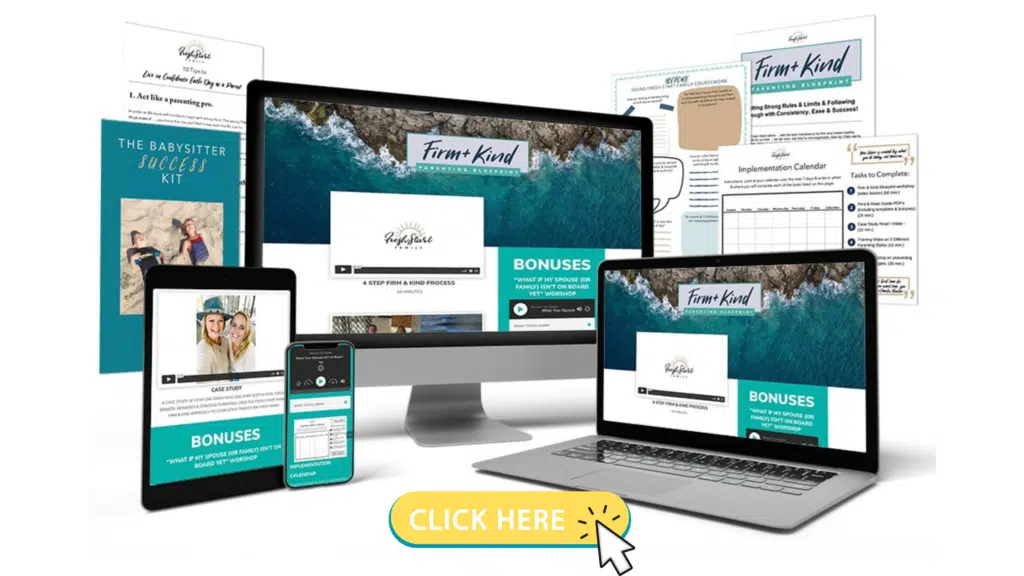
IMAGINE …
Parenting your kids with calm & confidence each day in a way that causes them to do what’s asked of them because they WANT to (not because they HAVE to) … because you’re helping to build essential life skills that have them behaving well & being respectful when you’re NOT looking!
The Firm & Kind Parenting Blueprint is your step by step plan & video training to help you build the family of your dreams. Click HERE to learn more now!
Episode Highlights:
- Importance of Early Detection and Prevention: Keep A Breast focuses on educating people about the importance of self-checks and early detection of breast cancer.
- Innovative Awareness Methods: Utilizing art, pop culture, and technology, Keep A Breast makes breast cancer awareness engaging and accessible.
- Global Impact: Through partnerships and technology, the organization extends its reach to diverse communities worldwide, offering resources in multiple languages.
- Community Involvement: Shany Jo encourages local involvement through creative means and emphasizes the importance of community support.
- Inclusive Approach: The organization’s inclusive efforts ensure that various communities, including the queer community and men with breast cancer, are represented and supported.
Resources Mentioned:
Follow Shaney Jo on Instagram
Follow Keep a Breast on Instagram
Zoomies – I Love Boobies Merchandise
How to be a Do Gooder in Four Easy Steps
Watch this episode on YouTube!
Catch Wendy & Shaney’s IG LIVE
Not able to listen or prefer to read along? Here’s the transcript!
0:05:33 – (Wendy): Well, hey there, community. Welcome back to a new episode. We are so excited to be here today with Shaney Jo Darden from Keep a Breast.
0:05:44 – (Shaney): Welcome to the show, Shaney Jo, thanks for having me.
0:05:48 – (Terry): Welcome.
0:05:49 – (Wendy): Oh, we’re so happy to be here. And families, today we are going to be talking about how we have one life, and we’re going to talk about how to make it count. And Terry and I are just really, really excited to have Janie Jo here today because she is someone that is very special in our life. And I just gonna. I thought I’d read just a little bit about who you are and some of the things you have done in this beautiful life and just that really represent your heart and your spirit and your work. And then we’ll dive into our conversation.
0:06:26 – (Wendy): So, community. Shaney Jo Darden is the founder global chief executive officer for the Keep A Breast foundation. After a friend was diagnosed with breast cancer in 2000, designer and artist Shaney Jo founded the global nonprofit organization, the Keep A Breast foundation to raise awareness of breast cancer and to encourage prevention and early detection among young people. Now, as Keep a Breast celebrates the 22nd anniversary, Shaney Jo is the leading voice in the cultural conversation about breast cancer and how her visionary youth targeted campaigns and programs featuring irreverent messaging, incentive art, cutting edge pop culture and technology are fueling a paradigm shift. Nonprofit organizations amongst nonprofit organizations.
0:07:19 – (Wendy): Since inception, Keep A Breast has expanded globally to Europe and Africa, non toxic revolution, check yourself, give back grants, treasured chest, and fit for prevention. The iconic I love Boobies message, one of Keep a Breast signature breast cancer outreach and awareness campaigns, has become a generational staple for the young people she’s reached. Shaney fierce commitment to arming young people with knowledge about breast cancer prevention and awareness has inspired action sports athletes, musicians ranging from punk to pop, and leading contemporary artists to help broadcast the message.
0:08:00 – (Wendy): Keep a Breast signature plaster cast of women’s and men’s torsos, hand painted by world famous artists and auctioned for the cause, help fund the important work she does via events at which she educates thousands. An expert on breast cancer philanthropy, Shaney Jo has received many awards for her innovative fusion of advocacy, art, lifestyle, brand partnerships and street culture, and in the process has generated substantial funds for Keep a Breast via donations, partnerships and licensing.
0:08:36 – (Wendy): I want to cry just reading this. She is a recipient of the Yoplait Champion Award, the Seema Humanitarian of the year award, the MySpace Impact Award for Health and safety, and notably in 2011, Shani Jo delivered the keynote speech for TEDx San Diego’s the world is in our grasp. Wow. How does that.
0:08:58 – (Terry): That’s my friend.
0:08:59 – (Wendy): That is. Yes. How does that.
0:09:01 – (Terry): That’s my darling. I’m with this one right here. I’m with you. Both of you all.
0:09:06 – (Shaney): Gosh.
0:09:06 – (Wendy): How does it feel hearing back like just a little bit about your work?
0:09:10 – (Shaney): Oh, it’s like that’s super emotional and wild. And we’re actually. It’s actually our 25th year this year, 24th and next our 25th anniversary. So we are right now I’m not sure when this will air, but we are on the eve of a huge milestone for Keep a Breast and it’s time to look back. Right? It’s time to look back and see what we’ve learned and also take that into the future, you know, what does the next 25 years of Keep a Breast look like?
0:09:50 – (Shaney): It’s fun to imagine and to bring our roots with us into the future and yeah. Thank you for those reminders. It’s really a privilege to talk with you both and be here with you both.
0:12:19 – (Terry): The other cool thing is, I just love that we’ve known each other so long. So, I mean, I’ve known you. I’ve seen this entire journey. I mean, this is, like, unreal now. I mean, you’ve been at this for 22 years.
0:12:35 – (Wendy): That.
0:12:36 – (Terry): Right?
0:12:36 – (Shaney): 24.
0:12:37 – (Terry): 24 now. Okay, so 24 years. So. So we’ve known each other that long. And it’s just been incredible to witness. And, I mean, you know, the. The intro kind of says so much, but, I mean, gosh, it’s just been, like, incredible just to see, like, what you’ve done. I mean, creating not just a community, but a movement and, like, really, like, with no limit on it. I mean, it is truly global. It is truly inspiring. It’s truly unique. It’s one of a kind.
0:13:10 – (Terry): And I just. I don’t know, I just think the world of you and what you’ve done.
0:13:15 – (Shaney): Thank you. And, I mean, our relationship is a perfect example of that community. Like, we know each other through, you know, my career as a designer and action sports industry, you know, so we know each other from community. And now what’s so beautiful is we’re able to continue to work together. And the work that you do through blenders continues to support and fund, Keep a Breast in our programs. So it makes me.
0:13:44 – (Shaney): One of the things that makes me the most stoked is when people, friends from all the years of my career as a clothing and designer in our little community of action sports and skateboarding move on to different jobs or different opportunities, and then they have something for Keep a Breast, and something will come up in their company or their brand that they want to do something for breast cancer prevention month. And automatically it’s like, Keep a Breast. Let’s call Shaney.
0:14:13 – (Shaney): And is just shows you what community is really all about, right? Is like supporting your friends, supporting your community, and making it stronger through all the time that we’ve known each other.
0:14:28 – (Terry): That’s so cool. And I just love, too, how you, it seems as though, like, you know, you and, you know, Wendy, I mean, why we’re sitting here, too. It’s like you have some sort of, like, something happens in your life or your friend’s life, and you have something that really makes an impact on you, creates some sort of personal testimony, and then you’re like, okay, well, what are the talents I have or experience I have? And then what’s the network and community I at least have right now?
0:15:01 – (Terry): And what can I do between those two things? And so I think it’s like, you’re a beautiful example, and Wendy’s a beautiful example of, like, you know, hey, there’s, there’s something that happens where you’re just like, you know what? I can’t just go on through life just pretending that didn’t happen or not applying myself or not trying to at least spread a word. And so it’s just amazing how you’re like, it doesn’t.
0:15:29 – (Terry): I feel like everybody out there has some talent they’ve been given and some network they’ve been given at that moment. They can, then they can build from. So it’s really cool. Everybody’s got to start somewhere.
0:15:40 – (Shaney): You have to start somewhere. And when we started Keep a Breast 24 years ago, we didn’t have podcasts. We didn’t have social media. We didn’t have cell phones. We literally would fax each other, leave messages on people’s answering machines at their house. Like, hey, we’re having an event. Can you come? Go to Kinko, make flyers. Like, go to Java depot, right? Like, put things out. You know, it’s a different world, but it’s the same thing. It’s like something happened.
0:16:15 – (Shaney): And I used what I had, which was my community of artists and friends in action sports. I created something unique and put it out in the world, and the world responded and was like, yes, we need this. This is amazing. Invite us here. You know, early on in Keep a Breast, we got invited by many brands and many companies to go, you know, on the warp tour to bring our platform, literally, to 10,000 kids every single day in the summer, you know, so we had opportunities to do things that we were so lucky because we just started in our own little world, right? And then it just goes and goes and goes and goes, like, really authentically. Like, we go where we’re invited.
0:17:08 – (Shaney): You know, we don’t try to just create programs or create things and push them on people. You know, we want to be invited and be inclusive at the same time.
0:17:20 – (Wendy): And, yeah, gosh, we have so much to cover in this hour. I love all of that. And if anyone’s here with us and watching on YouTube, remember where we do have. If you’re listening to audio, we do have a beautiful new build out over on YouTube where you can actually. I think it’s fun sometimes just to see who you’re listening to. Right. And the beautiful thing about Shaney Jo with us, being here with us today is that she’s got some of her beautiful artwork that is part of her movement behind her, as do we.
0:17:50 – (Wendy): Babe, will you grab. And, I mean, you guys are going back in time about when you. How far you’ve known each other. And so this is, as I’m holding up, audio listeners, a cast of my own breasts that was probably in. Do we know the year? Terry, I remember going to your house in Oceanside, and it was like this sweet little girl’s night, and there was probably wine flowing, and we were just, you know, tops off, and it was like, what are we doing? Oh, we’re casting our breasts, and then we’re gonna have. Then someone’s gonna paint them, and then we will, you know, bring awareness.
0:18:28 – (Wendy): And it was just so new to me, and I think at the time, I was just like, okay, let’s do this. And look how cute and, like, little.
0:18:36 – (Terry): My boobs were probably 2007, right before Stella was born.
0:18:40 – (Wendy): It was definitely before. So you founded this in 2000. So that was. You know, you were. You were doing it by then. And then Terry painted that one, and it’s beautiful. And that sits in our room. And then this breast cast is when I was pregnant with Taryn, and Terry has not gotten a chance to paint it yet, but that’s okay. I mean, to me, honey, we got.
0:19:02 – (Terry): A couple of fence projects. We got. Yeah.
0:19:05 – (Shaney): You know, but I like doing the pregnant cast, you know, as gifts for my friends. It’s such a sweet moment to honor and. And so incredible. Like, you could look at those two bodies side by side, and it’s like, yeah, I look at the miracle that your body is like, isn’t that cool? It’s, like, mind blowing, you know, it’s. They’re just so beautiful. And that’s the thing about these casts, right? Is, like, each one is, like, beautiful. You’re not noticing that maybe one has, like, this woman had a mastectomy, but you’re not seeing that her boobs are different looking because of her surgery.
0:19:50 – (Shaney): You’re just seeing, like, wow, that’s pretty. You know, and as women, we have such, and men, you know, we have such strange feelings about our bodies sometimes. And the casts really celebrate how beautiful every, like, body is, you know? And a lot of times they help people, you know, whether it’s after a surgery or before a surgery, like, come to terms at, like, where they are in their life at that moment and loving and accepting their body for truly what it is, which is a work of art.
0:20:23 – (Wendy): Yeah. And it’s such. And I love the art piece of this all as part of your movement because it’s like, you know, I’m sure you can even remember painting that first one and where you were in your life and all the things and then the second one that’s not painted yet. I feel like just now, whenever you do go to paint it, like, maybe you do that during the month of October since it is breast cancer awareness month. Right? Like, that would be fun.
0:20:48 – (Wendy): And, like, just to think, like, what a different place you are in your life now. To, like, go back and paint that now could be so, so cool. And that’s the beauty of art, right? Like, it just, just captures this, like, time of where you were at and what was your style then and your viewpoint and all the things. So I love it. And when it comes to. So just so as listeners are hearing right now, and they might be like, what, what is happening with breast cast art?
0:21:17 – (Wendy): You know, like, all the things. So just break it down, like, in layman’s terms, Shani Jo, like, what your foundation and organization is about. And tell us just your story in your own words. I mean, we read your bio, which is so beautiful, but how this started, what was on your heart, and then what you do on a day to day basis to raise awareness around breast cancer and save lives. Yeah.
0:21:42 – (Shaney): So keep a breast is a nonprofit organization, and our mission is to reduce breast cancer risk and its impact globally through our education, prevention and action. So having a mission statement for a nonprofit is super important, right? Because everything we do has to go back to this one sentence. So we are, you know, everyone knows about breast cancer organizations, and there’s literally thousands in the US and in the world.
0:22:18 – (Shaney): But what makes us unique is we are the only one that is global and focused on prevention. So the majority of all of our work is focused on early detection and prevention. And so how we do that is through education and outreach. So we have an app. You talked a little bit about our technology. We have an app that shows you how to do your self check. It sends you an automatic reminder. It’s available in three languages.
0:22:46 – (Shaney): And currently we have about 50,000 users all around the world. So it’s also about access, right? Like, access to education is so important now more than ever for women, for our bodies, for our rights, to even touch our own breasts. In many countries, that’s not okay. You can’t do that. So we are giving free access to breast health education and information to people in. We look at the map about the app, and there’s tiny villages in countries all over the world where you’re like, how do they know? But they haven’t.
0:23:28 – (Shaney): We have thousands of users in India. We have thousands of users in Mexico and in Africa through our outreach work there. So that’s what makes keep a breast different than most other organizations out there, is that we focus on prevention and early detection, and we also give grants to women of color who are breast cancer survivors. So for us, it’s really important to talk about why breast cancer is different in different communities.
0:23:58 – (Shaney): Breast is different for women of color. It’s different for our queer community. It’s different for Mendez, different for the jewish community. So we have different sections on our website that talk about these differences and why it’s important. It’s not this one size fits all disease. You know, it’s different for every community. So we’re about prevention, access, education, and really being a resource for people to find more information about, you know, what do you do when you are diagnosed? You know, we work with another organization called Young Survival Coalition.
0:24:37 – (Shaney): So we always referred people to them as newly diagnosed women because that is their expertise. So we try to stay in our lane, do what we do best, and partner with other organizations around the world to expand our work and expand our reach.
0:24:57 – (Wendy): I love it. And I know three of the hashtags that are part of your movement that I see you share often is hash feelitonthefirstein, which is so easy to remember, right. And then check yourself, of course. And then hashtag, know your normal. Right. Because I think that’s part of the big thing, especially for someone like me, who they’re like, I forget the term, but they’re like, oh, you got super lumpy, lumpy breast, and you’re gonna, like, they were fibrous, honey, look at you.
0:25:31 – (Wendy): You have been fibrous. Yes. And so that’s like a whole thing, you know, because you’re like, is this normal? So, hash knowyournormal and then feel it on the first. I feel like those are very easy to remember. And you just do so much creative campaigning to help people remember that this should just be a normal part of life. And the more you can make it normal, it becomes preventative. And do you have any stories, Shani Jo, that, like, off the top of your head? I mean, I know you’ve literally helped thousands and thousands and thousands of people, but is there anyone that you’re like, oh, yeah. There was this one time that because of the app or because of the work, like, they discovered something early, and then she wrote me or he wrote me, and they were like, hey, just to let you know, I got it taken care of, and now I’m thriving in life. Like, do you have stories like that?
0:26:23 – (Shaney): Oh, gosh, so many.
0:26:25 – (Terry): Oh, really?
0:26:26 – (Shaney): So many. Especially from, you know, like, being on the warp tour and being out of. Being face to face with people, teaching them, giving them education, giving them information. You know, we go to places where you wouldn’t typically see a breast cancer organization. You know, we go to skate contests, surf contests, music festivals. You know, we’re there. We want to be part of the day that you’re having that’s a fun day.
0:26:53 – (Shaney): And, you know, we look like you. We’re not, like doctors outfits. I’m not a, you know, I’m not a nurse. You know, so we create an environment that is, you know, supportive in learning because you’re having fun, you’re inquisitive, you’re drawn in by something that maybe looks cool or, you know, is exciting. So, you know, we hear from people all the time who either meet us in person or through the app.
0:27:21 – (Shaney): And, you know, what happens is a lot of people, young people, will come up to us in our booth, like, just like you guys. They’re couples. And the guy will be standing there like, what am I doing here? You know? Like, no. Like, get in here. Because, you know, over half the time, it’s actually someone’s partner who will be like, babe, that. Like, that feels weird. Like, that wasn’t there before. So Terry might know your normal more than you do.
0:27:48 – (Wendy): Yeah, probably does. Yeah.
0:27:50 – (Shaney): Partners. To just be aware. And it’s never, you know, you have the app, you have. We have, like, these like, check yourself cards. You know, we have education, but it’s more about, like you said, knowing you’re normal. You’re never looking for cancer. It’s a self care moment. It’s not scary, you know, and so many people are afraid to do their self check because they don’t know how or they’re afraid of what they’re going to find.
0:28:16 – (Shaney): And it’s like, you can’t do it wrong. Just get in there.
0:28:20 – (Wendy): Yeah.
0:28:20 – (Shaney): Hear it out. But do it consistently on a regular basis. So if you do find something, early detection, it could be literally not a big deal, you know, if you aren’t doing this. And this is kind of what happens without education or a lot during COVID like, people didn’t go to the doctor. So now we have a lot of late stage diagnosis happening currently because they missed appointments.
0:28:49 – (Wendy): Yes. Yeah. But it’s got to be so fulfilling.
0:28:54 – (Shaney): Like, and kind of like you said, a lot of people are like, I found my lump on the couch. I found my lump, you know, just when my baby had his head next to my boob, you know, I was just, like, doing something in the shower or snowboarding. Someone fell on their chest, and they’re like, that hurt more than it should. What happens? You know? So it’s just that awareness of that, like, mind, body, spirit, soul connection is just being aware of your body. You’re aware if you have a toothache, you’re aware of something.
0:29:25 – (Shaney): You go to the dentist, right? So you’re like, feels strange. You go. You get it checked out.
0:29:31 – (Wendy): Absolutely. And it’s like, I know having organizations like ours, like, you know, where you’re. Whether it’s. We’re not a nonprofit, but, you know, this, like, mission driven work where you’re just like, this is a lot of work, and it’s often not a lot of money, and it’s like. But it’s so. It’s like, it’s so wonderful to have such a purpose driven career and movement because you get to hear the stories, right, of literally lives are saved, right? Like, you literally, like, this person is standing on this earth a decade later.
0:30:02 – (Wendy): Because I just decided to listen to what I felt called to do to help people not just survive, but also thrive. But I just know that you probably just have so many stories like that of people who are literally watching their kids graduate from high school, school and college right now, or they are, you know, celebrating their 20th year of marriage or something because you helped them remember, just check yourself.
0:30:32 – (Wendy): Just feel it on the first, you know, and. And that’s just so beautiful, and it’s, like, so wonderful to know how many stories there are, so.
0:30:42 – (Shaney): Okay, well, it’s listening. It’s a calling. I could still be in my career designing clothes, working for some major denim brand, probably because that’s what I used to do. But my life changed. I had a calling. I listened. Something happened, and then there was a moment of, okay, do I stay on this path, or do I trust what is being shown to me as something important? And do I go in that direction? You know? And, yeah, I took a big risk and did it, and we’re still here doing this work. And so I always am grateful to, you know, listening and following those signs. Right, of where you can go in life to use my gifts, my talents, my creativity, but in a different way.
0:31:41 – (Wendy): Yeah. And it’s such a form of wealth, right? When you have such a purpose driven joy in what you do and you wake up every day, it’s not so much like work. It’s actually joy. And it is such a form of wealth. Right? Like, health is wealth and helping is wealth and serving as wealth, and. Yeah. So when it comes to the community side of things, Shani Jo, for someone who’s listening and might be interested in doing something in their community to raise awareness, what would you say to that? Because there’s the classic, you know, like, there’s a lot of five k’s, and. But is there anything, like, creative that Keep a Breast has that you can get behind?
0:32:28 – (Wendy): I think there’s, like, a fitness movement that might be happening right now. This episode will air during breast cancer Awareness Month in October. Yay. And. But, you know, for someone who is, like, you know, wanting to build community, maybe and support, what would you suggest for that? Is there anything out of the box that you guys support?
0:32:46 – (Shaney): Well, I think, you know, there’s always so many ways that people can support Keep a Breast and be part of our community. You know, whether it’s doing your own pizza party or whatever car wash, whatever you want to do, you can raise funds for Keep a Breast. But I always encourage people to start their own thing, you know, do something that, like, super meaningful for you. And I actually have a zine about it on our website. You could, like, link it in the show notes, but it’s called how to be a do gooder in four easy steps.
0:33:19 – (Shaney): Because people ask me all the time, like, I want to start a nonprofit. I want to do this. How do I do it? Da da da da da. So you can, like, download the zine. You could read it, but it’s basically like, soul search is step one. So go inside your heart and your soul, and it’s like, what is important to you? Like, what do you care about? Does recycling freak you out? Does pesticides freak you out? Does the ocean, whatever, polluting freak you out? So what makes you go, like, that’s your soul search moment.
0:33:55 – (Shaney): And that’s what I ended up doing. Keep a breast. And then the next step is research. So research in your community. Is there someone already doing what you want to do? Can you support their efforts? Is nobody doing it? Should you start your own little movement? And then the step after that is meet up. Meet up with other community leaders, meet up with your neighborhoods, meet up with your friends. How are you going to create something?
0:34:20 – (Shaney): Is it going to be for someone else? Like, reach out to that local animal shelter, recycling center, food bank in your neighborhood, meet up with them. And then the last step is like, have fun. Like, wouldn’t be involved with, Keep a Breast if it wasn’t fun. Cool, engaging, exciting. No one wants to come and volunteer with something that is just going to be a bummer all day long, you know, like, there’s like a very unique person who could really volunteer in, you know, very difficult situations, you know? So, yeah, have fun.
0:35:00 – (Shaney): Make whatever you do engaging, fun, exciting. Because then that’s how you start your own community movement, because people want to come back. That was fun. I felt good doing that. That was the best day ever, you know? So, yeah, just start your own thing. Make a difference in your community. Start small. People get so overwhelmed with the issues of the world and politics and all the things going on in the world, you know, like school shootings, all this crap, you know, it’s so overwhelming and, like, makes you freeze sometimes. So if you just start in your own little cul de sac, that expands into something bigger because that’s what we did, and we’re still here today to do it. Keep doing it.
0:35:45 – (Wendy): Yay.
0:35:47 – (Terry): That’s so cool. I love the zine. I can’t wait to check that out.
0:35:53 – (Wendy): Me too.
0:35:54 – (Terry): But also, too, I think you find people that are doers, and then there’s some people out there that just also want to just have something cool or some little to walk away with. And so I know you often have breastcasts up for auction, so we can also put some of that in the show notes. If you have an auction going on in the month of August, you want to own a unique one on one piece of art that, you know, all the, you know, the money will, you know, go towards this. Cause some really cool, cool stuff. I always love looking at all the art and the artists that you’ve worked with is just amazing.
0:36:34 – (Terry): Also, there’s a few brands out there that do some good, cool things. So, you know, I’ve been fortunate, like Shaney said, to partner up through blenders eyewear and make some really great products and donate a lot of money back to Keep a Breast. So month of August, or, sorry, October, if you’re looking for a new pair of shades, you know, that that could be another way to.
0:37:00 – (Wendy): We should have had our shades on right now. They’re probably, like, right out there.
0:37:03 – (Shaney): But, yeah, there’s keep a breast. And we have our iconic I love boobies bracelets.
0:37:10 – (Terry): Yeah.
0:37:10 – (Shaney): So this has been a major movement, maker, movement, shaker, trend breaker, you know, around the world. It’s. These little bracelets have caused so much movement and stir and drama and many things, you know, over the years. But we do have a partnership with zoomies, so we get these bracelets, belts, t shirts, hats, all the Isla boobies stuff in zoomies that supports our mission. And every product you buy has a QR code to download our app.
0:37:46 – (Shaney): And so, literally, our partnership with Zoomies has created, like, thousands and thousands and thousands of new young generations that we’re able to reach with this education and with this information through this tiny little thing.
0:38:06 – (Terry): You know, I mean, that. That. I love boobies graphic that, you know, primarily has been a part of the. The bracelets, but it’s also stickers. I mean, it’s a whole. It’s a whole thing. I have an I love boobies sticker, and it’s not that big on this giant water bottle that I have. And that water bottle has. Is covered in stickers. Covered. And I will tell you that that one sticker gets more comments and more like, hey, that’s cool.
0:38:35 – (Terry): Then, like, people gloss over all the other cool stickers I have on there, and it is just so cool just to see it. I’m like, I’m always so happy to talk about it. So, I mean, what a. What a great, you know, message and piece of art, and then vehicle through the bracelets and, you know, shout out to zoomies, who, you know, been such a huge supporter. You know, I love it when, you know, people just jump in and say, yeah, let’s go. How can we help?
0:39:02 – (Shaney): So for being supportive of keepabrest for so many years, and. And that’s the point is, right, you create these things. Like, you go into many people’s offices or homes, and you’ll see this and you’ll be like, why do you have boobs on your shelf? Like, a way to. You get. You get to talk about what Keep a Breast is about. You see people on public transportation at the grocery store. Whoa, what is that? Isla boobies bracelet. It gives people, individuals a chance to be like, oh, I’m wearing this because my aunt had breast cancer. My mom has breast cancer. My sister is actually fighting breast cancer right now. So it’s these things that we create open the door to talk about something that is hard to talk about that is taboo in many families and communities.
0:39:49 – (Shaney): So it’s ways to talk about things that are. Yeah. Super important and that we need to talk about.
0:39:58 – (Wendy): Yeah. It’s so interesting. You mentioned there’s been drama. So, like, did people not like boobies? Like, I love boobies. Was there people that were like, oh, God, we can’t put that in the children. Is that, like, what it was? Or.
0:40:10 – (Shaney): I mean. Yeah. When the bracelets first came out, which was like, ten years ago, they were banned in schools.
0:40:17 – (Wendy): Oh, my goodness.
0:40:18 – (Shaney): They were. I was accused of, like, sexualizing a disease. Just felt like the word boobies was incredibly inappropriate. We had a court case that went all the way to the supreme court, fighting. Two young girls were fighting for their right to wear this bracelet at their.
0:40:41 – (Wendy): Wow.
0:40:41 – (Shaney): To support their family members. And so it’s like, really? You guys are offended by the word boobies? Like, we have better things to be offended.
0:40:52 – (Wendy): If I was in Las Vegas, I think I could bet on who was leading those movements of being offended by the word boobies. Oh, my gosh. Yeah. I was listening to a podcast where there was an author. I forget her name right now, but it’s a book I want to read. She’s actually, like, a copywriter, but she’s just so funny. And her book is called tough titties. And she was talking about how when the publisher, like, got behind her and they were, like, cool. And then they realized after they published it, what? Like, people freaked out. Like, they couldn’t get a billboard in New York City because it said tough titties. But, like, you know, like, strip clubs will put up a whatever. Like, there’s just ridiculous, like, machine guns. You know, like, you know, the machine gun open up.
0:41:33 – (Terry): That.
0:41:34 – (Wendy): Or word titties was so, like, tough titties. They just. The world couldn’t deal. And so I love that your work just is, like, breaking those taboos. Oh, my gosh. It’s just so silly, right? Like, I have such an allergic allergy to hypocrisy. It’s like growing, growing every year. I’m like, dang it, I need, like, a Benadryl or something to, like, chill me out. But the hypocrisy just drives me insane.
0:42:00 – (Terry): Well, and I just keep going back to also, like, in my mind and thinking about listeners. Hopefully there’s some people out there that have taken inventory of all of the things that Shani mentioned in that zine, and they’re going to go out and drop everything and do some huge cultural movement. But I think the vast majority might just be like, well, I might not do that, but what can I do? And we’ve mentioned some things, but I think there’s a lot of things in your life and your life decisions and what you choose to be a part of that I think are worth leaning into. And a lot of them are, quote unquote, countercultural.
0:42:40 – (Terry): Or maybe you’re testing norms. I mean, we’re here talking about testing norms just of like, two girls wanting to support family members by wearing a bracelet at school. I think, you know, I think we’re in a, you know, you’re all in a position to make a difference, and sometimes those differences are huge. Like, hey, I’m going to start a nonprofit and I’m just going to go huge with this. And sometimes it’s just a choice to support somebody or support a cause, and you might feel pushback there. It’s like, hey, no, go get back in your box or you’re wrong or somebody’s going to hate on it. You know what?
0:43:22 – (Terry): Somebody is literally going to be waiting to hate on you for anything. If you feel like there is something that is in your heart that in the end is benefiting someone’s health or in the case of, you know, wendy, a lot, it’s like, you know, advocating for, you know, people that, you know, don’t have as much of a voice, whether it’s children or people that don’t look like other people, whatever it is, like you’re going to feel pushback.
0:43:49 – (Terry): And I think, you know, I’m not surprised at all that you felt a ton of pushback. And I think it means you’re in the right place, honestly. So whatever that looks like in your life, if you’re feeling a little pushback and as long as you’re rooted in that very, like, in integrity and that thing that you’re really, you know, feeling, you know, called to do, you know, keep going and of course, treat people with kindness, do all, you know, do all the things, but, like, don’t stop.
0:44:18 – (Shaney): Yeah, yeah. Don’t stop and follow your heart and keep going. And we are privileged humans in this world, and so we have a responsibility to use our voices and use our privilege to make a difference for the next generation, for the future, for just our best friend who needs to talk at this very moment. You know? Like, we have to drop what we’re doing. We’re all busy. Like, we all have a lot on our plate, but our friends need us. Our families need us.
0:44:56 – (Shaney): Our neighbors need us. And if we’re gonna survive in this world, like, we have to be there for each other.
0:45:04 – (Terry): Yeah.
0:45:05 – (Wendy): Period.
0:45:05 – (Shaney): Yes. Like, mic drop.
0:45:07 – (Terry): Mic drop.
0:45:08 – (Shaney): You know, so true is as important nothing.
0:45:13 – (Wendy): It’s so true. And it’s like, you know, just making room at the table for everyone. I know. As we were chatting before this episode, you know, you were like, oh, we were chatting about just our own show here, and, like, you know, you brought up just this most beautiful point of, like, you know, what have you ever thought about, like, as far as, like, addressing families or parents? And here you are, this beautiful single woman, no kids. Like, hey, I.
0:45:39 – (Wendy): What if it became a bigger table that was like, there’s people like me that really care about the relationship, work, and the things that you advocate for at fresh start family and all the things. And so how beautiful to, like, use your voice just to encourage us to even widen our table. And so after you had messaged me, I was like, you know what? I like addressing this space now with a community. Right? Like, it doesn’t even have to be just families or just parents.
0:46:07 – (Wendy): Right? And so I do admire the. How you show up when it comes to doing all that you can within your organization and your movement and your nonprofit to become more and more inclusive and just grow and expand in that space and be in a learning environment where you are really making sure and doing whatever you can to make sure everybody feels welcome at the table when it comes to Keep a Breast. So what? Like, is there something there that has just felt right in your heart as you make sure you have a presence and that you are expanding into, like, more and more inclusive spaces, whether that is the queer community or the men. Right? Like, I’m sure for a long time, you only were like, I’m guessing maybe, like, women. Hey, women. Hey, women. And then it was like, oh, wait, there’s a whole section of men who have breast cancer, right? And, like, right? Is there? Is there?
0:46:59 – (Shaney): Yeah, absolutely.
0:47:00 – (Wendy): And. And then the queer community comes with, you know, like, how speak to that and why that has been put on your heart and how that maybe has felt good for you to lean into that, making more room at the table, making it bigger, and making sure everyone feels welcome.
0:47:14 – (Shaney): Yeah, I mean, I love how you put that, and it’s like, everyone is welcome, but it’s not also for everyone, you know? So it’s like, even with what you do and what I do, you know, if what we both are doing isn’t resonating with you, that’s okay. Like, you don’t have to support, Keep a Breast. If what I’m doing isn’t your jam, you know, there’s thousands more other ones that you can go support. And that’s also why I’ve been, you know, a fan of what you do and your work with fresh start families, because even as, like, a single person without children, I just identify with the way that you present your work and that it is community driven, even though it’s, you know, focused on families.
0:48:06 – (Shaney): I know that I can learn a lot from you and what you’re doing, which is maybe focusing on children or relationships, but that applies to other areas in my life, you know? So, like, I listen to your podcast with a different ear, a different filter that I’m hearing what you do through, and how can I apply those principles in my life, you know, through my own faith, through my own communities, and through how I show up in the world. And so I think, you know, like, yeah, I want to be in, like, a family, fresh start families or whatever. So it’s like, you know, how can I also be in those spaces and, you know, support moms and, you know, support aunties, and how can I learn from experiences that you have that maybe I will never have, you know, but. But I want to also, but in a different way. You know, like, I never really wanted children.
0:49:06 – (Shaney): I was like, you know, if God means for me to have children, I’ll have children. But I have other work that I do in this world, and I’m an aunt and, you know, I have. I’m a God mom and all those things. So, like, of kids. But there’s also something inside me that is, you know, wants to learn more and which helps me ultimately just be more empathetic to everyone, to mom’s experiences, to dad’s experiences, to, you know, the mother of the mother of the mother of the mother.
0:49:41 – (Shaney): And how are we learning from our ancestors wisdom, you know? And so being older now, I’m, you know, working on access processing my ancestral knowledge to do the work I’m doing, you know, and I’m always asking for guidance, you know, from my ancestors, from my guides, from the angels around me, you know, and from the earth and, you know, the owls and the lizards and, you know, the owls.
0:50:10 – (Terry): I love them.
0:50:11 – (Shaney): There’s. I hope people can feel that there’s knowledge all around us that if we’re just open to it, we can bring that into our existence, you know? And I’m just. I’m a learner, you know, I always want to learn and grow, and I never want to be right, you know, like, I love right.
0:50:32 – (Wendy): Yeah.
0:50:32 – (Shaney): Don’t be wrong. Like, I can learn, you know, and grow and be a better person from someone else’s experiences.
0:50:42 – (Terry): Oh, I love that listener. Shaney lives out near Joshua Tree National park, so that’s why she’s, like, looking to her left and right, and there’s, like, lizards and owls and stuff. I don’t think they’re actually in the house, but they could be right outside the house. So, yeah, I love where you live.
0:51:00 – (Wendy): Oh, my gosh. Joshua tree, babe. That’s where I want to go on our little. We’re supposed to go away. That’s where I want to go. I want to go, and I want to have lunch with Shani Jo, please. We go to.
0:51:11 – (Shaney): But, yeah, nature is part of my everyday. Like, you know how I keep myself calm, you know, how I can handle stress? Like, running a global organization with a tiny team is really stressful. You know, I have to, you know, I go on my trail and walk every morning, you know, say all my prayers, meditate, like, do all my things, do breath, work every morning, you know, like, do all the things to keep this healthy, this strong, you know, so I can serve others.
0:51:47 – (Terry): That’s awesome.
0:51:48 – (Wendy): Yeah.
0:51:49 – (Terry): Yeah. And, you know, as you were talking through, you know, this whole idea of families, community and everything.
0:51:57 – (Wendy): Yeah.
0:51:57 – (Terry): I mean, fresh start family. I mean, the. The greater, like, mission here is, you know, create more peace in the home, you create more peace out in the world. So it’s like, you know, I think the spark or the, like, you know, the testimony, you know, maybe started with, like, discovering these opportunities for a deeper and different type of relationship within your own family unit and in our case, happen to be with, you know, some kids, but really, it’s like, that’s just, like, the spark from there. It’s really just like, okay, well, how do I apply that relationship to everything I see out in the world? I mean, I can’t tell you how many times that I’ve been out in the business world, no kids anywhere near me. And I’m just like, I find myself, and I’m like, I’m showing up differently because of the things I’m doing at home and practicing at home, that I’m now walking the walk out in the world.
0:53:02 – (Terry): And in turn, our kids grow up, do that same thing, and it’s kind of this ripple effect. And so that’s not exclusive to just like, oh, we have to have this little one to do that. It’s like, no, I think everything that we’re practicing doing, the guests that we have on is really just so that we can live in community and in a world that feels, um, you know, that feels, you know, closer and feels more, you know.
0:53:34 – (Terry): You know, just. It’s just a brighter place. It’s just safer, and it’s just a brighter place. And so, yeah, and I love, like, you know, you seem, you know, kind of. I love where you stand on this, too, because it’s like, you know, we’ve been in a lot of the same communities, too. And I love, like, so when you talk about, like, whether it’s the artists that you work with, but, like, describing it as, like, you know, this kind of punk community and also the skateboarding community, I think from the outside looking into that, people think that that’s very closed off.
0:54:10 – (Terry): And it’s like, you discover it’s quite the opposite. It is. Some of it is the most diverse, open minded cultures that is just like, you know, all you gotta have is a. Is, you know, a board and four wheels and you’re in, and even sometimes you don’t even need to have that. And, you know, and then the punk community, I think, is just, you know, has been just this safe place for people just to kind of express anything and everything. And you don’t have to agree with everything either. It’s just kind of this, like, place to be messy and not just, like, fall in line with cultural norms and do what I say or else type of thing.
0:54:50 – (Terry): So I just. I just love the communities that, like, we’ve. We’ve run in together, and then here, you’ve made your own thing within that that crosses all of those, and you too, Wendy. And I just. I think it’s some. I just think it’s the coolest thing ever.
0:55:09 – (Wendy): It is.
0:55:10 – (Shaney): Like you both were saying, like, let’s make that table bigger. Let’s invite all the friends to the table. And I think, you know, Terry, with kind of what you said about starting in your own family, but the taking it out in the world, you know, and how you show up in professional spaces, you know, like, have anyone has, like, random people come up to you and just, like, noticed maybe how you interact in your, like, work environment or in, like, a trade show environment and just, like, ask you, like, dude to dude, like, hey, what are you doing in your family? Like, why is your aura a little bit different?
0:55:52 – (Shaney): You know, because our chosen families, also our work families, you know, people always are like, that’s my work wife or my work, you know, husband. But it’s like, we have work families and chosen families and.
0:56:04 – (Wendy): Yeah.
0:56:04 – (Shaney): How, what is a good story of someone asking you about how you bring this into, like, the outside world?
0:56:15 – (Terry): Yeah, I mean, I think sometimes, you know, people, like, maybe know that I’m a dad or, like, have witnessed, like, me with the kids and kind of see that dynamic, but I think that’s cool. And I love that if, when people recognize that. But I think it’s almost, it’s more like, like, oh, like when people don’t know any of that at all and people are like, how do you do that? And, you know, you always think, like, so being in the creative realm, you think they’re going to be like, well, you know, how did you shoot that photo or come up with that idea or, like, make that campaign? But it, it’s usually more in, like, how did you carry yourself through that stressful situation the way you did that and you were still able to, like, communicate and, like, stay calm and, like, be true to yourself and not freak out type of thing, you know? And I think, because I think there’s been people that, like, are on the left or the right of me that I think they see, like, I would have freaked out if I would have, like, if that would have been happening or I would have been under that pressure.
0:57:18 – (Wendy): And they do sometimes.
0:57:19 – (Terry): And they do sometimes. So I think, you know, that’s been kind of the, the coolest thing for me to realize. I’m like, oh, yeah, this is so goes back to all the work and the daily practice and just the relationship building and the peaceful conflict resolution and self care. You know, the way you talk to yourself in situations that ultimately brings, I think, a confidence that just allows you to just be like, we’re okay.
0:58:04 – (Terry): You know, we’re all good. And it doesn’t mean it always feels comfortable. You know, you can still feel, like, super uncomfortable, but then it’s like, well, how are you going to react and what are you going to do? And I think that’s what people sometimes notice as a byproduct of what we’ve been after here, you know?
0:58:25 – (Shaney): Yeah, Wendy, a lot this last week, saying, I’m okay, I’m okay over here. And, yeah, I think it’s our also responsibility to mentor, you know, the people that are around us, the younger people. You know, like, one of the girls who works with me, she. She’s younger. And yesterday, you know, after one of our calls, I was like, you know, I really have to tell you that I see you, like, being a great young leader.
0:58:55 – (Shaney): You know, like, you are just showing up for our team. You are communicating in a boss lady way. You are kind. You are supported. Like, I am so proud of you for how you’ve been handling yourself lately. Stressful situations, you know, and always important for me to communicate those things to my team, especially if we’re all working, like, remotely sometimes, you know, so being older and passing it on, you know, passing on that knowledge and wisdom is.
0:59:31 – (Shaney): Is so important. Especially, like, I know Terry, you work with a lot of younger, you know, team members, and, yeah, they look up to you. Right. For, oh, how’s Terry going to handle this?
0:59:43 – (Terry): And I feel like I also need to point out, too, it’s not about, like, keeping it cool. It’s also about, like, you know, showing your emotions, too. Like, it’s definitely not like, a mask your emotions thing, because, you know, I have, you know, younger people that I work with. I mean, you know, one person in particular that I know I can just be, like, anything I want to be around and, like, you know, cry in front of, not be okay, but. And then also, like, when it comes time to, like, not be a part of something or not join in to something.
1:00:19 – (Wendy): Set a limit.
1:00:19 – (Terry): Set a limit. Not join in on something just because it feels like it’s the thing you’re supposed to do, whether it’s pressure from the workplace or the world or social, it’s like, you’re like, they watch that. They’re like, you know, they’re. They’re bigger versions than some of my kids are. Like, I noticed that you, like, you didn’t do that or you opted out of that or you didn’t participate in that. And, you know, I think sometimes that speaks more than any words or any winning an argument or anything. It’s like, you know, don’t be a part of some of that. Don’t.
1:00:54 – (Terry): Yeah.
1:00:55 – (Shaney): So, yeah, for all the kids, right, that you guys work with. I mean, even working us in the action sports industry, like, you know, there is so much, like, when I worked at aetni’s, you know, you had to, like, shock in a beer and squeeze a lemonade on your first day of work.
1:01:13 – (Terry): It’s like, shout out, Don Brown. Yeah, right.
1:01:16 – (Shaney): Like, what is this culture? You know? Don Brown, right. Obviously did that. But, you know, he’s the sweetest, most loving, most, like, solid, supportive dude ever, you know? So. Yeah. Oh, that’s a big water.
1:01:31 – (Terry): So I. That’s the pirate fun cup.
1:01:34 – (Shaney): Wow. Yeah. And I mean, like, you’re in the heavy metal scene and, you know, like you were saying, like, like, heavy metal, punk rock skateboarding is like, all the og people in those worlds are the ones that are the most inclusive. You know, their music is human rights. Most of it.
1:01:52 – (Terry): Yeah.
1:01:54 – (Shaney): And so.
1:01:55 – (Terry): No, totally agree. I mean, it’s a tough nut to crack, I think, from the outside. And you actually. I mean, you genuinely have to like it. I think that’s kind of the. I think that’s the barrier to entry with all of these things is if you genuinely love it and you like it, you will be accepted. I think it’s the people that, like, maybe just, like, try it on and you’re like. You can kind of tell. You’re like, this isn’t for you, you know?
1:02:15 – (Terry): But if you genuinely like it, you’re. You’re in. And. Yeah, I mean, my. I mean, my whole thing, not to tangent, I could go on a whole thing of, like, hardcore music, but, like, that was, like, people that stood for something. It, you know, clean lifestyle that I didn’t always live. I participated in those. Not only did I do the tough guy shots at the Shaney, do you know that me and Ashton were the demo people? We would demonstrate it for people.
1:02:44 – (Terry): So that means I would do an extra one sometimes, so.
1:02:48 – (Wendy): But drank in a year and a half, Shane.
1:02:51 – (Terry): Yeah, I’m over a year, and I’m over a year and a half sober on everything, so that’s great. But there was a time when I would demonstrate that, but that that limit was reached. That quota was reached. I’m done with that. But, yeah, it’s. No, it’s good, healthy health. Yeah, but, yeah, I mean, I just. I’m just. I’m. I’ve always been very attracted to these like minded communities, even though they’re totally different mediums, you know, like, whether it’s music, art, nonprofits, family centered things, you know, it’s just.
1:03:28 – (Terry): I don’t know. Those are the types of people I want to be around.
1:03:30 – (Wendy): Yeah, me, too. Me, too. There’s definitely so much common ground in all of those, and it’s so beautiful to like. I think this episode has tied in just so many of those common elements and creating a community for change, being willing to be part of a movement or support one or be a part of one, and then just making sure that you’re taking care of yourself so you can build a legacy that you want within your own home and heart and mind and soul. And it’s also beautiful when it comes to the fact that we have one life and that we want to make it count. So, Shaney Jo, we could talk to you all day long.
1:04:13 – (Wendy): You are such a joy and a light in this world, and we are so thankful for the work that you do every day. And thank you for reminding me to check myself. I’m going to go check myself right after this because to be honest, I’m not in a rhythm yet. And I’m 40. Am I 47 now? Babe, she always asks me, I know you’d be whatever age you want, seven now.
1:04:38 – (Terry): And I’m like, the number you want?
1:04:39 – (Wendy): Wow. It really takes a village to help us remember to take care of ourselves and to make it a habit, because for most people, that’s the first place you skimp on is yourself. Right? So just thank you. Thank you for being who you are, for being with us today, for taking time out of your busy schedule, and for doing your work at Keep a Breast. We love you and we honor you and just appreciate you so much.
1:05:06 – (Shaney): Well, I love you and thank you guys for this opportunity. I actually have a tattoo that says one life, one chance and one tattoo also. Yes. One life, one chance. And it’s a punk rock song. It’s from the band h 02:01 life, one chance. And I have a challenge for you and all of your listeners is to download the Keeper Breast app.
1:05:32 – (Wendy): Yes.
1:05:33 – (Shaney): In the app, there’s a share feature. So all of you have to share the app with eight friends because eight women are diagnosed with breast cancer. So you’re going to share this app with eight of your friends and maybe even ask them to share it with eight of your friends. Great. We all have our little text groups of our friends and our community. Share it in your text group. Hey, it’s October. Download keep for us app check yourself.
1:06:04 – (Shaney): Tell your friends, because that is how a movement takes fire is through word of mouth, right? Like, we’re ultimately a tiny little organization that has a huge impact and the way that we have that impact, because people talk about it because they want to know, what is this? What is on your phone? How many times do you tell your girlfriends. Like, oh, I heard about this new cafe. There’s this new shop.
1:06:30 – (Shaney): There’s this new app for this, right? So that’s what y’all gotta do. Share the app and talk about it. And if you’re a mom and you have a family history of breast cancer, you know, talk to your teenagers about it. You know, maybe they’re trying to do their self check. Family history is so important. And, yeah, talk about it. Go to blenders.com. blenders eyewear, whatever it is.
1:07:01 – (Terry): Blenderseyewear.com.
1:07:03 – (Shaney): Yeah.Com. Check out the Cupid breast collection.
1:07:07 – (Terry): Yes.
1:07:08 – (Shaney): Yeah. I really appreciate this and love you guys so much. And we’re just on the eve of our 25th anniversary, so.
1:07:17 – (Terry): So cool.
1:07:18 – (Shaney): Keep a Breast and looking forward to sharing more of the future with you both.
1:07:23 – (Terry): So cool. Love your tattoo. Shout out to Toby Morris. I saw h two o back in June. That was awesome show.
1:07:30 – (Shaney): And Toby has a cute west tattoo.
1:07:33 – (Terry): No way. Oh, that’s dedication.
1:07:36 – (Shaney): We got these on the same time together one day when I. Wow.
1:07:40 – (Terry): Oh, man. Okay. You and I will have another podcast where we just talk about music and artists. Okay. All right.
1:07:48 – (Shaney): Punk rock does good.
1:07:50 – (Terry): Let’s go. Awesome. Thank you so much.
1:07:54 – (Shaney): We love you.
1:07:54 – (Wendy): Shaney Joe.
1:08:01 – (Terry): You want to take.