

When one in three births in the U.S. is a C-section, why aren’t we talking more openly about what those experiences feel like?
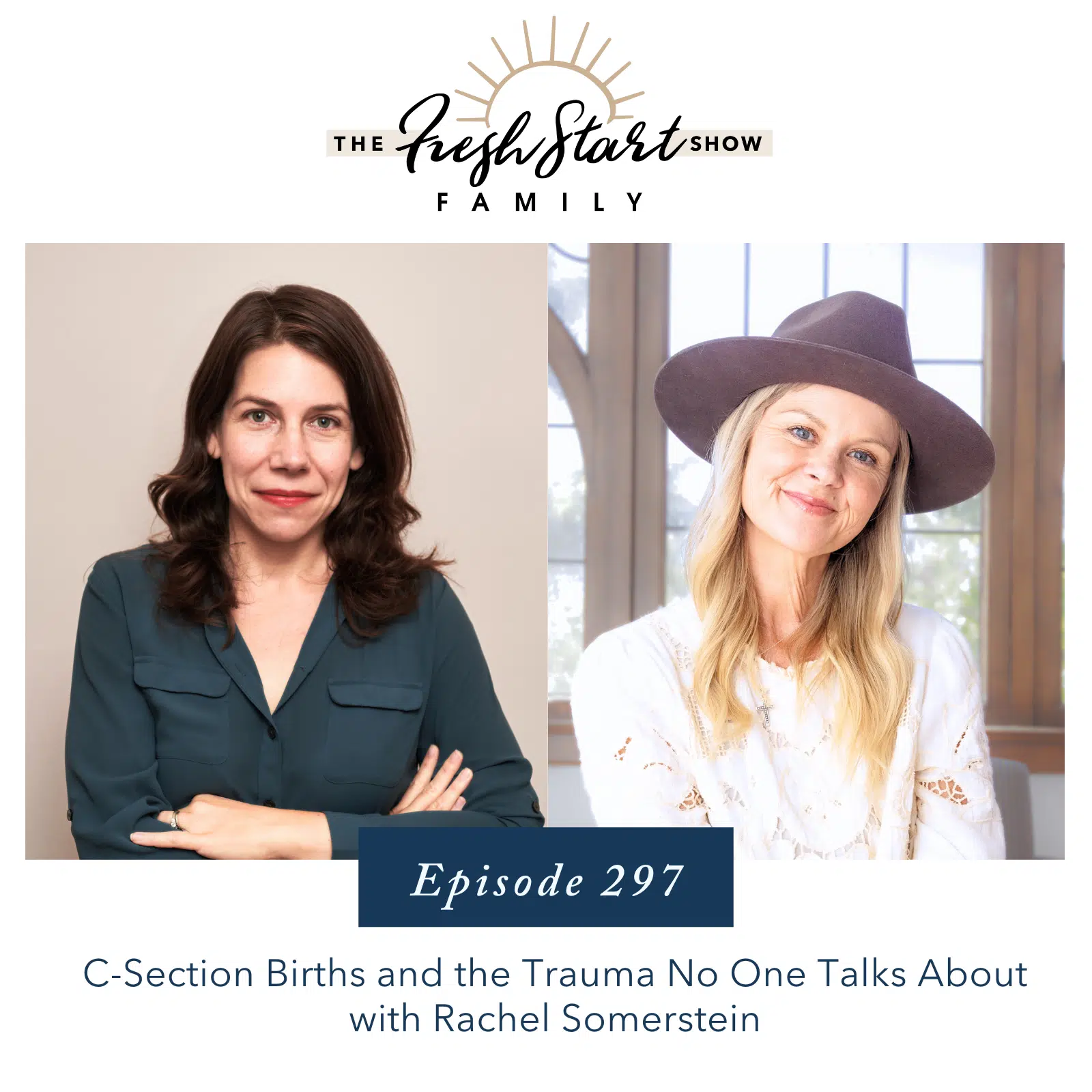
In this heartfelt conversation, journalist and author Rachel Somerstein joins Wendy to discuss the hidden trauma many parents carry after surgical birth — and how awareness, preparation, and compassion can change everything.
Together they explore:
• What a “gentle C-section” really means
• How language like “failure to progress” fuels shame
• Ways to prepare emotionally and physically for surgical birth
• Tools for healing afterward — from EMDR to somatic movement
This episode offers validation, hope, and practical ways to advocate for yourself and others — whether you’re preparing for birth or still making peace with the one you already had.
*Kind note: This episode includes discussion of surgical birth, emergency procedures, and difficult postpartum experiences. Please listen with care.
Want to learn how to escape a punishment mindset?
This free bundle comes with an extensive learning guide & workshop with me, where I’ll teach you ways to build a strong, compassionate, FIRM & effective discipline toolkit that works with kids of ALL ages!

Inside this FREE learning bundle, I’ll teach you:
- Methods to build intrinsic self-control muscles
- Strategies that unite you
- The importance of self-calming
- Natural Consequences
- Logical Consequences
- Creative Problem Solving Methods
Grab your free bundle & start learning today!
Episode Highlights:
- Preparation = peace: Planning for surgical birth (even as a “just in case”) reduces fear and improves your experience.
- Dignity in the OR: Gentle C-section practices restore connection and agency—ask for skin-to-skin, partner roles, and immediate feeding when safe.
- Words matter: Swap shaming terms (“failed,” “incompetent”) for accurate, compassionate language about what happened.
- Healing is whole-person: Combine talk therapy with EMDR and somatic movement to process what the body remembers.
- Community care changes outcomes: Meal trains, therapy funds, doula access, and birth story processing help families recover and thrive.
Resources Mentioned:
Find Rachel on Instagram
Grab a copy of Rachel’s Book Invisible Labor: The Untold Story of the Cesarean Section and the Disturbing State of Maternal Medical Care
Unable to listen or prefer to read along? Here’s the transcript!
00:02
Hello families and welcome to a new episode. I’m so happy you’re here today on the show. have Rachel Somerstein who is going to chat with us about C-section bursts and the trauma that no one talks about. Welcome to the show, Rachel. Thanks for having me. I am so excited to talk to you today, Rachel. When I found your work, I was thrilled. I have a lot to say about this subject and I’m just really looking forward to.
00:30
connecting with you in the next hour and hopefully really encouraging and pouring in to some moms and families out there who haven’t really necessarily dug into the subject that we’re going to talk about because it is such a, I think, missed opportunity in our society that I’m now realizing 17 years after my first C-section, which was a traumatic, absent
00:58
Absent birth, traumatic c-section, that holy smokes. Like that whole thing did not go down well. And after I learned about what could have been and seeing your work that you’re advocating for now and the articles you write and the book that you’ve written, it is just, I can see there’s such an opportunity for positive change in our world on this topic. So I’m really happy you’re here. Would you start us off by just telling listeners a little bit about you and
01:26
how you became so passionate about this topic. Sure. And thanks for saying that because the intro is really important to me terms of opportunities to change the experiences people have and that there are so many people who really are working to make experiences better for moms who have babies by C-section. And it can be better. And it will be. really believe It will be, right? Yes. So I have two children.
01:53
who are four and eight years old. I am a mom, obviously, a writer and professor of journalism. And I became interested in this topic entirely because of my own experience. So I used to write about art and I wrote about photography and I studied images in the mass media. And then I had a completely unexpected, unplanned C-section that was
02:22
also traumatizing and um traumatizing both in terms of the section was problematic, the actual surgery, there were issues during it and also it was traumatizing because I was totally unprepared to have one. um I was in very good health in my pregnancy, going into my pregnancy, my pregnancy was textbook and the possibility that I would have a surgical birth did not cross anybody’s mouth.
02:49
to me, maybe across their minds, but they never mentioned it. And so I was absolutely unprepared. And the reality is just because of the numbers of people who have six cesarean section surgical birth, we should have at least talked about the possibility, right? It’s one in three births in the United States. So, um, one in three, know, one in three. And so when I was recovering and as I recovered, I felt like I wanted to better understand
03:18
the feelings that I experienced after my birth, which were ones of shame, um feeling like I had done something wrong and not understanding why I felt those feelings. And I also wanted to better understand surgical birth. Like I was curious about like, what would have happened if I lived at a time when there wasn’t C-section? What happened before? Like in human history, right? And I was really interested in like, wait, why are there one in three?
03:45
And how come so many people of my age, should say like I’m 40, 42, um have had surgical births, but like our mothers didn’t necessarily. Like what changed, right? What’s going on? So those are the things that brought me to writing about this. And really I should say also like beyond my experience, talking to so many other moms who had similar feelings of shame and adequacy and really feeling like
04:15
As one person put it, did I even really give birth? Because they birth surgically. So I was like, this isn’t just about me, right? This is about a lot of us. A lot. A lot. That’s so incredible. Thank you for sharing all that. the name of the book, tell us the name of the book again. Sure. So the name of the book is Invisible Labor, the Untold Story of Caesarian Section. And it’s about what I went through and then how I
04:45
recovered and then also like trying to answer these questions. Why do we do so many of them in the United States, even though we know that they are doing more harm than good. And I just want to say like, cesarean birth saves lives every day. I’m like, we think goodness, they exist and they can happen safely and in places in the world where they don’t happen quite as often. That’s a problem too, right? Like there could be too few. We’re so fortunate to have this technique and
05:14
yet we do too many of them and we do too many of them and we fail to respect them, right? And we fail to respect the mothers who have them largely. And that’s like an issue in society, that’s an issue in medicine, that’s an issue on social media, in ourselves, right? All of this. So, um you know, the book really gets into why, because actually it’s an incredibly, if you think about it, a heroic way to birth, right? You’re not only bringing your baby to this side of the veil.
05:44
you’re undergoing a really big operation too. And then you have to recover from that while caring for your newborn. That’s like double in a way. I mean, there isn’t like actually like one better or worse way, right? But it’s like, we don’t respect it. And actually it’s so much effort and so much work. Yeah. The Medal of Honor, where is it? is it? Exactly. Yeah. my gosh. I have so much to say, but where do I start? It’s like, so.
06:12
When I found you, was so excited to chat with you because I have a little cousin who’s about to give birth to her first baby in January. And as I was at her baby shower, we were hanging out, was just, you know, just so excited for her. But I heard her and her buddies mention something about like, I don’t I don’t even remember where heard it, but someone mentioned like, oh, you don’t want to hear anyone’s horror stories. Right. And so it just it reminded me I could sense myself. I was like, oh,
06:41
I better be quiet. Don’t talk too much about your birth, right? Like, I’m pretty sure my cousin’s aware of it. But I was like, let’s just make sure we keep that, like put that under the rug. And then I thought to myself, wait a second. Actually, what happened was I read, it was about a month later, I read, I think you might have been part of it, the Women’s Health article. Did you write in that? do you just? Yeah, you did. OK. I loved that article. And I actually.
07:10
After I recorded this, I’m like, I’m going to reach out to my little cousin, just ask her, can I mail you this article? It’s so beautiful. And I just knew that today would help me prepare how to speak to her because my my intention is like for for lots of different people as they’re listening to this episode. But I thought recording this would almost be like an honor to my cousin to to learn how to speak to this kind of next generation of moms coming up so they can instead of going into birth being like, I don’t even want to think about.
07:40
a C-section. I want to. Oh, no, no, no, no, no, no, no, no, no, no, no, no, no, no, no,
08:04
birth experience with Stella, so I ended up having a torn placenta after 36 hours of labor and thank God there was a c-section. oh
08:14
And I knew I’d get emotional because this is part of it. So turns out they were like, my… Well, before I actually even go into that story back to my little cousin, I wanted to make sure that I was um encouraging new moms to at least be aware so they can go in educated, because I think part of what could have happened to me, and I’ll talk to that in a second,
08:43
was that I was so scared of this E-section and no one had told me like, you’re going to be okay. This is what’s going to happen. This is the step by step thing. They’ll take you into the OR and then they’ll put this sheet up and then, you know, this is how you want to breathe during it. And it’s like, like you said, nobody freaking talked about it. And then I watched my doctor who was like this tiny four foot.
09:09
six, she was like an oboe player. I remember we had four doctors in our practice and I never saw her, but I knew that she was, there was a chance she would rotate it and be with me that day. And she played the oboe. And I just remember she was so soft spoken and she always worked with you like this. And then that moment in that birth room where it was like, I’m hemorrhaging. had to be, it was like she changed and she became this like leadership doctor. um
09:37
That was incredible looking back, but it was so scary. And then you go in, they couldn’t find the anesthesiologist, or maybe it just needed to happen too fast. I could feel them cutting, right? So they just put the mask on. ended up having an absent birth, wasn’t able to be with my daughter or hold her or nurse her, nor had I even realized to advocate for that or ask her. Obviously, I was unconscious, so it was impossible. They accidentally left my husband in the… um
10:06
hallway, they forgot about him. He had to like contact all these people to be let in. It was just so gnarly. And then I come out of it and I wake up and Terry’s like holding the baby and he’s like, look, oh my God, he’s smiling ear to ear. Right. And I’m like, what the F just happened? Am I alive? Is my, can I have children again?
10:29
And then I looked at him, he came towards me with the baby and the pain just radiated in my arm. And they’re like, oh yeah, that’s gas something. And they just put the mask back on, shot me up with more drugs, and I went to sleep for another three hours. And then I woke up and I was like, oh wow, okay, I guess everything’s okay. I’m all right. And then no one ever spoke of it again. I mean, yeah, they’re like, how you doing? We have some funny like.
10:55
constipation story that like it was we laughed our way through the five days, but no one ever came in and was like, so here’s the prescription for the therapist. You’re going to want to do some trauma recovery. That was kind of a near-death experience. know, there’s a chance we could have lost you. Like whatever you start to realize this as time goes on. No one ever spoke of it. And it wasn’t until I think it was 13 years later.
11:23
that I started to do some somatic work. And I was like, holy shit, there is so much stored in my body. And exactly what you said, Rachel, there was shame, inadequacy. Those were the two biggest things that came out. My body spoke to me and through nonlinear movement that my friend, Chrissy Powers, it’s amazing. And I was like, whoa, body’s speaking to me. And it was just saying, it’s not your fault. You didn’t do anything wrong.
11:52
Yeah, you did great. Your body did great. There’s nothing wrong with you. There’s nothing broken. And I was just like, oh, I didn’t know I was living with this like deep shame for a decade. And I just look back and I think I cannot believe we have a system set up, but especially for an emergency and like traumatic. But but even for the standard ones like
12:16
why don’t women have like a beautiful therapist to just at least for like a few months afterwards, right? Because then I went into um trouble nursing, right? I mean, think Stella and I had such trouble. She was a colicky baby and then nursing was hell. It took me like six weeks till my nipples weren’t bleeding and I was like actually able to. And then people were like, oh, you’re depressed. Just go on antidepressants. And I was like, I think I’m just
12:45
really honestly, like this is a shit show. And then she became a strong-willed toddler. And it was just one thing after another that it just felt like that beginning of our life, if it just could have been different, would be would have been so beautiful. So with all that said, my intention as we speak today is just to do twofold. It’s like to prepare those moms for like
13:12
not just preparing yourself for the like, I’m going to breathe through the contractions and the birth, but like, I’m also going to prepare my body to signal safety. um Like I was, I just had a thyroid biopsy and I learned nervous system regulation stuff at this point. And, and I’m just like signaling safety. looking at the nurses and like as angels and I’m just speaking to my body. I’m like, but no one is prepared with that. um you’re just kind of panicking in the OR.
13:40
So anyways, with all of that said, I just think there is such an opportunity. the question, Rachel, is how do you, and I think, I know your book includes some of it, but how do you reach, and let’s just talk about, because there’s two people I’m kind of speaking to here, someone who hasn’t had a baby yet and you want to empower them.
14:04
So they’re educated and they’re not going in with fear because I do think that affects our body. It constricts us. It makes things harder, right? It could lead to the shutdown or whatever. And then also, like, so let’s start with that. And then I want to speak to, let’s speak to, like, let’s talk to that mom who’s in similar boats of us, right? Who’s like, whoa, wasn’t quite expecting the C-section.
14:26
Definitely realize there’s some shame going on, never even addressed it. Like, how can we help both of these departments? But what would, or both of these categories of human souls. And what would you say, Rachel, like is, for those of us, cause I think that’s part of um being a mother is you learn from your experience and then you pass it on to the next generation. So you are supporting your little nieces and nephews and cousins that are gonna give birth next. So.
14:55
How do we enter into that conversation without freaking the hell out of them? So first, also want to say, I’m just really sorry about how your birth happened. It sounds like it was really, ah really traumatizing. And also that you didn’t have people to walk with you, or not walk with you through it, but to be like, we can talk about this. It’s OK to talk about this. And um I have some thoughts about.
15:23
And I had similar experiences. really identify with a lot of what you’re saying and which we could talk about like the reasons why that happens. And there’s a lot of them, but in terms of, you know, you don’t want to scare people totally. And that’s not the goal. And I think what you’re hitting on that’s so smart and important is that actually not being prepared is the scariest thing of all. Right. When you get into like, you’re like, I was like, I’m not going to have a C-section. Me?
15:54
Yeah, I got a dual. Are you kidding? Exactly. I had a dual too. Right. I did all this walking. I did prenatal yoga, you know, all these things that are great to do, right? That has nothing to do ultimately with why a person might end up having a C-section. There’s so many other reasons I go into it. And you should still do those things. These are great things to do. It’s great to have a supportive person to in the labor room with you. So how do we prepare people? Well, I think one thing is to like as much as you might prepare, let’s say to imagine
16:22
going through labor and imagine pushing out your baby. Also prepare for, okay, if I end up needing a surgical birth, what would I want that to look like to the extent that you can shape that, right? So many places offer what’s called a gentle c-section or they might not even brand it that way. And that’s actually really important for moms to know. So that if you say to your doctor, like, do you guys do gentle c-sections and your doctor’s like, what?
16:49
What’s that new age crap? Exactly. What is that? It’s not about a different technique. It’s about an attitude in the operating room. What it means is that typically, first of all, would have provided everybody stable, skin to skin with your baby in the OR. I had no idea that that would have even been possible. I also had general anesthesia, so I was not present. But I didn’t even know that that was something like…
17:15
ask for that in advance, right? You can ask also, can say, you know what, really want to maybe it’s really important you to start breastfeeding right after birth. You could say I would like to do that in the OR two again, provide everybody’s healthy enough and stable enough. Right? Yeah. Some places will have a clear drape so you can see your baby being born. You don’t see like the the um more gory parts of the operation, right? You just actually like see them coming out and that can be important.
17:42
It could be important. Maybe you want your partner to be the one who says like, it’s a boy as opposed to write like a nurse or some, or maybe you want one person said that she wanted her husband to sing to her. That was what she’d imagined and what she’d written in her birth plan. She needed to have a C-section and he sang to her there. So it’s like thinking about not getting rid of all of the things that are so important to you for birth that you imagine and plan and desire and hope for, but you imagine them with a vaginal birth.
18:12
And some of them you wouldn’t be able to do with a surgical birth, right? Like that’s just, it’s a different way of having a baby, but you don’t have to be like, well, that’s it, right? Like I now have no agency. I now don’t get to like, I don’t know, advance what’s most important to me about this literally once in a lifetime moment, right? And also like it reduces you, I think in this way. And I know I struggle with this and a lot of moms I think struggle with this. It’s like you become only a patient as opposed to like, I am the mother.
18:41
I am the person who is having this life changing thing and literally bringing life into the world and to then be reduced into the patient role. It’s like, you feel like your power is stripped from you. Like it can be very, very negative. It’s not like going in to have like your appendix out or your knee dixed or whatever. It’s like your power moment. Like, oh my, wow, wow. Right? So, and then I think like one thing that’s also important and I say this sometimes is, and it’s a kind of a weird,
19:11
I don’t know, way to put it, like, you think about ah stuff you don’t want to have happen, right? Like, I don’t want to, I don’t really like thinking about dying. Like, still have a will, right? And I don’t really like to think, God forbid, my husband and I should die before our children reach the edge of majority. I still have made arrangements for who would take care of my children. And now surgical birth, not the same thing as death.
19:40
But it’s like, if you’re prepared and you’ve learned, right, in the event that this thing happens, it’s not my first choice. I’d rather have a baby vaginally, but in the event that I do have a search for birth, here’s what I want in terms of pain relief. Here’s what I want for anxiety or not. Here’s how I want to be comforted pharmacologically or not. Right. And so you’re not having to make these decisions on the fly or not even know about like the range of possibilities of what you can do, right. Or not to.
20:10
Right, so for instance, like some anti-anxiety medicines make you, they cause memory loss and they can be routinely administered as part of a section. And that might be okay for some moms and that’s a perfectly okay decision to make, right? Like I should say like no shame, no judgment, do what is the right thing for you, but you should know that could happen. Well, what are their alternatives? Well, maybe you can have the oh anesthesiologist holding your hand or putting a warm blanket on you.
20:39
or talking to you, or maybe you could have a doula in there with you, or maybe you do wanna have the anti-anxiety medicine, but that you know these are the possibilities and you’re not making the decision of what to do as you’re being wheeled into the OR in potentially a stressful, um chaotic, or even not chaotic, just unplanned situation. Yes, because I suppose there are just some that are like,
21:04
we’re going to do the C section now, and then you have like 15 minutes, right? Exactly. That’s right. That sounds like you and I were like, we have three minutes. Immediately. Like, I don’t care about your husband. um Yeah, that’s so beautiful, right? That tone of empowerment. And um yeah, I can just imagine that it would just make such a difference. yeah, I had no idea about any of this. No idea. Neither when I look back, like,
21:34
The idea of putting it in your birth plan of having a little section, a section, a section of your birth plan that’s like if there’s a surgical birth or C-section to the people afterwards, which you would like. Do they really look at that is my question because we, when we’ve, I mean, it was a long time ago, it 17 years ago, we were just like, what is happening in the hospital? They would come in every night and give Stella her shots in her heel at like 4 AM. We were like,
22:03
What? Why? What are you guys doing? And then the um doctor that would come in that was like, it was supposed to be like our pediatrician, but it wasn’t. And she just like went hardcore, like no checking really, like recovering from a traumatic C-section. Wow. No, it was like straight into like babies losing weight. So you went straight from like a traumatic C-section um into, uh-oh, danger, babies losing weight. You better give them that formula.
22:32
And then the milkmaids, we called them, would come in and they’d be like, no, it’s okay. And you’re just like, what is happening? Everyone was so um just not gentle. Like it was a very like odd experience. And again, thank God, maybe it was the drugs I was on, because I was on a lot of drugs that week for painkillers, I’m sure.
22:55
But we did, and I did laugh through it. Terry’s uh somewhat of comedian. So that really helped. But a lot of that was probably just covering up the grief and the shock of how could this be that no one is tending to the emotional stuff going on here? And why don’t we have more like therapists in birth wings that are coming in and just, if you have a mom that had a C-section, we were there for five days.
23:21
five, four or five nights. It would be the perfect opportunity to have a therapist come in and be like, why? I suppose it just takes more and more of us advocating for that. Or how would you get that to change in the system, Rachel? Yeah, that’s such a good question. And I think one of the unfortunate parts of it is that there’s so much fear of litigation. And it’s real fear. So like 80 % of OBs have been sued over the course of their professions. Wow. OK. Yeah.
23:50
Okay, if you, so okay, so there’s a fear then about calling something a traumatic birth, right? Because then that could suggest maybe we did something to cause that trauma that’s like litigatable. But the reality of birth is like sometimes things happen that are traumatizing. I mean, birth is unpredictable, right? Like it just is, most of the time it goes okay. And then sometimes things change very quickly, so often, right? So. um
24:19
I think that that’s part of it. And I think the other part of it is that we are so used to separating mental from physical health. And it’s like the hospital is the place for the physical health. We tend to physical health, even though they’re social workers, right? And, you know, they’re supposed to help people who let’s say are in domestic violence situations, right? Identify that or trafficking or whatever. um But we just, it’s like, you go there, you get fixed up and then you go home. And it’s like, actually you can’t, I really,
24:49
think most healers probably know this. You can’t have real healing unless you have physical and spiritual and emotional integration, right? It’s not, and I think that, you know, something you said earlier really struck me, Wendy, when you were saying like, it really wasn’t until what, like 13, 14, 15 years later after your birth where you were like, whoa, whoa, whoa, I have to tend to this, right? And it’s like, physically, you know, you could be doing everything, right? Like doing all your activities and like,
25:18
you know, people might look at you and be like, man, she looks great. What a great, know, like, and it’s like, and you do, right? That’s real. And you still aren’t healed, even if you can run as, you know, quickly, fast mile or whatever, like do your yoga practice, do your handstand. Like that was for me. Like I was like back doing my yoga to all, you know, outside people. would look like, wow, look, she’s, I took pride in that. Like, yeah, she’s back in her, like she’s back in her leggings.
25:47
You know, and not to that doesn’t matter. Like that’s real. That’s like part of your identity, like that matters. And it cannot, it cannot, you know, getting back into your jeans or whatever, cannot actually heal a traumatic experience. It just can’t. And that will, in a way it’s almost uh like a, a, like if you never properly tend to a wound, like it doesn’t actually heal, right? And it’s the same thing emotionally and spiritually.
26:16
And I totally agree with you. Why do we not have people for psychological first aid in the hospital, especially around birth? It is wild. I mean, there’s like, you know, actually there’s one hospital, I’m forgetting which one, there’s one where there are some chaplains who will do some kind of that work. And I think there’s only one such program in the nation. And it’s like why, there are so many qualified people who would.
26:44
be able to do this, right? And who also importantly, aren’t necessarily the physicians because if you feel harmed by your physician or you feel they didn’t listen to you, you don’t want to do the healing work with them, right? You don’t trust that. Having a psychotherapist, having a psychiatrist, having a chaplain, like that should be, it should be standard. Standard. Yeah. Absolutely standard. Yeah. I totally agree with you. And then to be like, here are the referrals, right?
27:13
So like, right, get this. This is important when you go home, change your wound. Exactly. And this is, and you at this partner. Yes. You’re like, Hey partner, you’re going to want to make sure you get her in next week. She needs to be seen as soon as possible and know you’re going to be tired. You can do it telehealth. You can do it on the video, but you’re going to need, Oh my gosh. just a hundred percent. Yes, absolutely. And also part of it is we don’t have enough people who specialize in perinatal mental health. Like that’s true. There is not enough. Really?
27:42
Right. And the demand is huge. Yeah. As an entrepreneur right now, I’m like, ooh, there is an opportunity there for I just think of all the people who like the start is so rocky. And then I have I specialize in helping parents of strong-willed kids who are just born with this beautiful spirit that is like such a blessing in the world, but mostly seen as a curse. And so if you start out life with your little soul, m
28:10
so separated and distant and like, you know, I think I used to joke that like, oh, Stella didn’t want to come out into the world. She had her strong will from birth. like, you know, like once you start to look at it, there was there was toughness from the beginning of just like, why was this so hard? and then no skin to skin, no connection. Like the nursing was hard. The colic was hard. The toddler years were hard. It was like there seems like there’s a real opportunity for
28:40
someone to come in and specialize in birth through like five for parents. totally agree. And especially for those people who have been through C-sections and didn’t get that like a peak. Because I mean, these days when I see births that are, I’ve always, I feel like when I see births and baptisms, it’s like, um marriages and weddings, it’s always kind of been that same feeling of like, oh my gosh, the most beautiful thing in the world.
29:09
Always crying. There used to be a show on called The Birth Story or something. was on yeah, I what you’re talking about. Yes. I’m old. It was a long time ago. We tried to actually recreate it, Terry and I. And we look at the film now and our kids are mortified. We were so weird. That was before anybody knew how to be on camera, right? So we set up the camera and we were like, welcome to our baby. I think it was called The Baby Story. And it was so awkward.
29:38
Yeah, I forget where I was going with that. yeah, was a crazy time. And I just think if people were supported with like after the birth, how to like connect with this kid when you didn’t have that connection first. Oh, I know what I was going to say. So when I watch births, marriages and baptisms, it’s just the best feeling, right? And so these days when I see someone having this beautiful birth, I’m just so happy for them. But I’m also just so sad that I…
30:07
I never got that, you know? And it’s like one of those things that if you could change, you know, have a few wishes in the genie bottle and go back in time. Like, I feel like that really could have changed the future trajectory of my life if I would have had a different connecting experience with Stella right off the bat, like on my chest, like right away, her and I, you know? But it just, wasn’t so. But I think there’s a, and I think that’s, I think that that can be, so like there’s two things that make me think. It makes me think first of all, like,
30:37
Yeah, and I’ve had similar thoughts too, right? Like it’s like the birth is not just the birth. It sets up oh the first six months, right? And then it becomes a narrative that feeds itself. But then the other part of it, I think too is like, well, you know, we don’t have, give moms enough space to grieve what they didn’t have if their babies are healthy, right? And it’s like, it’s okay.
31:04
You know, and I heard this actually recently from a friend of mine ran into in the grocery store and she was talking about this new mom who had all kinds of twists and turns in her birth and how, you know, the new mom said, well, at least the baby is healthy. And this friend of mine was like, whoa, whoa, whoa, whoa, Of course it’s wonderful. Thank goodness the baby’s healthy. And it’s okay to grieve that you, for her, this case, this person also had a C-section that she didn’t.
31:34
want or plan or and and both of those things can be true. You could be grateful for a healthy baby and you can be like, I there are things that didn’t happen as I have really hoped and wished and I’m sad for that and that’s okay. That doesn’t mean I’m not happy to have a beautiful baby. Yeah. And then on top of that, the like we and again, like how do we advocate for this more? How do we get this more to happen? But like the also the
32:02
It’s so important for next baby, right? Like, so I’m thinking of someone that I love so much right now that she’s like, who do I talk to to work through the like paralyzing fear I have of the second child? She’s like, I want to get pregnant, but like, I can just tell there’s a lot of like constriction in my body when I think about like, what if this were to happen again? I don’t know her exact birth story, but I know that it was, it did not go well, like emergency, you know, I think it was somewhat of emergency C-section.
32:31
And so there just needs to be so much more therapeutic support. And the earlier we can just talk to someone or do the somatic work combined with the talking, just the better. And I forget, did you answer that, Rachel, in your opinion, how do we advocate? How do we get the system to change, those of us who are common folk? Is it letters? it for the next generation, for our daughters?
33:00
for our sons, like for their families, like how do we, is there anything you recommend there? I think speaking openly actually is part of changing the culture and not in a way that’s like, it’s gonna be terrible and you’re gonna be depressed, but being like, saying openly like, I had a rough time and so what’s my regret? My regret is that I did not seek help earlier.
33:24
And here are some great resources, right? And like you make it about you, right? As opposed to like, you’re gonna, so I think that part of that can change the culture within communities, right? In terms of changing the culture and right, changing the culture in hospitals. I think changing the culture in hospitals is really, really hard because they can, they’re very insular. So that is a tough, let think about that for a little bit. How can we advocate for that within like hospital systems?
33:53
um I think that like, you know, one front that is useful is petitioning representatives to support, let’s say, funding for doulas, right? So like Medicaid funding doulas. um you know, emphasizing like this is evidence based, right? Like, kind of, right? This isn’t just like, well, it feels really nice to have somebody like hold your hand and telling you’re doing a good job. It does. And it shows that like,
34:22
that promotes physiologic birth, right? That makes people feel more satisfied with their births. makes people feel, um it makes them, what else? Physiologic birth makes them actually have lower, report less pain, like physical pain, right? So things like that. ah But I think speaking openly and I think like taking the initiative also to help people, you know, be like, I’m gonna set up that meal chain, you know, rather than like we often say, like, how can I help you? And,
34:50
new moms might be like, well, I don’t know. don’t know. I’m OK. I’m OK. We’re good. We’re good. Yeah. And my husband’s with me. It’s good. And it’s like, nobody has, you can’t have too much support. It’s just not possible. have a new baby. know, and be like, I’m to send. like, $150 bucks for like, a therapist instead of. Exactly. A necklace or, I don’t know. Exactly. Or like, know, do a, do, you know.
35:16
hold some money with some friends and like get a house cleaner for your friend, right? Like, I think that that kind of thing is really and beyond just like the first week at home and like here’s like a bouquet and balloons, right? And also changing your expectations when you go visit, you want to hold the baby because babies are amazing. And maybe your friend doesn’t want you to hold the baby or maybe your cousin doesn’t want you to hold the baby. Maybe what your cousin needs is for you to walk over to the sink and do the dishes. Yeah.
35:45
And that’s why you’re really there, actually. Or maybe they do want you to hold the baby. But don’t assume that that’s what you’re going to do. I love the idea of pulling together with people for a um therapy fund. you know what? Because I do this for a living, I know how people are so resistant to that. So even like, so I don’t even know. I might have been resistant at that time. I don’t need therapy. So I wonder if there’s a way to put it where it’s like, um
36:16
It’s just, you know, you’re just popping over to talk to somebody. Yes. Because a lot of times you don’t realize until you get in a safe, sacred space or room. So a lot of times it’s online now and you just start talking. And then all of a sudden you’re like, oh, I can’t speak because I’m going to ball, you know, like until you actually say something or whatever. So but but just the the
36:39
So I don’t know, I have to brainstorm if there’s another word for therapy. Maybe it’d be like mental health support or even that has a stigma around it, right? Like I’m not mentally challenged. You could think about like maybe you could talk about it in terms of like, do you wanna like process your birth story, right? Like that, because I think that people have a very deep need no matter how their birth goes to talk about their birth story, right? And if you’ve had a traumatic birth.
37:07
I think it usually goes in one and two ways. Either like you can’t stop talking about it, right? Like you keep going over and over and over, or you’re like, I’m not saying a word about it. know, how did go? Right. And so if you’re like, Hey, I, we got together and we, made you an appointment for, um, birth processing, right? Birth story process, you know, and that doesn’t feel stigmatizing or like mental health support. Right. then here’s a stack of cash.
37:32
Here’s a stack of cash. if you really want to use it for a house cleaner or whatever, you can. And this is what we recommend after being through motherhood or whatever birth. Exactly. What are we talking about today? Exactly. Yeah, no, but really though, right. Yeah. Yeah. OK, well, let’s switch gears a little bit because some of the other stigma stuff, we’ve talked a lot about the traumatic side. And hopefully the newbies aren’t too freaked out by our traumatic stories.
37:59
But let’s talk about how society builds them up as awful when really a lot of times they’re not that bad, right? So I had a second plan C-section for me, it just wasn’t that important to try to do the V-back or whatever. And so I was just like, cool, I went in, I did it. It was actually phenomenal. It was phenomenal. I always joke that, uh you know, I didn’t have to deal with like peeing on the trampoline, you know, for a long time. you’re like, once you’re almost 50, like you start to question, oh, am I struggling with that or not? But so we joke about it, but a lot of times it,
38:29
isn’t as bad as people think it’s gonna be, But society kind of tees it up as like this awful kind of like failure, right? So like maybe even trying to change the conversation around that. I have done a pretty good job of that when I tell people, I’ll say, remember there’s great perks if that ends up having to happen. So I don’t know if you have anything to add to that, Rachel. Oh, I mean, think first of all, like your previous birth isn’t your next birth.
38:58
It’s totally different, right? That’s something that’s super important to keep in mind. The past does not predict the future. um you know, like, we have to remember that some of these feelings come from even the medical language. So like a lot of medical language is like, even if your doctor doesn’t say this to you, it might say in your records, failure to progress, right? And it’s like, oh, I messed up. I failed. And that’s medical terminology.
39:28
And a lot of medical terminology says not nice things about women, right? Incompetent cervix, right? And so, and there, I want to say, I actually was speaking to a group of physicians a few weeks ago and they know that and they’re working on it, right? Like this is not, And, you know, so like there’s a lot of different parts of language that might have ways of saying things that are not patient centered and gentle. And that doesn’t actually describe you.
39:57
It’s not, you didn’t fail. You can do anything wrong at all. um And that we have an obsession, I would say, with so-called natural birth, which, what does that even mean? Right? And it’s great to, if you have, let’s say when I was pregnant, I was like, I’m gonna have no epidural. I’m gonna be like, right? I have such a high pain Experience the transition high. The most powerful moment of your life. Yes.
40:26
And that’s what makes me like a legitimate, real, amazing mom. And if that works for you, phenomenal. And if it doesn’t work for you, phenomenal, right? Like it has nothing to say with how good a mom you are or how much you love your baby or how much you really, really wanted to have that baby. And the way I think about it sometimes is like the pressure on moms that never ends, right? Where it’s like, it’s your kid’s birthday. And if you buy the cookies as opposed to making them yourself, it’s like, oh my God, do you not care? Like, do you not love your baby?
40:56
It’s like, well, maybe you just didn’t actually have time to make cookies because of life, right? Like it has no, that doesn’t mean don’t love your child. But we, so we deal with that at every level and it happens at birth too. And I think what’s so hard with the failure stuff is like, you haven’t been at it long enough in terms of being a mom to recognize, oh, that’s that thing that happens. That’s that like vanishing horizon of like, if only you were a good enough mother, right? Which you can.
41:22
It’s still hard to like say, no, I’m not going to like play that game. Right. But like I, as I’ve had more experience than a mom, like I am better able to recognize it and be like, that’s ridiculous. It was ridiculous. You know, I bought the cake because I had to buy the cake because there needs to be a cake and then have time to make the cake. Yeah. Period. Yeah. Right. And once you have teenagers, you know, they won’t want the freaking cake at home. So you’re like, you just got a future. I’m setting myself up for second. We were joking this morning. Terry is like. uh
41:51
Babe, because the kids, my strong old one especially, she’ll be like, what’s for dinner? And I’m like, oh, pad thai. And she’s like, did you make it? And I’m like, yeah. But if it’s to go, if we go out, she’ll eat pad thai. But if I make it and Terry’s like, we need to start buying to go containers from the place that we get to go from. to cool her. Look, we got to go tonight.
42:19
Oh yeah, my children are like, we want it from a bag. Like if it’s from a bag, I’m like, can I make you a snack? they’re like, want something from the cabinet that has the junk food in it, right? But like the goldfish or whatever. I’m like, come on. I made those energy balls or whatever. know what I Totally. Oh my gosh, so funny. Yeah, that whole failure to progress thing, it’s interesting because it is like the start of your motherhood journey. And it really like,
42:49
for a life coach that does limiting belief work with people, it’s like, know that like those very triggering, emotionally charged events, and like, as soon as you create a belief, like it sticks in the body, right? So it’s like, then you’ve got beliefs about yourself, you’ve got expectations of the world, and then that is the start, right? And so like, if you could just, and I just remember like thinking,
43:15
And it just feels like yesterday, right? Like, should I have waited? Should I have waited to get the epidural longer? Should I have been at home more? Should I have gone totally drug free? Would that have prevented it? Is it my fault? Like, all the things that just come with it that if you could get a handle on early, if you could just address it early and say, let’s just get it out on the table with a qualified individual. as in your community, Rachel, let me know if you ever.
43:43
have people to recommend to send my people to that really specialize in that because that would be an amazing. Well, I I recommend, I mean, you’d mentioned somatic work and EMDR, which is similar. It’s eye movement, eye movement, desensitization, reprocessing. And they have a website that you can then find a provider who lives near you. Some of them specialize.
44:13
in birth trauma specifically. And it’s really very effective therapy for things that are stuck in your body. Right? So it’s like, basically, it’s like, if you have a traumatic memory, a traumatic experience, this helps you to reprocess it in your brain and move it out. And when I have to say, to be totally honest, when I was seeing a therapist and she recommended it and she didn’t do that work, right? But she could see like, this is in your body.
44:43
we can talk, but you need something different. At the time I was like, I just, I thought, I just was like, is this real? And I mean like, I’m a little crunchy person. I’m honestly right, like I’m a yoga person, but I was really like, and I completely, and it’s because I wasn’t ready. I was not ready. And then once I was ready, which I needed to do the talk therapy first, it was, it just, brought down the hypervigilance for me.
45:13
It really, really, really helps. So I recommend EMDR a lot for people who are dealing with PTSD or traumatic birth, or if they have a previous traumatic experience that’s like stuck in the body and that shows up in all kinds of ways that can be really, you know, they can keep you from wanting to have another baby and they get in the way of your parenting, right? Like if you’re hypervigilant and you’re just always have like little feeling in your body, like I’m gonna like, oh, how can you be
45:42
especially with a strong willed for instance, how can you approach them from a place of calm if your nervous system is always about to spring into action? It’s just impossible. And then you blame yourself more, right? Because you’re like, God, I’m a terrible parent. And it’s like, no, your nervous system is just over-activated. It’s not your fault. And you actually need help quieting it and learning tools, right?
46:10
to then be the parent to engage the strategies. Yeah. And that, cause during that process you feel very out of control. So it’s like, I’m just quickly scanning myself and I’m like, I definitely went into like control mode, you know, like trying to get the control. uh So who knows everyone has a different little, you know, cycle that they go through, but, and, I will add to your EMDR recommendation that
46:34
Once I started doing that nonlinear movement with my friend, Chrissy Powers, that was where everything really came up for me. And what’s so nice about that stuff is like, you don’t gotta talk to anybody. don’t gotta talk. All you gotta do, Chrissy does hers, like she does hers through a Zoom. And like you are, it’s like yoga. It’s like yoga with music and like nobody, mean, Chrissy does a little bit of talking, like a little bit of guiding, but the only thing that you have to do is keep one digit moving at the entire time. Like it can be a pinky.
47:04
but you just can’t stop moving. And that’s all you have to do. And it was unreal the way my body spoke to me and the emotions that I processed during those sessions. And so I just, recommend her so much. And I’m sure there’s so many nonlinear movement people in the world now because that somatic therapy is really starting to become more and more popular. But I can imagine that being a very easy entry point. Like you don’t gotta talk about anything. All you gotta do is get your yoga mat out.
47:33
and just be willing to, you know, if emotion comes, then I love that your body. Yeah, you cool. But there’s no pressure. You’re just going to move around for a little bit on your yoga mat. So, oh my gosh, Rachel, what a delight to talk to you. I knew that this was going to be um really a beautiful conversation and healing for me. And I do um think it has been. So thank you so much. Will you tell everyone where they can come get your book and find you and all that good stuff, please?
48:02
Sure, yeah. So it’s Invisible Labor, the untold story of the Cicero section and it’s on Amazon and Barnes and Noble and local bookstores. you can find me on Instagram. You can go to my website, is rachelsommerset.com. And I hear a lot from people and it’s really meaningful. And one of the reasons I wrote this book was thinking like, I would have needed to read something like this to know I wasn’t alone.
48:31
And I hope that people in hearing this episode or reading the book just realize what they went through, whatever they went through, they’re not alone. And that means a lot. Yeah, that does mean a lot. And I really pray, too, that people are inspired to pass this information on that we talked about to the next generation, to our children, to our nephews, nieces, cousins.
48:58
All that good stuff. Let’s pass this on. So even if the system doesn’t necessarily change, we are doing the work within our family lineages to really change the experiences of the people we love. So, And I love that you brought up the husbands. think that, you know, there’ve been a few husbands who’ve reached out to me and have been like, I really wouldn’t have known how to talk about this my way. And so sometimes, you know, the mom’s not ready and that’s okay. And you know, the husbands can do the work too and they can help.
49:28
And that is healing for you too, right? Absolutely, yeah, because it is just as much as a wild experience for them. Like Terry being stuck in a hallway and then he actually, his relationship with God was formed in Stella’s birth. He’s got a wild story. it’s just like, okay, know, like, wow, that just happened. Yeah, and so, yes, it’s not their body, right? But it’s happening to them too.
49:57
And so like they also have right to be part of this journey, right? And I know that it can be easy to push that away, right? Be like, oh, it me, it’s fine, I’m okay. And it’s like, it’s you too. It’s also your family. It’s also your Especially with the rad dads of this next generation. 100 % agree. We were part of, we’re kind of the first kind of, one of the first generations where like dads are really freaking involved and they’ve gotten the memo, they’re excited, they’re part of everything.
50:27
And I look at my little cousin in her circle and I’m just like, yes, thank you God. Because it’s changing. mean, her husband is like, you know, they had a joint baby shower because like Matt couldn’t even imagine not being there, right? Like it was a coed. They’re just, he’s like uh perfectly like I have so many friends and I have a lot of clients too. Usually they’re from the religious trauma world that the spouses are not um on board. um
50:53
But so many these days are, and it’s just so beautiful. And to remember to include them because they are processing and part of the planning too for the next one. So amazing, Rachel. You are such a light. Thank you for your work. Thank you for your writing. listeners, go find Rachel. And thanks so much for listening. We’ll see you in the next episode.