
Raising Kids with a Faith Rooted in Love—not Fear
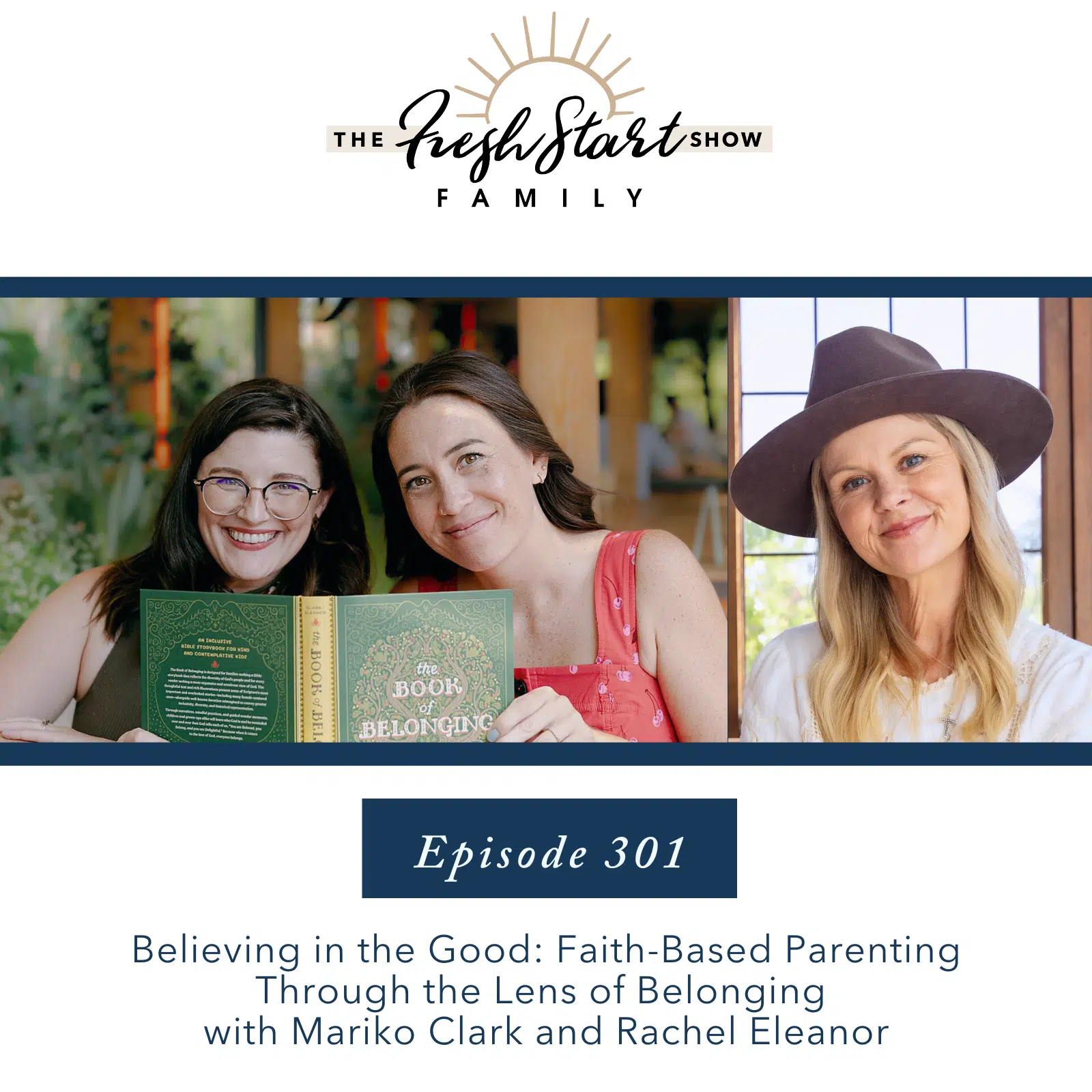
In this tender and hope-filled episode, Wendy talks with author Mariko Clark and illustrator Rachel Eleanor, creators of The Book of Belonging—a reimagined children’s Bible centered on original goodness, emotional literacy, inclusive imagery, and a deeply compassionate view of God.
Together, they explore what it means to raise kids with a faith rooted in love, equity, and belonging—especially when you’re navigating your own journey of healing from high-control theology or rethinking inherited beliefs.
💛 What You’ll Learn:
- How to introduce Scripture without fear, shame, or pressure
- Why representation in spiritual spaces matters deeply for kids
- How embodied, relational practices help children feel safe with God
- The story behind The Book of Belonging and its gentle theology
Whether you’re deconstructing, rebuilding, or somewhere in the beautifully messy middle—this conversation will remind you: you’re not alone.
Want to learn how to escape a punishment mindset?
This free bundle comes with an extensive learning guide & workshop with me, where I’ll teach you ways to build a strong, compassionate, FIRM & effective discipline toolkit that works with kids of ALL ages!
Inside this FREE learning bundle, I’ll teach you:
- Methods to build intrinsic self-control muscles
- Strategies that unite you
- The importance of self-calming
- Natural Consequences
- Logical Consequences
- Creative Problem Solving Methods
Grab your free bundle & start learning today!
Episode Highlights:
- Belonging is a core need for every child. When kids feel seen and safe with God, their behavior shifts from the inside out.
- Children learn who God is by watching how we love them. Identity shapes action far more than instruction ever will.
- Parents around the world are quietly “editing” old Bible stories because their bodies signal something doesn’t feel right. That’s wisdom, not rebellion.
- Representation in children’s Bibles matters. Kids need to see women, people of color, a wide range of emotions and a God who isn’t distant or punishing.
- Embodied faith practices help kids move emotions, build resilience and experience God through their whole selves, not just their thoughts.
- Shifting from original sin to original goodness opens the door for compassion, courage and healthier family dynamics.
- You’ll parent differently when you believe you were created good, loved as-is and never separated from God.
- Kids who know “I belong” naturally extend belonging to others — which is exactly the world-changing work faith is meant to do.
Resources Mentioned:
Find The Book of Belonging on Instagram
Grab a copy of Mariko & Eleanor’s book The Book of Belonging: Bible Stories for Kind and Contemplative Kids
The Book of Belonging Substack
Catch this full episode on YouTube!
Unable to listen or prefer to read along? Here’s the transcript!
Wendy (00:03.936)
Hello, families, and welcome back to a new episode of the Fresh Start Family Show. So happy you are here. Today, we are with Mariko and Rachel, authors of and illustrator of the Book of Belonging, the most beautiful children’s Bible I have ever, ever, ever, ever seen and read in my life. Ladies, welcome to the show. We’re so happy you’re here.
Mariko (MAH-ree-ko) (00:22.455)
Okay.
Mariko (MAH-ree-ko) (00:27.222)
Thanks, Wendy. Wendy, you can actually just call me Mari. I should have said that before we started. It just makes it all easier.
Wendy (00:33.522)
Awesome. Okay, Mari. think I swear when I do episodes that is the hardest part is getting past the names and then once I do that, I’m like my shoulders relax and I’m like, let’s chat. So Mari and Rachel.
Mariko (MAH-ree-ko) (00:42.67)
I usually try to say that before, but yes, we’re thrilled to be here, Wendy. Thank you for having us.
Rachel Eleanor Phillips (00:49.105)
Yeah, thank you for having us.
Wendy (00:50.726)
Absolutely. So today, ladies, our subject matter is believing in the good faith-based parenting through the lens of belonging. Your beautiful book is called The Book of Belonging. And we’re going to get into so many things today about why this book is so beautiful, why this Bible is so beautiful. But I have to share with you that this Bible has been extra special to me because I’ve learned that this is common.
in the world of us who have more evolving faiths. But probably, I think it’s been maybe a year and a half or so is when like I finally formally left the evangelical church. Now I’m at a Disciples of Christ Church and kind of is really cool full circle because that is where I came to know my faith when I was 19 years old, was in a Disciples of Christ Church, and now I’m back there and it’s just like everything is.
Mariko (MAH-ree-ko) (01:39.374)
That’s all.
Wendy (01:43.946)
good again, right? It’s like a fully inclusive, affirming church based on justice, joy, and inclusion. And I’m just so happy. But for a long time, I was trying to figure out what was happening as my eyes were getting open to things. And then it all kind came to a head, where I had a beautiful parenting ministry that I was building at our large church. And then they found out that I had done an affirming theology study and had decided to become an affirming Christian. And they asked me to step down and leave.
And they asked me to step down. Of course, I could have stayed and still tithed and showed up and all the things. But those of us who choose not to take that route, that doesn’t feel quite right. We advocate for a fully inclusive space where everyone gets to contribute and lead and all the things. And so I knew I had to leave. And it was just a really intense season for me where
Mariko (MAH-ree-ko) (02:13.933)
Hmm.
Mariko (MAH-ree-ko) (02:26.626)
Yeah.
Mariko (MAH-ree-ko) (02:31.814)
Mm-hmm.
Wendy (02:40.991)
the America was changing too, right? Like I was witnessing America changing into more of like a Christian nationalist nation or I should say, I shouldn’t say that. It was more like, obviously we saw that starting to rise. And so it really scared me. And I found myself struggling to get into scripture, to get into the word because it just felt like when I picked up the Bible, it was like this very weaponized thing.
Rachel Eleanor Phillips (02:43.057)
Hehe
Mariko (MAH-ree-ko) (02:48.022)
Mm-hmm.
Mariko (MAH-ree-ko) (02:55.938)
Yep.
Wendy (03:09.277)
that all of a sudden I just, I was feeling very distant from. And I knew it wasn’t from God. I knew it wasn’t from Jesus, but it was like, there was just so much like hurt and anger that was like still pumping through my veins. The hypocrisy and the like, everything was just like, ugh. And when you girls sent me this beautiful book, I found myself just feeling so safe and peaceful and wanting to like,
Mariko (MAH-ree-ko) (03:36.548)
Hmm.
Wendy (03:39.402)
be back in it. And I’m an adult, right? Like, and obviously, like, I know, I know it’s for children, but it’s just, mean, I just cannot tell you how beautiful it is to have this Bible be representative of the type of faith that I identify with as a Christian, right? Like, I just slowly back stepped from the type of Christianity that I started to realize, this is not
Mariko (MAH-ree-ko) (04:00.46)
Yeah.
Wendy (04:07.973)
me. Like, this is, I can’t mask anymore. This is not what, you know, what I support. And so, thank you. Thank you for every word that you wrote, every story that you told, every picture that you write in this. It is just the most beautiful representation of the story of Christ and Scripture and God’s love and belonging. So, thank you so much, ladies.
Mariko (MAH-ree-ko) (04:08.962)
Mariko (MAH-ree-ko) (04:12.866)
Yeah.
Wendy (04:35.509)
With that said, would you each just take a moment to introduce yourself and share with us why you wanted to be part of this project. And let’s start with you, Mari.
Mariko (MAH-ree-ko) (04:35.8)
Rachel Eleanor Phillips (04:45.139)
you
Mariko (MAH-ree-ko) (04:46.37)
Wendy, you started off making me cry. You can’t do that. So my name is Mariko Clark. You can call me Mari, whoever is listening. I’m the author of the Book of Belonging. I wrote these stories for my kids, yes, but I agree with Glennon Doyle’s quote that there’s no such thing as other people children. So I wrote it for
Rachel Eleanor Phillips (04:49.403)
Mm-hmm.
Wendy (05:11.935)
Mmm.
Mariko (MAH-ree-ko) (05:13.866)
your kids and Rachel’s kids and the inner child and all of us that like very often is aching for this sort of like exactly like you said Wendy these sorts of stories told from this type of lens and I am so thrilled that you felt that way about it and I think you said something that’s really important that we should I would like to highlight before our conversation you said something to the extent of I needed to leave
you know, not God or like that you saw the problem not with God, but with the church. And I think so often when we’re talking around this issue, people will say something like, they left their faith. they walked away from God. Right. Like that’s a lot of the language that’s used. And I think that’s really tricky. And especially when, you know, kids can overhear these conversations and often do, I think it’s really important to hopefully, hopefully we’ve done this in the stories and hopefully we’re clarifying in conversation that like,
Wendy (05:44.937)
Yeah. Yeah.
Mariko (MAH-ree-ko) (06:12.044)
We can’t walk away from God, right? That’s impossible. God is always with us. God is in us. We don’t walk away from God. We walk away from people who misrepresent God. We walk away from institutions that weaponize God against certain groups of peoples, but we don’t walk away from God. Wherever we go, God goes with us. And I think that’s why this concept of belonging was so important for me to infuse into every story. But also it’s just like, talk, we use this word to death and I like.
I am perfectly fine with that because I think it’s so crucial for kids to hear, but especially for our generation that’s raising this next generation of kids, for us to really ingest that and make it a part of every cell in our body so that it becomes this automatic thing that we’re saying to kids no matter what, that like, you always belong with God, God is always with you, you can’t walk away from God, wherever you go, God goes with you.
Rachel Eleanor Phillips (06:46.386)
you
Wendy (07:07.701)
So beautiful. I will say that belonging, so we are a powerful parenting education and family life coaching organization here. And so we teach behavior modification, right? We teach parents how, if you want to get better behavior out of your kids, more cooperation, more trust, right? Like how to compassionately discipline versus punishment, all the things. But everything we teach is based on the basic needs of a human soul.
Mariko (MAH-ree-ko) (07:09.39)
you
Mariko (MAH-ree-ko) (07:20.573)
huh.
Wendy (07:35.71)
And so belonging is one of them. So when a human being, whether it’s a kid or an adult, like, because we do, we misbehave too. We’re short with the barista at Starbucks or we flick someone off on the freeway sometimes. But like when we have a lack of any of those things, so a lack, the four big buckets are power, belonging, love and value. And if you have a lack of belonging, you will seek to get that need met.
Mariko (MAH-ree-ko) (07:36.076)
Mmm… Yeah.
Mariko (MAH-ree-ko) (07:44.652)
Mm-hmm. Yeah.
Mariko (MAH-ree-ko) (08:00.77)
Hmm.
Wendy (08:05.489)
often in inappropriate ways, until you get that need met or power, right? Like, that’s what feel like we’re seeing a lot in America right now. Like, it will be met in unhealthy ways if someone isn’t taught or understands how to meet that in healthy ways. So the whole concept of belonging being so important to humanity and part of God’s natural design of like, we just belong together is so, so spot on and in line with our work. So thank you, Marie.
Mariko (MAH-ree-ko) (08:07.532)
Yeah.
Mariko (MAH-ree-ko) (08:13.25)
Yeah.
Mm-hmm.
Mariko (MAH-ree-ko) (08:20.334)
Mm.
Mariko (MAH-ree-ko) (08:29.976)
Yeah.
I love that. That’s so awesome to hear. I can’t wait to hear more about that, but I want to let Rachel tell her part of our partnership.
Wendy (08:38.068)
Yes!
Rachel Eleanor Phillips (08:40.858)
Absolutely. Hi, everyone. I’m Rachel Eleanor, and I’m the illustrator of the Book of Belonging. And wow, I was so thrilled to work on this project with Mari. It came at the right time. I had walked away from my church as well, Wendy, over issues of affirming theology, wanting that inclusion to be a part of our church practice. And that was a long and sticky road. And I think a lot of people identify with
what it feels like to actually leave a place where I felt a lot of belonging and suddenly to feel, wait, this isn’t allowed. I took it too far. But feeling the cognitive dissonance of being in a place where I’m like, I can’t sing these worship songs and be in this space. And all I could see is all the people who aren’t in here feeling welcome, feeling celebrated.
Wendy (09:14.805)
8.
Wendy (09:21.237)
Yes!
Wendy (09:34.644)
Yes.
Rachel Eleanor Phillips (09:37.447)
the church, we had a meeting and I talked about like, we want to be welcoming. We just can’t be affirming. And I said, I want to be in a space where these people are celebrated and where my friends of color don’t feel tokenized in your campaign to be well-intentioned justice warriors, you know? It was a messy, grief-stricken process. I did walk away from my capital F faith. I didn’t know.
Wendy (09:42.964)
Mm.
Wendy (09:46.857)
Yes.
Rachel Eleanor Phillips (10:06.846)
It all felt, like you said, very hard to touch. Particularly scripture was way too triggering and hard for me to touch for a while. And I trusted that the God that had met me in love and mystery in so many ways was gonna hold me through it and was not going to be hurt or offended by my.
Wendy (10:10.42)
Mmm.
Wendy (10:29.012)
Yeah.
Rachel Eleanor Phillips (10:31.302)
what I called wandering in the wilderness. And there’s lots of great books written about that now, which is wonderful. A lot of us went through that. So I was just beginning to get an appetite to do more writing and drawing and revisiting scripture right when Mari emailed me. So it was was perfect timing. I was I was feeling ready and excited. I likened it to like, you you move to a foreign country, which many of us are dreaming of doing right now.
Wendy (10:35.679)
Yes.
Wendy (10:48.669)
Of course.
Mariko (MAH-ree-ko) (10:49.838)
Thank
Mariko (MAH-ree-ko) (10:58.059)
Okay.
Rachel Eleanor Phillips (10:58.288)
and you learn a new language and you’re immersed in the culture and one day you start singing a song in your mother tongue. And that’s how it felt. Like I started thinking about scriptural stories again. And I thought, wow, there’s something compelling here. Me, to me, wow, I like this stuff. I was not okay with thinking about or touching. And they started popping up again. And I realized, okay, I think I’m ready. And then Mari gave me the call.
Wendy (10:58.537)
Yeah.
Wendy (11:07.093)
Mmm.
Mariko (MAH-ree-ko) (11:08.64)
Mm.
Wendy (11:13.449)
Yeah.
Wendy (11:22.005)
Mm.
Mariko (MAH-ree-ko) (11:24.75)
Mm-hmm.
Rachel Eleanor Phillips (11:26.284)
and we were really aligned on what we wanted from Children’s Bible.
Wendy (11:26.516)
Isn’t that wild?
Mariko (MAH-ree-ko) (11:28.59)
you
Wendy (11:31.581)
And how did you know Rachel Murray?
Mariko (MAH-ree-ko) (11:34.606)
We were introduced by a friend. as the story goes, this is way back in 2020. I had this idea for the book. Well, I was forced into this idea by being a parent. My daughter, who is five at the time, was just learning how to read. One day out of nowhere, she’s like, hey, mom, does God love boys more than girls? I’m like, no, where did you get that? How dare you? Like, I have raised you to be a feminist. Like, where is this coming from?
Rachel Eleanor Phillips (11:58.78)
Hahaha
Wendy (11:59.061)
Yeah.
Mariko (MAH-ree-ko) (12:03.534)
And she goes on to say that, you know, the story Bible that we had at our house at the time only had two, she called them two girl stories and that the rest were about boys. I’m like, what are you talking about? I go home and I go through with like my little sticky note and my pen and I started keeping a tally and sure enough, only two of the stories had a female main character. And so I’m like, oh, that’s weird. That’s fine. I’ll just get a different one. So I ordered the top eight story Bibles at the time on Amazon.
Wendy (12:11.541)
Hmm.
Mariko (MAH-ree-ko) (12:31.278)
Same thing, went through with my little sticky note in my pen and I kept a tally of how many stories had a female main character, how many stories had a female mentioned, and I’m not even named, just like she, aunt, mother, anything, I would take anything, and how many of the pages had a female depicted anywhere on the page. And I always misquote these stats, they’re on our website, but I think it was that 7 % of the stories had a female main character.
Wendy (12:44.403)
Yeah. Yeah.
Mariko (MAH-ree-ko) (13:01.806)
19 % had a female mentioned at all, even just the word she. And 23 % of the pages had a female depicted anywhere on the page. Like I’m talking about like Jesus preaching to a crowd.
Rachel Eleanor Phillips (13:19.665)
I’m so sorry, I’m on airplane mode. I don’t know how my phone turning off every single.
Wendy (13:24.757)
No, I see this as God’s alert, alert, listen people, listen up, because Mari is speaking some wisdom. I swear, I have stories like this where alarms have gone off. I have really good stories. So we welcome that alarm. This is like a signal of importance.
Mariko (MAH-ree-ko) (13:29.486)
I’ll say it again.
Rachel Eleanor Phillips (13:39.093)
thank you. Everything is off. I’m going to throw it across the room. All right. We are open in listening and in bold, whatever Mari is about to say.
Mariko (MAH-ree-ko) (13:41.592)
We’ll take it, we’ll take it.
Mariko (MAH-ree-ko) (13:49.23)
Bug.
Wendy (13:49.407)
Yes.
Mariko (MAH-ree-ko) (13:52.398)
Love it. No pressure. So 23 % depicted anywhere on the page, even like crowds, like crowds listening to Jesus, not one woman in most of these pictures, just beards everywhere. And so I thought, okay, I guess I’ll just do this myself, right? Like any parent would do for their kids.
Wendy (14:01.801)
So interesting.
Wendy (14:13.087)
Yeah.
Mariko (MAH-ree-ko) (14:16.738)
just you do what you need to do to give your kids the world that you want them to live in. And so I’m like, okay, I’ll just start. I had already sort of been doing that, like telling my kids the stories that I knew that were included in most story Bibles. Or, you know, we had this one that was a story about Noah’s Ark. And it said something about like Mrs. Mrs. Noah, she picked up a broom to clean up the Ark, to clean up after the animals. And I was like, what?
Wendy (14:39.285)
you
Wendy (14:45.045)
Mm.
Mariko (MAH-ree-ko) (14:46.646)
And so like stuff like that, my husband and I would sort of just like be editing as we went all these stories. And so after a while we had this sort of like mental collection of stories we were either orally passing down to our kids or stories that we had sort of augmented to be able to show them like, I have two daughters and I had a baby son at the time. He’s four now. And so we wanted them to know like, this is like, this is the reality. We don’t have to make this up, right? Like women were present everywhere Jesus went.
Wendy (14:52.009)
Yeah.
Wendy (15:12.339)
Yes.
Mariko (MAH-ree-ko) (15:15.51)
because they aren’t named in the stories doesn’t mean that they weren’t there because often they are named. That’s the funny thing. says they’re not in the story Bible. So we started, I started to realize like, I could just do this. I’m already doing this. Why don’t I just do this? So it started with me wanting to make this thing for my kids. And then the more friends I told about it, we’re like, me too. Sign me up too. So I started to think, okay, it’ll be a small collection of friends. And then before I know it, I’m like, okay, I think enough people would want this. Maybe I could do some sort of like Kickstarter.
Wendy (15:15.764)
Yeah.
Mariko (MAH-ree-ko) (15:45.218)
And so then I think, okay, well, I need an illustrator for Kickstarter. At the time I was reading Scott Erickson’s Honest Advent, it was Christmas time. And so was going through his Honest Advent book, which is so good, highly recommend it. And I just love Scott’s work. And I had been a huge fan of his illustration for a long time. My husband’s a designer, so he really values that sort of spiritual practice of like looking at illustrations and meditating on images. And so I thought, you know what, it’s Christmas. Maybe I’ll get a Christmas miracle. So I reached out to Scott.
Wendy (15:52.635)
yeah.
Mariko (MAH-ree-ko) (16:13.882)
like cold emailed him and just said like, hey, here’s this idea I have, would you ever even dream of illustrating it? And he was so kind. Scott and I are good friends now, so like I can totally picture him responding to the email the way he did. He was so kind, so affirming. At the time he was working on a book, so he’s like, I can’t do this, and it’s not even really quite my style, but I actually just met someone that I think I should introduce you to. And so he connected Rachel and I over email.
Wendy (16:24.499)
Yeah.
Mariko (MAH-ree-ko) (16:41.856)
And just as I was about to send her sort of like a, I kind of wanted to vet her in the same way you’re talking, Amy, of like, if we want to work together, I need you to know that I’m affirming and I need you to know that I, like, I don’t believe in biblical inerrancy. And if we’re going to write these stories, like I want it to have this lens of belonging and not of penal substitutionary atonement. Like it’s not about punishment. As I was thinking of sending that email, Rachel sent me almost
Wendy (16:58.942)
night.
Mariko (MAH-ree-ko) (17:10.644)
verbatim what I had wanted to say to her. this like spicy vetting of me. And now that we’re good friends, she’s like, I can’t believe I sent that. And I’m like, I was about to send it right back to you. This is perfect. This is serendipitous. Absolutely. So it was just love at first sight with Rachel and I were like, absolutely immediate creative partners. And it has just been a dream to work with Rachel. Like not only is she incredibly talented as you were showing, Wendy,
Wendy (17:15.125)
Of course.
Wendy (17:36.789)
Mmm.
Mariko (MAH-ree-ko) (17:39.424)
for anyone who’s listening, Wendy was opening the pages and showing some of Rachel’s incredible illustrations. She’s so talented, but also Rachel is a really amazing writer herself. And so she got to weigh in on some of my stories and help me find the thread when I was losing it. And she, was also this really amazing collaborative process where I would say, she would say like, Hey, you’re doing this one thing here, but what if, you know, we put a speech bubble over this character and then made this sequence almost like a comic book then.
Wendy (17:41.917)
Yeah, if you’re on YouTube, this is a good episode to look on YouTube.
Mariko (MAH-ree-ko) (18:09.262)
we could show instead of tell, which Wendy, as you know, is a fantastic way to work with kids to show instead of tell and allow them to use their imagination. So it just, it’s been a dream and we’ve become close buddies in the process. And it’s just been so fun to watch her step into motherhood herself and to share some of that as well. Yeah.
Wendy (18:18.164)
Yes.
Wendy (18:30.165)
Mmm.
Rachel Eleanor Phillips (18:33.156)
Mm-hmm.
Wendy (18:33.265)
Wow. It’s amazing. And I do feel like this conversation for me was serendipitous too. mean, we, we had this like, we’ve been planning this for a year, ladies, right? Like life happened, parenthood happened, we had to reschedule, I feel like a bunch of times, but I really needed this conversation like today. I’ve just, speaking of belonging, like it is such a weird season where it’s like, for me, it’s just such a, I am
Mariko (MAH-ree-ko) (18:42.466)
Yes. Yep. Yep, we did.
Hmm. I love that.
Rachel Eleanor Phillips (18:50.767)
on
Wendy (19:01.991)
as one of my mentors said yesterday in a session, like, OK, this is the next step up to be able to have compassion, to raise your compassion and your understanding and your grace with others who are really seeing the world differently than you. It is kicking my ass right now. And I’m like, I can do this. Today I said that. And being here with you guys who are like,
Mariko (MAH-ree-ko) (19:08.462)
you
Wendy (19:29.023)
Taking action to create the world of belonging that you see brings beauty and light and unity, right? It was very important for me to have this interview today. So cool. So God’s awesome and obviously orchestrates incredible things. So let’s dig into this topic that we have today. And we can each just riff on these points. And I’ll go back and forth between the two of you.
Mariko (MAH-ree-ko) (19:32.696)
Mm.
Rachel Eleanor Phillips (19:44.762)
Mm-hmm.
Wendy (19:58.05)
since we have three of us today. So looking at Bibles for Children and this book of belonging from the angle of believing in the good, faith-based parenting through the lens of belonging. And I will say, actually, before we even dig into this topic, I was telling my family about this interview. My kids are now almost 15 and almost 18. Seriously, I don’t know how it happens, but I’m like, I cannot believe my daughter is almost an adult.
Mariko (MAH-ree-ko) (20:21.838)
Okay.
Wendy (20:27.219)
But I was chatting with them, and I’m like, my gosh, look at this beautiful Bible. I’m interviewing these women. And I said to Taryn, my little guy, I was like, do you remember the Lego Bible that I had gotten you? my gosh, it’s horrendous. It is so scary. It is bloody. There is all these pages of blood and guts. The Lego people are like, is Legos, guys killing each other.
Mariko (MAH-ree-ko) (20:38.35)
There’s a leg up
Mariko (MAH-ree-ko) (20:49.024)
Of course.
Wendy (20:56.709)
And I remember the day, and this was still when I was deep in the evangelical world. And I was very just like, I think it happens little pieces at a time. You’re like, huh, that’s odd. Why are we teaching children this? you start to pick up one little thing at a time sometimes. And I remember being like, this is really odd. And I would look again. I’m like, this is a children’s Bible? And it was a big old Lego Bible. It cost me like $70 or something. I don’t remember. It was a lot.
Mariko (MAH-ree-ko) (21:01.08)
Sure, yeah.
Mariko (MAH-ree-ko) (21:09.614)
Mm-hmm.
Mariko (MAH-ree-ko) (21:19.95)
you
Wendy (21:23.381)
And Tarrant was like, he was like, I love that thing. He was like, all the blood and guts, and you took it away. You made it. And I was like, you were like three years old. I’m like, who in the world thought that that was a good idea to put this in front of kids? And now we know that is very in line with a lot of the teachings, right? There are very prominent teachers that will sit children down in a circle on Easter and say, you deserve to die. And it’s like, wow. And those of us who are.
Rachel Eleanor Phillips (21:26.38)
Yeah.
Mariko (MAH-ree-ko) (21:26.648)
Hahaha!
Mariko (MAH-ree-ko) (21:30.926)
you
Mariko (MAH-ree-ko) (21:43.438)
Mm-hmm.
Mariko (MAH-ree-ko) (21:49.486)
Yes.
Wendy (21:52.758)
choosing to do things differently as we evolve, we’re like, OK, we’re going to do it a little bit differently, right? And I do have so many students, not just in America, but in different parts of the world, who have the same journey. They’re picking up these children’s Bibles, and they’re like, wow, original sin is being hammered into these kids from a very young age.
And they’re in the messy middle of trying to figure out how they’re evolving and questioning and finding safety in that because that’s a whole journey when you’ve been brought up in a world where infallible and inerrant reading of the Bible is the only way. And if you stray, you know, like, but they have shared how they’re starting to edit a little bit when they read these children’s Bibles and they’re like, that didn’t feel right as I was reading this to my three year old.
Mariko (MAH-ree-ko) (22:21.838)
Okay.
Mariko (MAH-ree-ko) (22:30.956)
you
Wendy (22:45.317)
So we know this is a big thing for parents. This is a universal thing that’s happening. So let’s talk about this from as you guys were writing and illustrating this, this idea of shifting the focus from doing to being as you were sharing these stories and illustrating these stories. So instead of over-emphasizing instruction, helping kids understand that God’s love is rooted in who they are, not just what they do, right?
Mariko (MAH-ree-ko) (22:48.11)
Mm-hmm.
Mariko (MAH-ree-ko) (23:09.922)
Mm-hmm. Mm-hmm. Okay.
Wendy (23:12.585)
taking the focus away from behavior and, again, not focusing on shame and not focusing on performance-based worth. There are definitely many elements of that in the Book of Belonging. Can you speak to the importance of that?
Mariko (MAH-ree-ko) (23:19.821)
Mm-hmm.
Okay.
Mariko (MAH-ree-ko) (23:29.387)
Yeah, I mean, I think it all sort of boils down to my refusal to incorporate penal substitutionary atonement in the book, which is just a fancy way of saying like this sort of like pretty foundational Western Christian belief that God needs to that we are born flawed, that we’re born bad and that God needs to because of the flawed way that God
Wendy (23:51.957)
night.
Mariko (MAH-ree-ko) (23:56.718)
that God then needs to punish us and that Jesus sort of jumps in front of God’s punishment and takes it on himself. And that almost this idea of like, I picture it like, where the sort of like dark shadowy person who has to put on like a sparkly gold dress to kind of cover up that darkness, as opposed to the way that I approach it from the
Wendy (24:08.661)
Bye.
Mariko (MAH-ree-ko) (24:26.21)
lens of original goodness, it’s that we are all born this gold sparkly person and that because of our shame and because of our striving and because we can’t seem to believe that goodness about ourselves, we put on these shadowy sort of layers of shame, of striving, of grasping for what God was already giving us to use some language from the book. And that the invitation isn’t to cover up your badness. The invitation is to shed those layers
and believe in alignment with what God speaks over us. There’s this moment in the book of, well, in the Bible, but that we focus on in the book of belonging, where Jesus is being baptized and says the Spirit of God descends on him like a dove and God says, this is my beloved son in whom I am well pleased. So we see in that one sentence that God’s claiming Jesus, he’s speaking belonging over Jesus, right? Like this is my beloved son.
God is speaking love over Jesus and is saying, I’m well pleased. And I got into it with our, we had a Hebrew language expert who has read every page and word of the book. had a panel of six incredible advisors. Not one of them was a straight white male. I just want to put that out there. Who read every single word of the book. And Elle, who is our Hebrew language advisor. I was like, talk to me about this in whom I am well pleased. Cause to me, I don’t love that language. To me, that’s like.
Wendy (25:31.154)
Nice.
Wendy (25:40.915)
Nice, yes.
Mariko (MAH-ree-ko) (25:53.6)
I don’t know, just like a Victorian, like, good job, Chad. Like you’ve done it kind of thing. I’m like, no, I don’t love that. She’s like, no, like to kind of get into it, know, ancient Hebrew is this agrarian language. Like they’re talking about the function of a thing. So like to say that you are well pleased with your rake, it’s like this rake is doing its job. It is doing what it is intended to do. And it’s the best rake I’ve ever had. I am so pleased with it. It’s like that sort of thing that like God is well pleased with you when you are being the youest you.
Wendy (25:56.649)
Yes.
Wendy (26:14.352)
Mmm, nice.
Mariko (MAH-ree-ko) (26:22.872)
that you can be. God is well pleased with Jesus because Jesus is living in complete alignment with Jesus’ identity as God’s son. So if we, there’s so much nerdy theology, participation theology that we could talk about, but basically like we can apply that same thing to all of us as children of God, as image bearers of God’s spirit that
Wendy (26:38.719)
So cool.
Mariko (MAH-ree-ko) (26:47.522)
God is speaking those same things over us. This is my beloved child and whom I’m well pleased. This person pleases me when they are exactly themselves, when they trust that the person that I created them to be, that I put my spirit in, is actually just who they are and that they don’t have to strive towards belonging and that they don’t have to hide from belonging, that they just get to live into who they are.
Rachel Eleanor Phillips (27:12.665)
Mm-hmm.
Mariko (MAH-ree-ko) (27:13.558)
And so I think that when you start with that place of original goodness, you don’t have to do all of the sort of like backwards calculating that penal substitutionary atonement requires of you where it’s like, okay, well, if you’re gonna be punished, if you’re gonna go to hell, then we need our kids to say this special word so that they won’t end up there. If we want them to say these special words, we have to make them want to say them. So to make them want to say them, we have to convince them that those words are necessary. So we have to convince them that they’re bad.
How do we convince them that they’re bad? We scare them, we point out the behavior and tell them, hey, your behavior is evidence of your badness. Instead of, hey, your behavior tells me that you don’t really trust your own goodness, talk to me about that. And it just creates an entirely different posture towards our kids. And also just changes the language we use to speak to them. I think it’s called, when do you probably know this? What’s that? Pygmalion, Pygmalion theory that like,
Wendy (27:42.889)
by scaring them.
Rachel Eleanor Phillips (27:44.451)
Mm-hmm.
Wendy (27:54.953)
Yes.
Rachel Eleanor Phillips (27:54.969)
Mm-hmm.
Mariko (MAH-ree-ko) (28:10.84)
people will live up to what’s spoken over them that like, you if you tell a kid like, well, you’re not very good at math, this test is gonna be hard, they perform poorly. And this has been tested a ton of times. And so it’s that sort of thing. Like if we’re telling a kid, hey, you’re so good and loved and delightful, like, but the way you’re acting, like, it doesn’t seem, it doesn’t seem like you believe that. Talk to me about that. That’s a totally different thing to speak over a kid than like, you’re inherently terrible.
Wendy (28:13.097)
Mmm.
Yeah.
Wendy (28:19.957)
Exactly.
Mariko (MAH-ree-ko) (28:38.222)
So it makes sense that you’re acting like a terrible kid, but stop doing it. Like, what? That’s just a completely different set of tools to hand a kid. to me, I think it’s so evident when you see these kids that have original goodness spoken over them as opposed to original sin. and it’s, think the thing, the conversation that is so fun for me to have with parents is like, I didn’t make this up, you guys.
Wendy (28:42.257)
Yes.
Rachel Eleanor Phillips (29:05.103)
Yeah.
Wendy (29:05.652)
Right?
Mariko (MAH-ree-ko) (29:07.686)
Augustine made up original sin and this was hundreds of years after Jesus. Yes, but like I didn’t make this up. I didn’t come up with this. I think that the phenomenon where we see like you’re talking about Wendy, a lot of parents sort of choosing a different style of parenting and choosing a different style of storytelling. I think it more points to just the internet that like so many of us are able to educate ourselves and have access to ancient documents. And like we’re not
Even our parents’ generation, they just had to kind of trust their local pastor. They kind of had to trust the smartest person in the room. They had to trust a book that they could check out from the library. Like, we’ve got the internet. We can research these things. We can see like, hey, original sin is actually not the most ancient theology that we have. That’s not what the original, that’s not what the early church was believing. That’s not what the early church fathers were believing. This isn’t, this isn’t original. Original sin’s not original.
Wendy (29:49.322)
Yeah.
Mariko (MAH-ree-ko) (30:05.646)
And I think it’s like, people are like, wait, what? There’s other valid ways of seeing this? Like, yeah, there’s total, totally biblical, theologically sound ways to interpret these stories that don’t require you to tell your kid from the jump that they’re terrible. And isn’t that so liberating? Like you talked about, like, I forget how you said it, but I heard it as like having the ick. Like so many parents are reading these stories and they’ll like get the ick, right?
Wendy (30:05.717)
Yeah.
Rachel Eleanor Phillips (30:09.871)
you
Rachel Eleanor Phillips (30:22.274)
Mm-hmm.
Mariko (MAH-ree-ko) (30:32.898)
something in story that doesn’t quite sit well, that feels kind of icky. Like there’s a reason that that feels icky. There’s a reason that like your body is reacting to some of these things that the stories are requiring you to speak over your kid. Like pay attention to that. Like tune into that. If it feels icky, why does it feel icky? Dig into that. Rachel said it really early in our professional relationship. She said something like, I just kind of have to believe that I’m not a better parent than God.
Wendy (31:02.941)
Yes.
Rachel Eleanor Phillips (31:03.552)
to be at least as loving a parent as I am. Yeah. Yeah.
Mariko (MAH-ree-ko) (31:04.11)
It was important. Yeah.
Wendy (31:08.053)
Policed, minimum, right? Oh, it’s so good. Yeah, that word ancient. When people ask me, am I a believer? Nowadays, it’s interesting. You have to say it in an interesting way. And I’ve just been playing around with it, right? And I’ve been really trying to focus on, again, like,
Mariko (MAH-ree-ko) (31:09.91)
Great.
Mariko (MAH-ree-ko) (31:21.614)
Mm-hmm.
Mariko (MAH-ree-ko) (31:26.509)
Yeah.
Wendy (31:35.006)
doubling down into unity and just speaking for what I want and what I advocate for versus what I’m not and what I’m against, right? It’s just such a journey for me. But that ancient word, for me, I often have been experimenting with, I practice ancient progressive Christianity. So it’s it’s nothing new. To me, this is the ancient way. And it’s also in today’s age.
Mariko (MAH-ree-ko) (31:41.154)
Mm-hmm. Yeah. Yep.
Rachel Eleanor Phillips (31:42.542)
Mm.
Mariko (MAH-ree-ko) (31:53.122)
Mm-hmm.
Wendy (32:02.953)
considered progressive, which is just so interesting, right? So it’s like, so very confusing. yeah, this idea of the original sin versus original goodness has just been really like just blowing the minds of people in my community. I didn’t grow up thick in the like high control religious circles or the evangelical circles. So I just didn’t realize it was such a big thing until I started supporting so many people who were really struggling in their adulthood.
Mariko (MAH-ree-ko) (32:04.546)
Yes. Isn’t that funny? Yes.
Mariko (MAH-ree-ko) (32:26.158)
Hmm
Wendy (32:32.253)
with shame and implementing firm and kind connection-based parenting because of really from the beginning they had been given this message. just really, like the struggle was so intense. so I love the idea that shame is something that, and we use this analogy quite often in our work, is like we get to shed those layers that were never meant for us to begin with, like an artichoke heart, right? Like the middle of an artichoke is so tender and soft.
Mariko (MAH-ree-ko) (32:54.456)
Hmm.
Mariko (MAH-ree-ko) (33:00.95)
Mm hmm.
Wendy (33:01.621)
and yummy. And then as it grows older, it develops these very hard shells and they have daggers on the end that will bloody your skin if you don’t know how. And so over time, shame is one of those things that I day in, day out support parents that I work with to shed shame and make sure they’re not repeating that same generational cycle of putting shame onto children. Because I believe guilt is like…
Mariko (MAH-ree-ko) (33:10.094)
Yeah.
Wendy (33:27.381)
perfectly human God design, right? Like it’s a wonderful inner compass of like, hey, if you do, we always say, if you feel guilty, you are guilty, probably. So like just make amends, make a different decision tomorrow, right? But shame is a whole different can of worms. And that was never meant to be put on children. And it makes us believe as we get older, like what is wrong with me, right? Like that was a big phrase. My mom grew up like Irish Catholic, like really strict schools and stuff.
Mariko (MAH-ree-ko) (33:36.726)
I can’t wait,
Mariko (MAH-ree-ko) (33:48.119)
Mm-hmm.
Rachel Eleanor Phillips (33:48.3)
Mm-hmm.
Mariko (MAH-ree-ko) (33:52.141)
Okay.
Wendy (33:55.653)
And that was the phrase, like, what is wrong with you? And it’s taken years to shed that and make sure I don’t pass that on to my children. So shame is just such an interesting thing. And really, I remember years ago the concept of being just totally in love with who you are and it being enough, like inherent worth and goodness. And I was just always like, what does that even mean? Like, come on. Like, we are doers, right? Like, I’m a mover. I’m a shaker. I’m a doer. And now.
Mariko (MAH-ree-ko) (33:59.894)
Mm-hmm. Yep.
Mm-hmm.
Mariko (MAH-ree-ko) (34:15.502)
Mm.
Mariko (MAH-ree-ko) (34:20.487)
Wendy (34:25.052)
like 15 years into my exploration of that subject, I’m really finally starting to understand like what it means to just really be rooted in the belief that you are enough just because you literally are. Like, that’s it. That’s it. So.
Mariko (MAH-ree-ko) (34:40.108)
Yeah.
Wendy (34:42.534)
Amazing. Okay, I’m going to pass this one to Rachel this time. This idea of identity shapes action and how this showed up when you guys were illustrating and writing the Book of Belonging. When we tell children who God is and who God says they are, consistently and intentionally it shapes their identity, leading to actions that naturally flow from a place of belonging and belief. So this idea of just telling children over and over again who God is.
Mariko (MAH-ree-ko) (34:45.422)
Yes.
Wendy (35:12.36)
continuously and intentionally. What would you say about
Rachel Eleanor Phillips (35:15.646)
I love this question. I think this identity and action piece, Mari and I, and it sounds like you two have felt a lot of overwhelm about the capital W world in our country and what’s going on and feeling helpless. And I keep saying like, I can at least go to my grave knowing we took one solid whack at American Christian nationalism. We handed a book to children.
that will hopefully be foundational in them understanding that their identity at its core, they are beloved. I think people, children who believe that they are fundamentally loved have greater capacity to show and extend that love to others. they believe that they belong and everyone belongs, then they will extend that to others. I think it’s so easy if you have a theology of original sin.
I’m just a sinner saved by grace, that minimizing of self that it’s, you’re degrading yourself and it’s gonna be easier and easier to look at others too and to look at others as people to rescue, to educate, to discipline instead of as people to learn from, to discover from, to partner with. And
Wendy (36:26.429)
It’s true.
Wendy (36:34.238)
Yep.
Rachel Eleanor Phillips (36:42.658)
Gosh, I was like, just in a conversation, I’m wondering why this feels connected to me, but how our kids watch what we do and what we say, and then they perform it. And sometimes you don’t even know if they’re listening to what you’re saying, and they’re definitely watching what you’re doing, and those two things go hand in hand. think that’s, Mari’s in my relationship, words and pictures, right? It’s not just pictures, it’s not just words. There’s something really magic when they both align, and I think that happens with our words and our actions as well.
Wendy (36:57.341)
Right.
Rachel Eleanor Phillips (37:12.026)
And there are times when kids need to be shown and you can say, I need you to be kind, I need you to be kind, I need you to be kind, we need to be kind. But when they see mommy, when Finn, my son, sees me rub daddy’s back, when I say daddy’s sad, he’s having a bad day, let me rub his back, or not even say it, just do something, he’s seeing me be kind. And in turn,
Wendy (37:33.128)
Yeah. Yeah.
Rachel Eleanor Phillips (37:38.358)
When Finn saw me crying, he came over and was like, let me hold your hand. I’m like, you are too, a half. That’s beautiful. he’s watching us do that. that’s something I’m really passionate about with pictures is that, and pictures especially, there’s a lot of room for nuance and metaphor. A picture’s worth a thousand words, right? And I love helping Mari. We gotta keep the word count, right? Word count down.
Wendy (37:42.288)
Mm, yeah.
Mariko (MAH-ree-ko) (37:42.463)
hehe
Wendy (37:45.212)
amazing.
Rachel Eleanor Phillips (38:05.698)
because every single one of Mari’s words have got a hit. They’re like song lyrics, they’re poetry. they, we, you know, you don’t need to say so and so said this and then they walked over here and then they did this. Like I can take care of that. can show up crowd moving. You don’t have to use up the word count. But also I think our dear friend Scott does this really well creating sacred iconography. But we also remember
Wendy (38:09.683)
Great.
Mariko (MAH-ree-ko) (38:09.794)
Mm-hmm.
Wendy (38:20.516)
Yes!
Rachel Eleanor Phillips (38:34.209)
pictures really viscerally. We have, a lot of us have a white God in a chair in our heads that’s kind of hard to get out. Mari’s daughter Ada felt the absence of images of women in her story Bible. So when I was working on the pictures and thinking about identity forming action, I thought I want these kids to in the pictures see all kinds of people, all shapes and sizes.
Wendy (38:42.781)
Yeah.
Rachel Eleanor Phillips (39:04.267)
I want them to see a wide spectrum of emotion. want them to see angry women. I want them to see grief. Because we can talk about being sad. We can also show being sad and celebrate that. even talking about depicting God on the page, this showing them then helps them be able to believe it and perform it.
Wendy (39:13.725)
Yes.
Wendy (39:29.992)
Yeah.
Rachel Eleanor Phillips (39:30.783)
Yeah, that’s my best way can put it is the hope is that these kids believe who they are and that will flow out. I feel as you working with parents when you’re talking about behavior modification, it’s like when I see my child having a behavior that I don’t love, it’s probably because they don’t have a tool to regulate that emotion yet. And if I trust that my kid is actually a good kid who’s having a hard time in
doesn’t have the skills to tell me, mommy, I really wanted to color with the red crayon. all I saw was he chucked a truck at my head. Yeah, like that makes a big difference in how I parent him and how I think about him and how he’s going to get vibes from me about how I love him. A few nights ago at bedtime, I said, I love you. And he said, you love me all the time. And I just.
Wendy (40:06.866)
Yeah.
Wendy (40:20.113)
Absolutely.
Mariko (MAH-ree-ko) (40:25.454)
you
Rachel Eleanor Phillips (40:25.677)
I was chopped to my tracks. It was something I’d said to him three weeks ago. said, mommy loves you when you’re sad. Mommy loves you when you’re happy. I love you when you’re angry. I love you when you’re silly. And he said, I love mommy all the time too. I was like, shit, like that’s amazing. And my kid is gonna have more capacity to practice loving others all the time too. And Wendy, I have compassion for what you’re feeling right now. How do I open my heart to have deeper compassion?
Mariko (MAH-ree-ko) (40:30.668)
No.
Wendy (40:39.867)
Yeah.
Rachel Eleanor Phillips (40:53.015)
for people who are so determined to see me as their enemy. And yeah, that’s what Mari and I are trying to pass on. And I think with us and Pixar and a couple of other, Bluey and some other institutions, there’s a generation of kids that know their self-worth and know how to have compassion for others and hopefully will get the ick. Even if.
Wendy (40:56.777)
Yeah.
Wendy (41:20.339)
Yeah.
Rachel Eleanor Phillips (41:20.621)
Policies go down the toilet and we become an authoritarian regime. I think our kids are going to have a sense that some of this stuff is bull, you know? And that feels good.
Wendy (41:29.618)
Yeah, exactly. It’s so good. Yeah, I think I love how like half of the Book of Belonging is Old Testament and then New, right? And it’s like, you guys did such a great job of like representing God’s like true identity, right? Like we know we are made in God’s image. So it’s like, God is good, we are good. like telling these stories from an angle of
Rachel Eleanor Phillips (41:42.978)
Mm-hmm.
Wendy (41:59.123)
Where is the goodness? Where is the belonging? Where is the togetherness? Where is the light? Right? Like, I just think it’s so important for children to see and hear that and see the character of God being played out in those ways, because the Old Testament is very confusing. Let’s be real. It’s really confusing, right? Like, you could have just done the New Testament and then adding those illustrations to help these kids. Like, really, we know that, like, if you…
Mariko (MAH-ree-ko) (42:14.882)
Mm-hmm. Mm-hmm. Yep.
Wendy (42:28.34)
If you just tell a kid, right, as you were saying, Rachel, if you just tell a kid, they’re less likely to understand. But if you show a kid. And so I thought I would just one of the pages I earmarked, that’s one of my favorites and I can show everyone here on if you’re watching on YouTube. Again, this is a great time to come find us on YouTube if you don’t yet. But this particular one was was I guess would be Chapter 11 page called The Mountain of God Exodus 1931. But it really
is just like exactly what my heart needed this morning to remember that, you know, we’re going to be okay. But and I love that you use the original names of these biblical characters, Moses, Moshe. But they heard distance thrums and rumbles. that thunder or God? Thunder or no thunder? When Moses came back down the mountain, he had a message from God, beloved, which is a word you guys use so much in this book of belonging.
Rachel Eleanor Phillips (43:00.18)
and
Mariko (MAH-ree-ko) (43:02.126)
Hmm.
Mariko (MAH-ree-ko) (43:08.489)
Mm-hmm
Wendy (43:25.97)
You saw my power against Pharaoh. You felt my flight of rescue from Egypt. Didn’t I carry you like a great mama bird back to the nest to care for you? I’ve protected and provided for you. Have you come to trust me yet? Do you want to stay with me? I will guide you in my ways and show you how to live with peace and purpose. If you are faithful to me, we can work together to heal the world. And then on the following page,
There’s just beautiful more illustration and this world that this character of God that you do such a beautiful job to represent, this is the world that we’re talking about where nobody uses their power to bully or steal or harm, where everybody apologizes when they hurt someone else, where everyone respects the bodies of others, where animals are treated with
Rachel Eleanor Phillips (43:56.813)
you
Mariko (MAH-ree-ko) (43:56.814)
Thank
Wendy (44:19.26)
dignity and kindness, where everyone is generous toward one another, sharing with those in need, where the land is honored and nourished, where goodness is celebrated with holidays and parties and rest. But that was just like, I just needed to hear that this morning. as like someone who just came out of like a private session yesterday where I was processing some deep fear, and then once we came back to like my heart and the like,
Mariko (MAH-ree-ko) (44:41.527)
Mm-hmm
Wendy (44:45.586)
the internal intuitive, like God within and divine guidance. was exactly that. was like hope. It was like, we can do this. We’re going to be OK. Just stay true to how I designed you. Keep practicing what I like. I built you to have compassion, empathy, firm kindness, to have this strong voice. Like, we can do this. This is the world we are creating. And it was just like,
Mariko (MAH-ree-ko) (44:53.952)
you
Mariko (MAH-ree-ko) (45:02.03)
Mm-hmm.
Wendy (45:13.362)
Wow. I’ve been playing around lately with, not playing around with, but reading the work of Meghan Waterston and learning about Mary Magdalene and just how her gospel was really just about this like God within and how that has been pretty much eradicated from our world, right? The idea of like this feminine intuitive knowing from within. But that’s what it felt like yesterday. It was like,
Mariko (MAH-ree-ko) (45:21.57)
Mm-hmm.
Mariko (MAH-ree-ko) (45:27.627)
Uh-huh.
Mariko (MAH-ree-ko) (45:36.38)
Mm-hmm.
Hmm.
Wendy (45:39.625)
wow, this is the message that is coming from within when I process scared in a healthy way. And I will say, ladies, that I was delighted when I saw so much emotional literacy being weaved throughout the Book of Belonging because, again, natural design, right, made in the image of God. Like, emotions are healthy and good and important, and every single one that you go through, whether it’s sadness and teaching kids about lament or anger and the importance,
Rachel Eleanor Phillips (45:40.204)
Wow.
Mariko (MAH-ree-ko) (45:59.82)
Mm-hmm.
Wendy (46:09.074)
where justice is born, like you really hit the nail exactly on the head of what we teach. And that is very new for parents that I work with because they were taught they can’t trust their heart is wicked. They can’t trust their bodies. Their emotions will take them astray. Empathy is bad, right? Like all these things that through your children’s book, these adults are also learning like, wow, okay, like we can do this. We can do this. We’re not taking crazy pills.
Mariko (MAH-ree-ko) (46:15.842)
Mm-hmm.
Rachel Eleanor Phillips (46:19.232)
Mm-hmm.
Rachel Eleanor Phillips (46:34.028)
Mm-hmm.
Wendy (46:37.896)
We are belonging in this world that we are creating, and we can do this. So good. All right, you guys, our last point that we’re going to cover is this idea of having interactive tools for connection. So throughout the Book of Belonging, if we want to believe in the good and have faith-based parenting through the lens of belonging, how can we encourage kids to explore their identity and God through activities like recording God’s names, love, justice, healer, and their own?
Mariko (MAH-ree-ko) (47:04.29)
Mm-hmm.
Wendy (47:06.29)
belonging, forgiven, purposed, and how this interactive approach deepens their understanding of their inerrant worth and connection to God. So the idea of interactive tools, what does this look like?
Rachel Eleanor Phillips (47:18.124)
Oh, can I take this Mari for a second?
Mariko (MAH-ree-ko) (47:19.813)
I would love for you to take it Rachel, go.
Rachel Eleanor Phillips (47:22.144)
Well, Wendy, you were just talking about how so many of us were raised with this perspective of like the body is bad and emotions are bad and the heart is wicked and distrusting. And that’s a neck up religion. It’s just all in the head. And we wanted to get this book off the page and into our kids’ lives and in their hands and in the hands of their family and to give them practices. And I think we’re all learning so much more neuroscience.
how important having physical practice is to make these connections in your brain and also help move trauma through your body and to help you feel the things that you need to feel and flush it out. And so we also know that kids and people learn really well by doing, know, if you’re going to learn the multiple times table, do it while you’re throwing a ball or walking. So we knew that practice was going to be good for making the information sticky and connect.
Wendy (48:15.378)
Yeah.
Rachel Eleanor Phillips (48:22.474)
and that there would be a sense of play and practice. And then also that we would be giving parents and kids tools to just take this information off the page and incorporate into their real lives. This isn’t just a story about a people from a different time and culture. We can incorporate this into our lives together as a family. And I think we also knew that a lot of families were sort of hungry for that. So.
Mariko (MAH-ree-ko) (48:45.422)
Mm-hmm.
Wendy (48:46.364)
Yeah, and two examples there is, there’s one page here, it’s like you have these mindful moments baked into this Bible. One is like this page where it’s like, hey, grab something warm, like a cup of tea or hot cocoa, and then you’re basically teaching children how to like create an embodied approach to like being together with God and like feel the warmth from the outside of your fingertips. And like, you know, you just go through like how it feels and, and like,
Mariko (MAH-ree-ko) (48:51.971)
Mm-hmm.
Rachel Eleanor Phillips (49:04.012)
Mm-hmm.
Mariko (MAH-ree-ko) (49:05.597)
Mm-hmm.
Wendy (49:14.47)
Are there, like as you’re doing that, are there moments throughout the day where you notice God’s goodness and like, where did it hit your body? like, and then another page where you’re teaching about lament and the importance of sadness and then like talking about it and looking at where in your body when you lost a toy earlier or your dog had to go to the hospital, like where did you feel it in your body? And you have discussion questions that, I mean, kids are not taught that.
Rachel Eleanor Phillips (49:25.42)
Hmm.
Mariko (MAH-ree-ko) (49:38.572)
Mm-hmm.
Wendy (49:44.501)
Kids are not taught that. And how beautiful that you’re baking that into actual practices, because that’s God’s design. This perfect body was beautifully designed to have emotions. What we’re realizing now as we study the nervous system is the emotions actually hit the body first. Then we label them as an emotion. But it’s all energy. It’s all like, but we have these physical things. the sooner that we can help children be.
Mariko (MAH-ree-ko) (49:44.608)
Yeah. Yeah.
Mariko (MAH-ree-ko) (49:52.758)
Yeah.
Rachel Eleanor Phillips (50:06.454)
Mm-hmm
Wendy (50:12.168)
become embodied as they grow up and integrate the body and the mind with the heart and the soul. Talk about hope for a different future. did you have anything you wanted to add to that, Marie?
Mariko (MAH-ree-ko) (50:21.034)
Thank you.
Rachel Eleanor Phillips (50:21.355)
Mm-hmm.
Mariko (MAH-ree-ko) (50:23.982)
I was just thinking about how, ironically, you know, the Bible, I think the mistake we make in Western Christianity often is thinking that the Bible was written for and by white people. And that like, we just sort of pass the stories down as if they are. But like, when we put it in its context, and that’s why we were intentional about using the original Hebrew names alongside the Anglicized versions, it’s like,
Wendy (50:41.524)
Yeah.
Mariko (MAH-ree-ko) (50:52.492)
This is an ancient book written for and by brown people for brown people. They we borrow that in our tradition. We’ve inherited that and we want to honor it and be respectful. like those are the roots. And it’s so ironic that in Middle Eastern culture, they are more physically effusive and they are like or even like in any indigenous.
people, you see that they have these rituals of embodiment, these rituals of moving their emotion through their body. You see more wailing or like beating their chest when they’re sad, or you see death rituals, you see birth rituals, you see women more supported in their birth because it is such a physical act. Like we see these cultures having these embodied experiences and these embodied containers for emotion. And it just is so
Wendy (51:24.329)
Yeah.
Mariko (MAH-ree-ko) (51:48.97)
ironic to me that then as Rachel said, like somehow we have made our faith in the West to be a neck up faith that like you think you learn, you study and you agree, right? You agree with ideas and that’s what faith has become. And so then we don’t know what to do with kids because they have these big feelings and they have these wiggly bodies. And it’s like, but from the neck down, we just like,
Rachel Eleanor Phillips (52:15.008)
Mm.
Mariko (MAH-ree-ko) (52:18.062)
I grew up thinking like my thoughts and my beliefs are really important. Everything else is just sort of like annoying, right? You just have this like body that you drag around and it like weighs you down and it holds all your sin and it holds all of your messy emotions that are so annoying and they get in the way of you learning more about God. So it’s like without having an embodied faith, we’re not giving kids tools to be who God created them to be. We’re only giving them tools for like
Wendy (52:25.161)
Yeah.
late.
Wendy (52:36.158)
So true.
Mariko (MAH-ree-ko) (52:46.828)
memorizing stuff, which isn’t actually living your faith. And like the Bible talks about becoming living sacrifices. The body talks about like being image bearers. The body talks about our, the Bible talks about our bodies. And their Bible was originally written by these people who had these beautiful embodied practices. just, Rachel and I write a weekly sub stack where we do a spiritual practice.
Wendy (53:00.116)
Yeah.
Mariko (MAH-ree-ko) (53:15.47)
for families who either aren’t doing the church thing or want supplemental practices. And we did last week a therapeutic dance party and it’s based on one of the chapters called The Song of the Sea. And I had written this chapter through like a trauma-informed lens of like, you know, we’ve all seen the Prince of Egypt, you know, they walk through the Red Sea to get to the other side. They’re free from 400 years of enslavement and it’s this really momentous song that happens in the women gather around.
Wendy (53:30.813)
Nice.
Mariko (MAH-ree-ko) (53:44.088)
their drums and they’re doing this dance. And we talked about in our practice, like that is such a crucial moment that like when you have, when you go from this terrifying moment into this joyful liberation, like your body wants to do something. Kids get that right? Like when they’re pumped about something, like jumping off the furniture, when they’re sad about something, they’re throwing themselves on the ground. Like that’s what our bodies naturally do. Just because we adults have learned to like cram it down and not do that doesn’t mean that that’s not the way that an emotion moves through your body.
Rachel Eleanor Phillips (54:13.451)
Mm-hmm.
Mariko (MAH-ree-ko) (54:13.452)
So to deny that in our spirituality is really just teaching kids to ignore parts of themselves. But like when we have these embodied faith practices, we’re teaching them like, God made all of that. And not only did God make all of that, but like, that’s good. That’s really good. God blesses that. Exactly.
Rachel Eleanor Phillips (54:19.552)
Mm-hmm.
Wendy (54:22.996)
.
Yeah.
Wendy (54:29.852)
It’s where the wisdom comes from a lot, right? Like it’s where the wisdom straight up comes from. And yeah, I just taught a workshop recently for the public and it was a nervous system healing and regulation workshop mostly designed to help parents go from reactive to responsive, right? So there’s knee jerk reactions and you you get feedback. It was a four day live stream event and it’s like, hey, what hit? What felt good? And almost like so many people were like,
Mariko (MAH-ree-ko) (54:35.437)
Yeah.
Mariko (MAH-ree-ko) (54:47.822)
Yeah.
Rachel Eleanor Phillips (54:48.031)
Mm-hmm.
Mariko (MAH-ree-ko) (54:56.014)
Mm-hmm.
Wendy (54:58.216)
the dance party. was like every day we’d have a dance party at the end. We would just pick one song and we would just dance as we finished off our live stream event after an hour. And people, that was like one of the best takeaways. We know that it’s a straight up nervous system regulation strategy. It’s a tool. of course, ancient culture that was just baked into what you did all the time.
Rachel Eleanor Phillips (54:59.627)
Hahaha
Mariko (MAH-ree-ko) (54:59.714)
Yeah.
Mariko (MAH-ree-ko) (55:15.308)
Yeah.
Mariko (MAH-ree-ko) (55:21.538)
Yeah. Yeah.
Wendy (55:22.868)
And nowadays we’re like these rigid, like we can’t embarrass ourselves with our body’s movement. I just found it so interesting that that was one of the most favorite parts of that workshop was people just standing up and dancing with their children and letting go of the inhibitions and moving their body, which we know is really important to like, it’s one way to complete the stress loop that, know, it’s a pretty high stressful world right now.
Mariko (MAH-ree-ko) (55:28.066)
Mm-hmm.
Mariko (MAH-ree-ko) (55:34.606)
Yeah, that’s cool.
Rachel Eleanor Phillips (55:37.643)
Mm-hmm.
Mariko (MAH-ree-ko) (55:42.392)
Yeah.
Mariko (MAH-ree-ko) (55:45.932)
Yeah. Yeah.
Rachel Eleanor Phillips (55:48.841)
Mm-hmm.
Wendy (55:49.237)
Ladies, my gosh, what a beautiful, rich conversation today that we’ve had. Let families know, where can they come get this beautiful book of belonging Bible? We will make sure we add it to our shop page at Fresh Start Family, too. But where can families come find you if they want to hear more about all the things that you do and teach and write and illustrate? Let them know, please.
Mariko (MAH-ree-ko) (55:53.902)
I’m sorry.
Rachel Eleanor Phillips (56:10.356)
Mm-hmm.
Mariko (MAH-ree-ko) (56:14.466)
So you can buy the book wherever it is you buy books, the book of belonging. And then if you want to access any of the other resources that Rachel and I have been working on, as I said, we do this weekly spiritual practice. That’s the belonging workshop is the name of our sub stack. So that’s the book of belonging.substack.com. And that’s where all of our stuff sort of lives there. That’s kind of our catch all. So you can find us there.
Rachel Eleanor Phillips (56:40.779)
Mm-hmm.
Wendy (56:42.766)
my gosh, I did not know about that sub stack. have quite the collection of amazing pastors and theologians and authors in my sub stack, but I’m going to have to add you guys. wonderful. Rachel, thank you. Mari, thank you. Thank you for this beautiful work and this contribution to the world. I am so grateful to meet you. It really has been an honor to chat today. listeners, viewers, families, go. Every single one of you needs to have this book.
Mariko (MAH-ree-ko) (56:56.269)
Thanks Wendy.
Mariko (MAH-ree-ko) (57:10.652)
you
Wendy (57:12.222)
for your children. go, this is like the perfect, whether it’s Easter, Christmas, birthday, or just a gift because you love your children and it’s Tuesday. right. All right ladies, thanks for being here.
Mariko (MAH-ree-ko) (57:21.55)
Thanks Wendy.
Rachel Eleanor Phillips (57:26.22)
Thank you, Wendy.