
Fresh Start Family + Research
Fresh Start Family + Research
At Fresh Start Family, we’re passionate about helping parents break painful generational cycles and create homes filled with connection, respect, and compassion. This post is thoughtfully designed to empower families with science-backed research that highlights the harm and danger of corporal punishment — so we can move away from fear-based tactics and towards parenting methods that truly nurture our children’s hearts and minds. You’ll find trusted links, resources, and book recommendations that support a more peaceful, effective way of guiding kids. Together, let’s build a family legacy rooted in dignity, grace, and firm kindness. 💛
Key Facts (From The Society for Child and Family Policy and Practice)
- There is strong evidence that a number of interventions to change spanking-related parent attitudes and behaviors are effective.
- There is no scientific evidence that spanking improves children’s behavior.
- There is consistent and strong evidence that spanking makes children’s behavior worse and increases the risk of a range of harms, including more mental health problems and poor school performance.
- The harms of spanking are universal: they have been replicated in countries all around the world, including low- and middle-income countries, and have been found consistently across race and ethnic groups within the United States.
- Although we cannot randomly assign children to experiments to test the impacts of spanking, numerous studies have used methods to approximate experiments that lend confidence to the conclusion that spanking causes harm to children.
Resources and support:
- End Corporal Punishment
- The Society for Child and Family Policy and Practice
- Sheila Wray Gregoire – Does Research Really Say That Spanking is Bad for Kids?
Scientific & Clinical Studies:
- The positive impact of prohibition of corporal punishment on children’s lives: messages from research
- Twenty-five years of physical punishment research: What have we learned?
Durrant, J. E., & Ensom, R. (2017). Journal of the Korean Academy of Child and Adolescent Psychiatry, 28(1), 20-24. - Harsh physical punishment in childhood and adult physical health.
Afifi, T. O., Mota, N., MacMillan, H. L., & Sareen, J. (2013). Pediatrics, 132(2), e333-e340. - Physical punishment and child outcomes: a narrative review of prospective studies.
Heilmann, A., Mehay, A., Watt, R. G., Kelly, Y., Durrant, J. E., van Turnhout, J., &
Gershoff, E. T. (2021). The Lancet, 398(10297), 355-364. - The case against physical punishment.
Grogan-Kaylor, A., Ma, J., & Graham-Bermann, S. A. (2018). Current opinion in psychology, 19, 22-27. - Childhood physical punishment or maltreatment and partnership outcomes at age 30.
McLeod, G. F. H., Fergusson, D. M., & Horwood, L. J. (2014). American Journal of Orthopsychiatry, 84(3), 307–315. - Spare the Dog, Hit the Child: Preliminary Findings Regarding Parents’ Beliefs About Spanking and Hitting Children
Elizabeth T. Gershoff, Shawna J. Lee, Joyce Y. Lee, Olivia D. Chang, Catherine A. Taylor.Psychol Violence. 2025 Jan;15(1):76-84. doi: 10.1037/vio0000535. Epub 2024 Aug 5. PMID: 40276252; PMCID: PMC12021440. - UN Special Representative of the Secretary-General on Violence Against Children
- The strength of the causal evidence against physical punishment of children and its implications for parents, psychologists, and policymakers.
Gershoff, E. T., Goodman, G. S., Miller-Perrin, C. L., Holden, G. W., Jackson, Y., & Kazdin, A. E. (2018). American Psychologist, 73(5), 626-638 - Effective approaches to reducing physical punishment and teaching disciplinary alternatives: A guide for clinicians, practitioners, and policymakers.
Gershoff, L., & Lee, S. (Eds.). (2020). Washington, DC: American Psychological Association. - Physical punishment and child outcomes: A narrative review of prospective studies.
Heilmann, A., Mehay, A., Watt, R. G., Kelly, Y., Durrant, J. E., van Turnhout, J., & Gershoff, E. T. (2021). The Lancet, 398(10297), 355-364. - More Harm Than Good: A Summary of Scientific Research on the Intended and Unintended Effects of Corporal Punishment on Children
Gershoff ET, Law Contemp Probl. 2010 Spring;73(2):31-56. PMID: 34446972; PMCID: PMC8386132. - Underlying mechanisms for racial disparities in parent-child physical and psychological aggression and child abuse risk. Child Abuse & Neglect
Rodriguez, C. M., Lee, S. J., & Ward, K. P. (2021). 17, 105089.
Books:
Very Intentional Parenting: Awakening the Empowered Parent Within – Destini Ann Davis
Positive Discipline for Preschoolers by Jane Nelsen Ed.D., Cheryl Erwin M.A., & Roslyn Ann Duffy
Positive Discipline for Teenagers by Jane Nelsen Ed.D. (Author), Lynn Lott
Positive Discipline Parenting Tools by Jane Nelsen Ed.D., Mary Nelsen Tamborski, Brad Ainge
Podcasts:
Ep. 39. 7 Steps for Correction That Connect with Kathryn Kvols
Ep. 57. 4 Ways You Can Practice Firm & Kind Parenting with Terry & Wendy Snyder
Ep. 32. Punishment vs. Discipline with Wendy Snyder
Ep. 44. Escaping a Punishment Mindset with Wendy Snyder
Ep. 109. Handling Tantrums with Grace and Dignity with Dr. Rebecca Hershberg
Ep. 122. Why Connection Through Discipline is SO Important with Chad Hayenga
Ep. 123. Parenting without Punishment with Tanya Camps
Ep. 124. Embracing Fear & Wonder in Discipline with Wendy Snyder
Ep. 178 – 6 Important Messages to Send Kids When Disciplining (re-release) with Wendy Snyder
Ep. 142. YES Conscious Parents Say NO to Their Kids! with Michelle Manning-Osborn
Ep. 143. How To See Weaknesses as ‘Strength Under Construction with Amanda & Dr. David Erickson of Flourishing Homes & Families
Ep. 223 Disciplining Without Harm: Understanding Needs and Guiding with Empathy with Marcela Collier
Ep. 253: Is Gentle Parenting Aligned with the Gospel? A Critical Assessment with Dr. David and Amanda Erickson
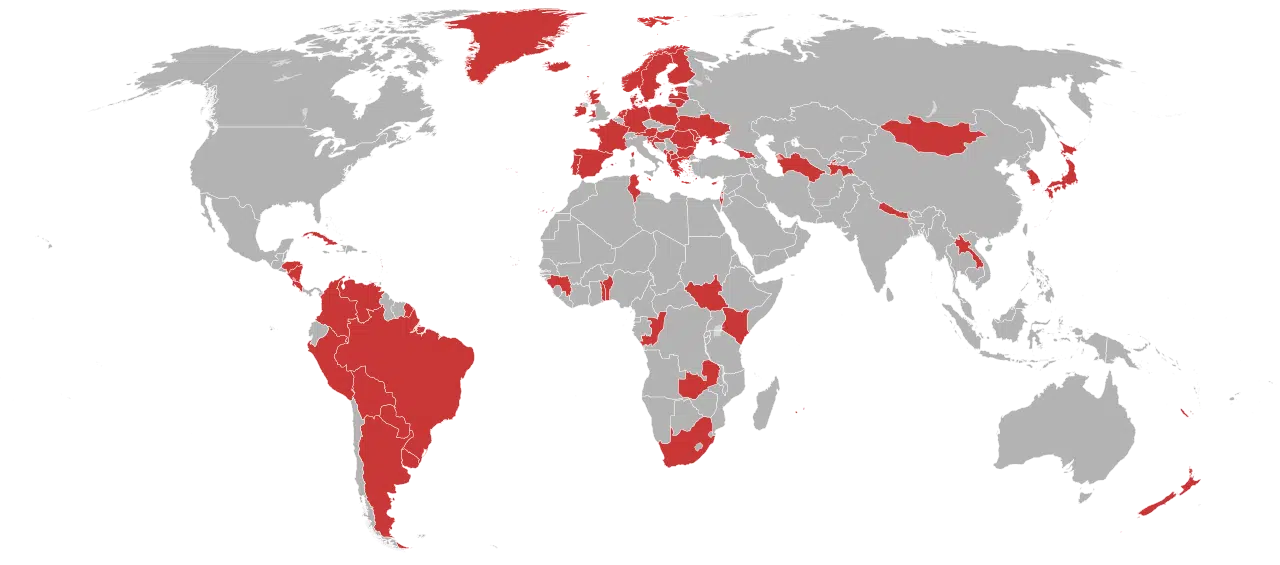
Here are the 74 countries and territories that have a ban on corporal punishment for children. You can learn more on the End Corporal Punishment website.
- Sweden (1979)
- Finland (1983)
- Austria (1989)
- Cyprus (1994)
- Denmark (1997)
- Poland (1997)
- Latvia (1998)
- Croatia (1999)
- Bulgaria (2000)
- Germany (2000)
- Israel (2000)
- Turkmenistan (2002)
- Iceland (2003)
- Ukraine (2004)
- Romania (2004)
- Hungary (2005)
- Greece (2006)
- Netherlands (2007)
- New Zealand (2007)
- Portugal (2007)
- Uruguay (2007)
- Venezuela (2007)
- Chile (2007)
- Spain (2007)
- Togo (2007)
- Costa Rica (2008)
- Moldova (2008)
- Luxembourg (2008)
- Liechtenstein (2008)
- Norway (2010)
- Tunisia (2010)
- Kenya (2010)
- Congo, Republic of (2010)
- Albania (2010)
- South Sudan (2011)
- North Macedonia (2013)
- Cabo Verde (2013)
- Honduras (2013)
- Malta (2014)
- Brazil (2014)
- Bolivia (2014)
- Argentina (2014)
- San Marino (2014)
- Nicaragua (2014)
- Estonia (2014)
- Andorra (2014)
- Benin (2015)
- Ireland (2015)
- Peru (2015)
- China (2016)
- Mongolia (2016)
- Montenegro (2016)
- Paraguay (2016)
- Aruba (2016)
- Slovenia (2016)
- Lithuania (2017)
- Nepal (2018)
- Kosovo (2019)
- France (2019)
- South Africa (2019)
- Jersey (2019)
- Japan (2020)
- Georgia (2020)
- Scotland (2020)
- Seychelles (2020)
- Guinea (2021)
- Colombia (2021)
- South Korea (2021)
- Wales (2022)
- Cuba (2022)
- Zambia (2022)
- Mauritius (2022)
- Philippines (2023)
- Laos (2023)
- Tajikistan (2024)
Learn more about how Positive Parenting Curriculum can transform your life through the Fresh Start Family Expereince.
0 Comments